
Jean Lowrie- Chin
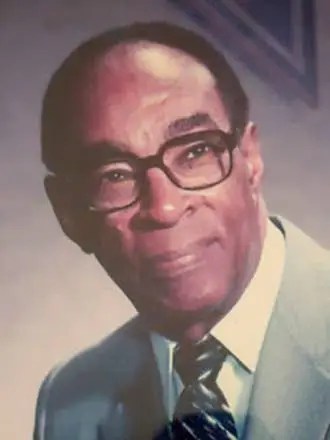
Last Friday we gathered at the former Foundation for International Self-Help Jamaica Limited (FISH) Clinic to celebrate the 40th anniversary of the renamed Louis Grant Medical Centre in honour of its founder, Professor Grant. The beloved professor created the clinic in 1975 at 19 Gordon Town Road, near Papine, to serve less fortunate Jamaicans.
In her tribute at the event, his daughter, Bette Grant Otunla, traced the humble beginnings of this son of Mitchell Town, Clarendon, whose love of learning gained him the Vere Trust Scholarship to Jamaica College at a time when the College was a school for the privileged. The outstanding student was recommended by his headmaster, William Cowper, to take up a position at the government laboratory. This involved working visits to the Kingston Public Hospital where young Grant became interested in medicine, and with his savings and assistance from his family, enrolled at University of Edinburgh.
“He graduated in 1939 with his medical degree, three months before World War II started, and returned to the government laboratory in Jamaica,” shared his daughter. Soon after “he was awarded a Rockefeller Foundation scholarship to do a master’s in public health at the University of Michigan in the USA, which then had one of the best public health programmes in the world … [He] set up an excellent system of laboratory services in Jamaica on his return,” she said. This continues to be a linchpin of Jamaica’s health system.
Professor Grant was one of the first members of staff at the newly established The University College of the West Indies (UCWI) and was awarded a scholarship to study bacteriology at London School of Tropical Medicine and Hygiene. Thus armed, he set up the Department of Bacteriology at The UCWI. His research on tropical diseases led him to appeal to the World Health Organization and UNICEF to provide vaccines for an islandwide immunisation operation. We can thank the goodly professor for the eradication of tuberculosis in Jamaica.
Further, he noted the suffering of patients with leptospirosis and embarked on a public education campaign so Jamaicans would learn to protect themselves from rats, which carried this often-fatal disease. When equine encephalitis became widespread among horses, Professor Grant set up an area for animals near the Mona Post Office where he could test and treat them.
The professor used his knowledge to help protect Jamaica’s livestock. One of his colleagues at the Department of Bacteriology, Dr Owen James, recalled, “Outside of the department in nearby communities like August Town or further afield in St Thomas, chickens or goats or horses or other animals would be kept in certain areas and checked from time to time. This could signal a warning of an imminent outbreak of a particular disease, based on the findings from these ‘Sentinel stations’.”
Source: Jamaica Observer

