Joy Clark, chair of the Digicel Foundation, shares a joyful moment with Sharaya McPherson (right) and Nicquantae Evans, students from the Catherine Hall Special Education Unit in St James who received backpacks filled with essential school supplies as part of the foundation’s recent annual back-to-school initiative.
As families across Jamaica prepare for the new school year, the Digicel Foundation is helping to ease the financial burden of back-to- school preparations, delivering more than 500 backpacks filled with essential school supplies to students across selected schools, special needs institutions and community groups.
The annual initiative is part of the Digicel Foundation’s continued commitment to education and community development. This year, the programme takes on added significance for families in western Jamaica, where more than 300 of the 500-plus students receiving support were affected by the Category 5 Hurricane Melissa. Each backpack was packed with care by members of the Digicel Foundation team and included practical supplies such as books, pencils, pens, colouring books, geometry sets and rulers, items designed to help students return to the classroom prepared and ready to learn.
For Digicel Foundation CEO Charmaine Daniels, the initiative is about standing with families at a time when they need support most. “We know how difficult this time of the year is for many parents, especially those in the West who have to add back-to-school expenses to the many challenges they are already facing after experiencing a Category 5 hurricane. As a Foundation committed to education and community development, we wanted to play our part.”
Among the beneficiaries was the Catherine Hall Special Education Unit in St. James, where the Special Needs Unit Coordinator Marsha Rigg-Kerr expressed gratitude for the Foundation’s continued support of students with special needs. “Every year, our parents can count on the Digicel Foundation to lend a helping hand where back-to- school supplies are concerned. As you know, many of our students were impacted by the hurricane, so these supplies are very much welcomed. They will make a meaningful
difference to our students and their families and we are truly thankful to the Digicel Foundation for continuing to support our children.” The Digicel Foundation continues to work with schools, community organisations and other partners to identify opportunities where targeted assistance can have a direct and meaningful impact on children and communities.
Players from Total Football Academy celebrate with a symbolic $650,000 cheque presented by Digicel Foundation, after the Academy’s winning entry in the Foundation’s “Show Your Skills and Score” social media challenge earned it the grant to support its football programme.
Total Football Academy (TFA) has been awarded a $650,000 grant from Digicel Foundation, giving the grassroots programme a significant boost as it continues developing young talent. The Academy won the Foundation’s “Show Your Skills and Score” social media challenge, which invited school football teams, community clubs, and academies to post a video showcasing their team’s skills for a chance to win a grant. Total Football Academy emerged victorious, securing over 1,000 organic likes on Instagram. Charmaine Daniels, CEO of Digicel Foundation, said the timing of the contest was deliberate, designed to ride the wave of excitement generated by the World Cup tournament.
“Football has a unique way of uniting people and the whole world was watching the World Cup with such passion. We wanted to channel that same energy back into our own communities, where the next generation of footballers is being shaped every day. A lot of young players look up to these World Cup athletes, and they dream of one day representing their own countries on that same stage,” she said. Daniels added that the grant reflects the Foundation’s long-standing commitment to sport as a tool for social development. ‘Throughout the years, we have consistently supported grassroots programmes because we’ve seen firsthand what it does for young people. It teaches discipline, teamwork and resilience. It keeps children engaged and out of harm’s way. Most importantly, it brings communities together.”
Founder and Director of TFA, Raymond Leveridge, said the grant comes at a pivotal moment for the Academy’s growth. ‘We are incredibly grateful to Digicel Foundation for this opportunity and for believing in what we’re building here. This grant will help us provide proper gear for our players, cover training expenses and support critical areas like nutrition and hydration that are often overlooked but so important to a young athlete’s development. We’ll also be able to purchase much-needed equipment that will elevate the quality of training we can offer,” he said.
Leveridge also spoke to the Academy’s mission and the communities it serves. “We are an academy with a very diverse demographic. A large number of our players come from inner-city communities and less fortunate backgrounds, where access to structured, quality football programmes isn’t always guaranteed. For many of these young people, TFA is a safe space, a and a support system.
This grant allows us to remove some of the barriers that stand between our players and their potential and that means everything to us,” he said. Digicel Foundation offers two grant programmes: the Mek A Muckle grant, which provides up to $650,000 in funding for small projects and the Build Jamaica grant, which supports larger programmes with up to $2,000,000 in funding. To learn more about Digicel Foundation grants, visit www.digicelfoundation.org/jm/en.
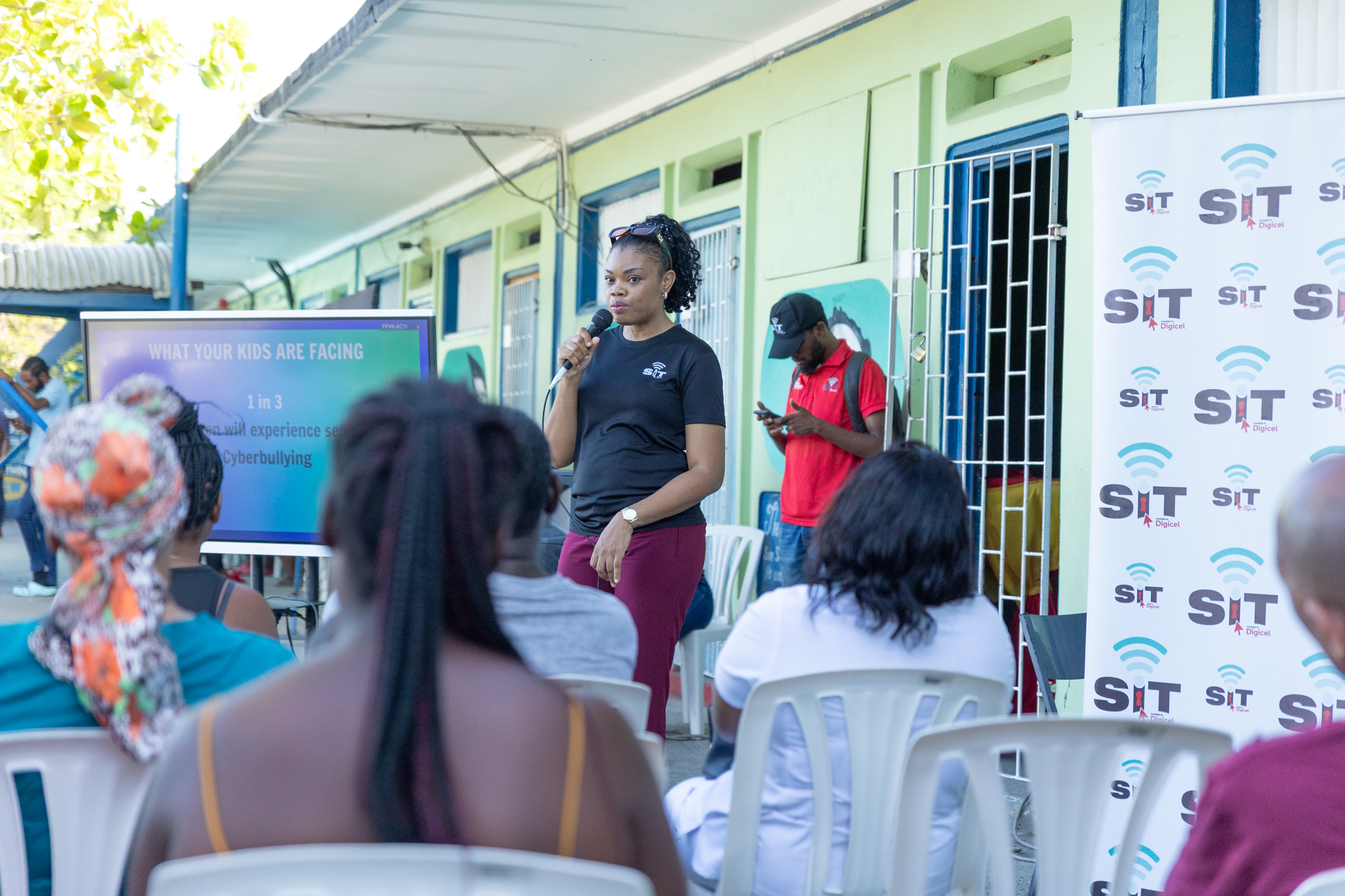
Kavelle Hylton, CEO of STEM Builders Learning Hub, addresses parents and teachers at Waterford Primary School on safer internet use, as part of Digicel Foundation’s Safer Internet Together (SIT) programme. In addition to students and community members, the SIT programme is now empowering parents and teachers with the knowledge to guide children’s digital responsibility and online safety.
Digicel Foundation is deepening its commitment to online safety by broadening its Safer Internet Together (SIT) programme to include parents and teachers, arming adults with the knowledge and tools needed to guide and monitor how children behave online.
This expansion comes on the heels of a standout year for the programme, which reached more than 34,000 students across 150 schools islandwide with lessons on digital responsibility. SIT is a year-long, nationwide initiative built to give all Jamaicans the essential knowledge to move safely through the digital space.
So far, over 50 parents and teachers have taken part in the programme, which tackles key issues such as cyberbullying, parental controls, personal data protection, and data privacy.
Looking ahead, the Foundation will host a series of targeted sessions with school principals in the Ministry of Education, Skills, Youth and Information’s Regions 4 and 1 this summer, further strengthening ties with school leadership and expanding the programme’s footprint in those communities.
Charmaine Daniels, CEO of Digicel Foundation, explained, “The digital landscape is evolving at a pace that can be difficult for any parent or teacher to keep up with. Through SIT, we are ensuring that the adults in our children’s lives are not left behind. Adults need to be aware of what is happening online so that they can effectively monitor, guide, and protect the young people in their care.”
STEM Builders Learning Hub, the programme’s implementing partner, is responsible for delivering the digital safety curriculum in schools and community settings. According to CEO Kavelle Hylton, experience on the ground has made clear just how urgent it is to bring parents into the conversation alongside students.
“What we are finding is that parents sometimes are simply not aware of what their children are encountering online – the risks, the platforms, or the conversations happening in digital spaces. Educating them and guiding them is so important, because they are the ones who can guide our children at home. When we strengthen the awareness of parents and teachers, we multiply the impact of everything we do in the classroom,” said Miss Hylton.
SIT is backed by a group of dedicated partners united by a shared vision for a safer digital Jamaica, including Sunshine Snacks, Macmillan Education, JPS, and KOOL 97FM. Looking to 2026, Digicel Foundation aims to bring the programme to 100 additional schools and host 25 PTA sessions.
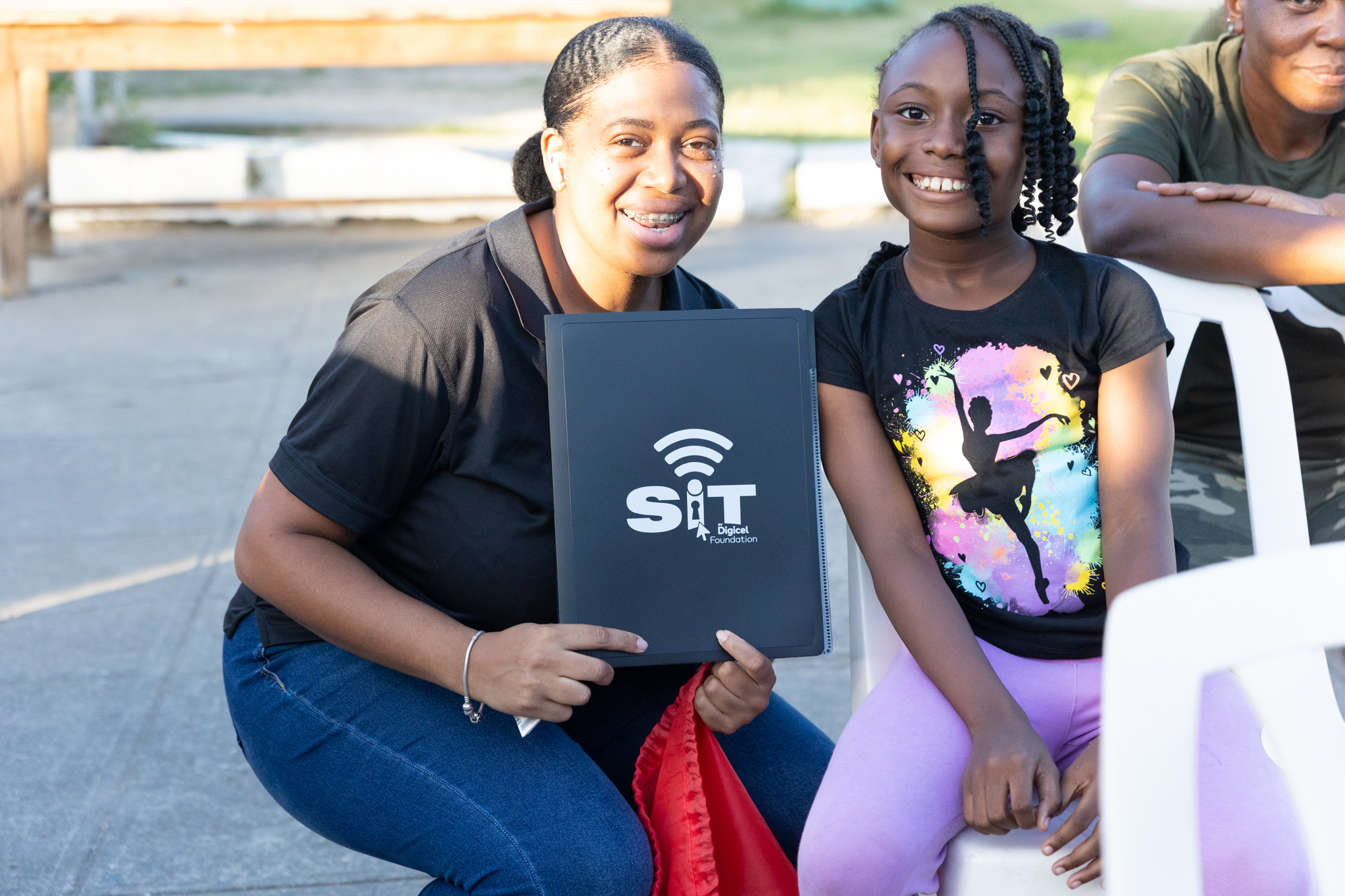
Kedisha Clarke, Communications and Digital Media Officer at Digicel Foundation, presents a notebook to a student at Waterford Primary School during a PTA session held as part of the Foundation & Safer Internet Together (SIT) programme. In addition to students and community members, SIT is now empowering parents and teachers with the knowledge to guide children & digital responsibility and online safety.
Curious students at Constant Spring Primary School gather around Sharika Miller, volunteer and Customer Care Team Leader at Digicel, as she reads from the SIT Squad comic and interactive activity book during Read Across Jamaica Day on May 5, 2026. The school was among four visited by Digicel Foundation volunteers as part of efforts to promote online safety and responsible digital behaviour
In recognition of Read Across Jamaica Day 2026, the Digicel Foundation brought literacy to life through a series of interactive reading sessions in primary schools across the island, delivered under its Safer Internet Together (SIT) programme.
More than 20 Digicel employees volunteered their time to support the initiative, visiting St. Richards Primary, Rollington Town Primary, Spanish Town Primary and Constant Spring Primary, where they read with students and facilitated engaging discussions focused on online safety.
Students were introduced to the “SIT Squad” by Kavelle Hylton, CEO of STEM Builders Learning Hub. The interactive comic and activity book promotes safe, responsible and positive internet use. By blending reading with practical digital lessons, students learned how to protect their personal information, recognise online risks and make informed decisions when navigating digital spaces.
Speaking on the importance of the initiative, Charmaine Daniels, CEO of the Digicel Foundation, highlighted the need for early and inclusive digital education. “As children become increasingly connected online, it is essential that they are equipped with the knowledge and skills to navigate the digital world safely,” said Daniels. “The Safer Internet Together programme goes beyond
students, it engages teachers, parents and even senior citizens, ensuring that entire communities are empowered to use technology responsibly and confidently.”
The Safer Internet Together programme is a year‑long national initiative designed to educate and empower students, teachers, parents and the elderly on digital literacy, online safety and emerging technologies. In its pilot year in 2025, the programme directly reached more than 34,000 students across 150 schools and impacted over 2,000 senior citizens through digital literacy and artificial intelligence workshops.
Building on this success, year two of the Safer Internet Together programme begins in May 2026, with an expanded focus on deepening digital awareness and creating safer online environments for all Jamaicans.
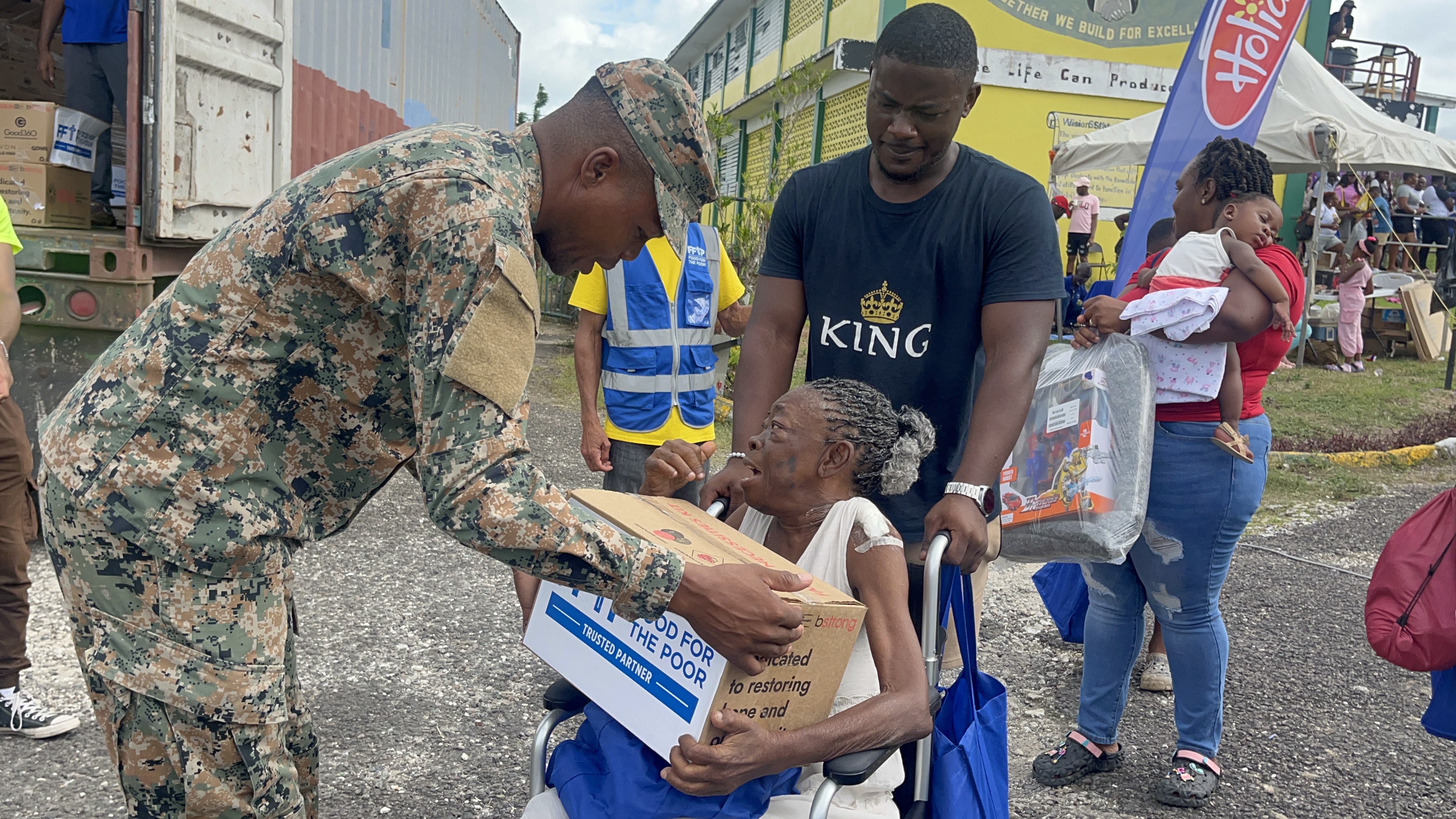
A touching moment: At the Ramble, Hanover health fair, a member of the Jamaica Defense Force (JDF) personally hands a box of supplies to a woman in a wheelchair. Her joy says it all. These essential items brought comfort and relief, showing the power of community care and support. This health fair ensured hundreds of residents had access to essential health services and support, underscoring the power of partnership in strengthening community wellbeing.
Food For The Poor Jamaica recently hosted a community health fair in Ramble, Hanover, on January 10, 2026 serving more than 500 residents from the surrounding areas and reaffirming its commitment to improving access to essential healthcare services in western Jamaica.
The health fair provided a wide range of free services, including eye examinations, general medical care, dental services, and mental wellness support. Residents benefited from consultations and screenings aimed at promoting early detection, prevention, and overall well-being.
The initiative was made possible through the support and collaboration of several corporate, nonprofit, and public-sector partners. Participating organizations included JAM for Jamaica, JAMBISCO, Island Grill, National Water Commission (NWC), Jamaica Public Service (JPS), National Bakery, Wisynco, A&E Ambulance Services, Lions Club, KFC, Sean Paul Foundation, the Ministry of Health & Wellness, Sign Xpress, Jamaica AIDS Support For Life, the University of the West Indies (UWI), and the University Hospital of the West Indies.
Through these partnerships, the health fair delivered vital services directly to the community, reducing barriers to care and providing much-needed support to residents in the west. Food For The Poor Jamaica continues to work alongside partners to uplift vulnerable communities by addressing critical needs such as healthcare, food security, and social support.
Smile Awhile: Demonstrating good spirits, Food For The Poor Jamaica’s Agricultural & Fisheries Manager, Othniel Carby (left) poses for a quick picture with a woman and her baby at the recent health fair in Ramble, Hanover. The event, which served over 500 people, provided free medical, dental, eye care and mental wellness services, made possible through strong partnerships across the public and private sectors.
Flanking Pastor Claudia Ferguson, chair of the National Leadership Prayer Breakfast Committee, are Jonathan Brown (left), Manning’s School board member, and Courtney Campbell, president & CEO of the VM Group.
THE historic Manning’s School in Westmoreland, which was ravaged by the October 28, 2025 Hurricane Melissa, will get a rebuilding boost for its wellness centre from this year’s National Leadership Prayer Breakfast (NLPB).
The 46th staging of the NLPB will focus on western Jamaica, with the historic Thomas Manning Building structure, which is believed to be the oldest-surviving part of the institution that was built in the early 20th century, being the focus.
“This year the VM Group and the NLPB have identified simultaneously the charity for sponsorship as the Manning’s School, and we are focusing again on the sick bay which requires significant rehabilitation,” said secretary for the NLPB Committee Reverend Wayneford McFarlane during media briefing on Wednesday.
Past chairman of the NLPB Committee, Reverend Sam McCook, said the project, which is valued at $2.8 million, will be undertaken in collaboration with the Manning’s School Past Students Association.“The project involves spending roughly $2.5 million on a modular structure, $300,000 on some ancillary aspects which they regard as a baseline. That is in excess of what we have traditionally done as a breakfast, and we indicated to the past students that we may not be able to fully fund that, but they welcomed the support and the efforts will be made to compliment what was done,” said McCook.
In the meantime, president and CEO of VM Group Courtney Campbell said its organisation stands in support of all the objectives and the virtues promoted by the NLPB.“We believe in the power of faith, we believe in the effectiveness of prayer, we believe in the importance of unity, and we believe, like many others, righteousness exalts a nation,” Campbell said.
Underscoring Melissa’s devastation to western parishes, the NLPB Committee announced on Wednesday that the annual National Week of Prayer for this year will be launched in that section of the island, with the first service being held at the First Church of the Open Bible in Montego Bay, St James.
The week of prayer will culminate on the morning of January 15 with the NLPB, which will be held under the theme ‘Caring for our neighbour’.
(L–R) Dr. Kasan Troupe, Permanent Secretary in the Ministry of Education, Skills Youth and Information; Principal of The Mico University College, Dr. Asburn Pinnock; CEO of the Digicel Foundation, Charmaine Daniels; and Digicel Foundation Chair, Joy Clark, cut the ribbon to officially open a Smart Lab at The Mico University College. The lab is the second of five being installed at teachers’ colleges across the island.
The Digicel Foundation has officially handed over two state-of-the-art Smart Labs to St. Joseph’s Teachers’ College and The Mico University College, marking another milestone in its mission to advance education through technology and innovation.
The Smart Labs, each outfitted with 24 laptops and a Mimio-compatible smart board, are part of the Foundation’s commitment to ensuring that teacher training institutions are equipped with modern tools to enhance teaching and learning outcomes. Speaking at the handover ceremony of the Smart Lab at St. Joseph’s Teachers College on Thursday, October 09, 2025, Charmaine Daniels, CEO of the Digicel Foundation, said the investment reflects the Foundation’s dedication to building a more inclusive and technology-driven education system.
“Teachers are the backbone of our society. Every doctor, engineer or scientist begins with a teacher who believed in them. And today, in this digital age, we want to give our teachers the tools that will make their work more impactful and more efficient,” Daniels said. “This Smart Lab has been fully retrofitted and outfitted with advanced technology, including 24 laptops and an interactive Smart Board powered by Mimio Studio Educational software.”
At St. Joseph’s Teachers’ College, the newly installed Smart Lab has already been embraced by faculty and students. Winsome Francis, Principal of St. Joseph’s Teachers’ College, expressed her gratitude for the initiative, noting its alignment with the college’s mission to prepare 21st-century educators.
“This Smart Lab is a game-changer for our students,” said Francis. “It allows us to expose future teachers to the technology they will use in the classroom, helping them to innovate and connect with learners in new and exciting ways. We are thankful to the Digicel Foundation for making this possible.”
Meanwhile, at The Mico University College, the second of the two Smart Labs was officially handed over earlier this week. Dr. Asburn Pinnock, President of The Mico University College, said the lab will enhance teaching practice. “This Smart Lab embodies the intersection of education and technology that will now serve as a powerful hub of creativity, collaboration and digital literacy,” Dr. Pinnock stated. “The Lab will provide a dynamic space for teachers to explore innovative teaching methods and a training ground for lecturers to model technology integration and instruction.”
Representing the Ministry of Education, Skills, Youth and Information, Dr. Kasan Troupe, Permanent Secretary, commended the Foundation for its continued partnership and support of national education priorities. “We applaud the Digicel Foundation for understanding the mission and vision of transformation in education,” said Dr. Troupe. “This investment means that our teachers will be equipped with the skillset to prepare our young people for the global digital economy. As this lab comes available, I encourage our teachers to embrace the new learning opportunity.” The Smart Labs at St. Joseph’s Teachers’ College and The Mico University College are the first two of five labs in teacher training colleges the Digicel Foundation will roll out this financial year as part of its STEM and digital literacy programme.
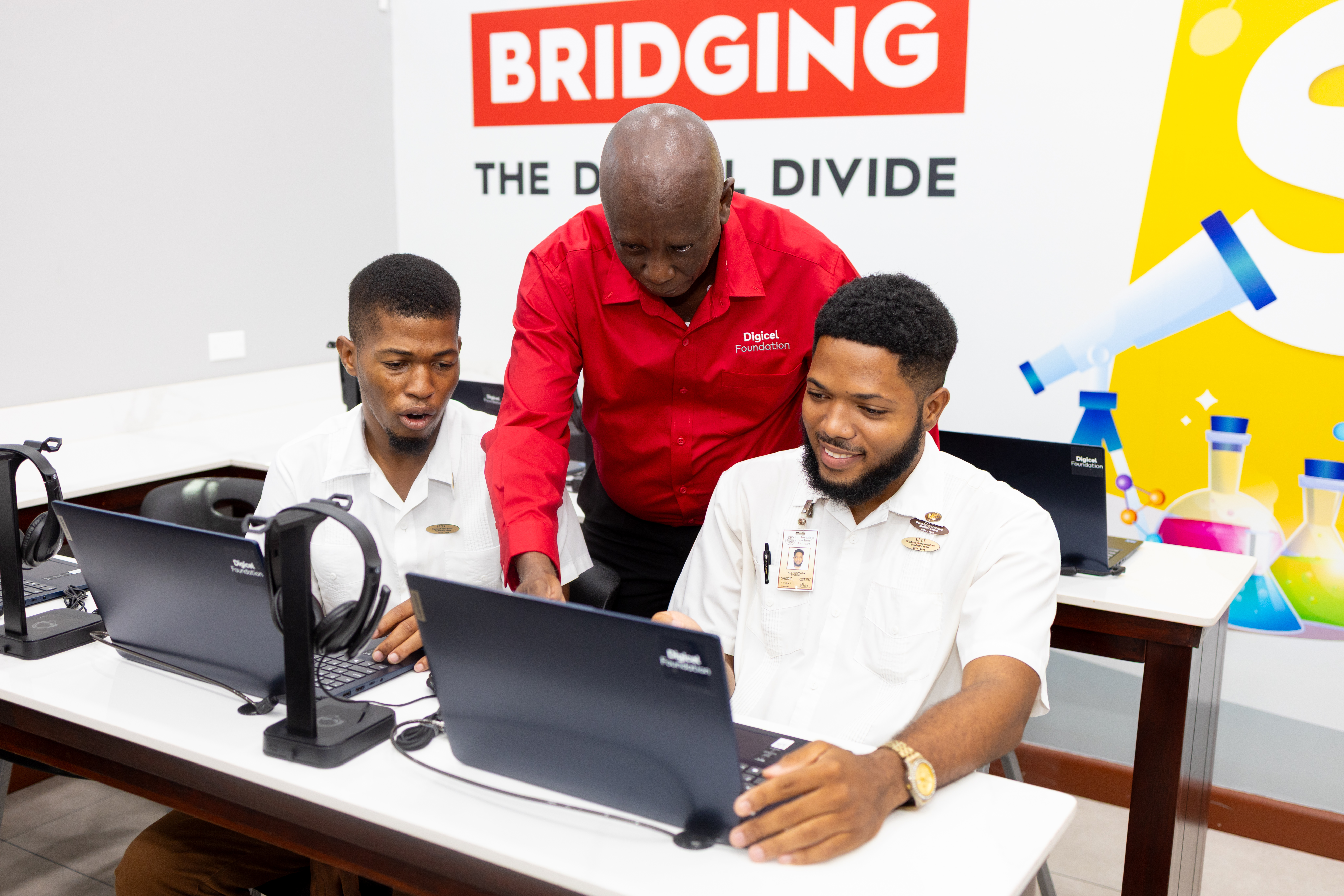
Digicel Foundation Board Director, Wayne Smith, engages with St. Joseph’s Teachers’ College Student Union President, Sariek Edwards (left), and Vice President, Alex Hepburn, inside the newly opened Smart Lab. The lab is the first of five being installed at teachers’ colleges across the island.
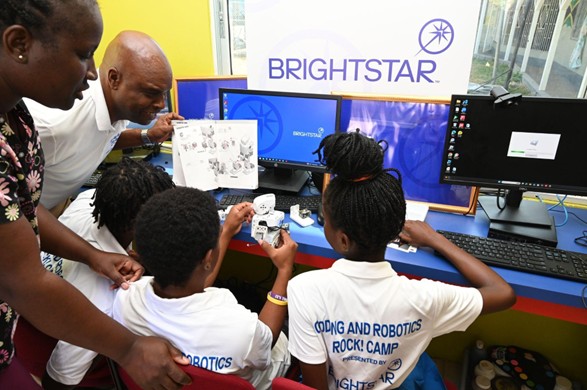
Students at the 2025 Brightstar Coding and Robotics Rock! Camp examine robotics components and reference materials under the guidance of staff volunteers and Centre Supervisors, developing technical skills through collaborative learning.
Brightstar Lottery (“Brightstar”), successfully completed its fifth annual Coding and Robotics Rock! Camp with 100 Caribbean students graduating from the programme. Comprised of students from five Caribbean territories – Jamaica, St. Kitts and Nevis, St. Maarten, Trinidad and Tobago and the US Virgin Islands – the Brightstar Coding and Robotics Rock! Camp proved that geography cannot limit Caribbean youth’s technological potential.
From July 14-25, students from Brightstar’s After School Advantage Centres immersed themselves in a cutting-edge curriculum developed with the Mona Geoinformatics Institute (“MGI”) at The University of the West Indies. Under the theme “Coding Opens Doors”, participants didn’t just learn technology – they became creators, innovators, and digital architects of the Caribbean’s technological future.
“The digital literacy gap isn’t merely a technological challenge; it’s a matter of economic sovereignty for Caribbean nations,” said Shelly Ann Hee Chung, Brightstar’s Director, Antilles. “Through our Coding & Robotics Rock! Camp, we cultivated a generation of innovative thinkers who transformed from technology consumers to creators, establishing a foundation for sustainable digital economies across our islands.”
The Coding and Robotics Rock! Camp featured two distinct learning tracks. Level 1 students mastered web development fundamentals, learning HTML for content creation, CSS for design, and JavaScript for interactivity. Their capstone projects included personalised websites featuring Home and About Me pages, Coding Careers pages exploring technology opportunities, Coding Tools pages highlighting development resources, and Contact Us pages – all inspired by the camp’s “Coding Opens Doors” theme.
Level 2 participants advanced into artificial intelligence (“AI”) and robotics, exploring AI applications, creating machine learning models using Google Teachable Machines, and building functional robots using VEX robotics platforms. Students engaged with cutting-edge technologies, including Robotic Process Automation and participated in VR.VEX virtual reality activities.
“In the rapidly evolving digital ecosystem, early exposure to computational thinking proves as fundamental as traditional literacy,” said Debbie Green, General Manager, Brightstar Jamaica. “Our multi-island approach to the Coding & Robotics Rock! Camp demonstrates our commitment to democratizing access to these critical skills, ensuring that geographical constraints don’t limit any child’s opportunity to participate in the digital future.”
The programme’s success was measured not only in technical skills acquired but in the transformation of student perspectives on technology careers. Participants discovered how coding opens doors to industries ranging from healthcare and finance to entertainment and environmental conservation, directly addressing the Caribbean’s need for homegrown technology talent.
Throughout the camp, students worked in virtual breakout rooms, fostering collaboration across territories while building individual expertise. The programme’s hands-on approach yielded extraordinary results. Students created working web calculators, interactive image carousels, and AI models addressing everything from hurricane preparedness to sustainable tourism. Their final presentations demonstrated not just technical proficiency but creative problem-solving that directly addressed Caribbean realities.
“By designing content that’s accessible to students regardless of their technical background, we are helping to cultivate the next generation of innovators who can use mapping, software engineering, data analysis, and geospatial thinking to solve real-world problems in their communities,” said Luke Buchanan, Executive Director, MGI.
The 2025 Brightstar Coding and Robotics Rock! Camp’s success arrives at a crucial moment. As Caribbean governments prioritise digital transformation and seek homegrown technology talent, Brightstar’s investment in youth development provides exactly the skilled workforce these ambitions require.
This fifth annual achievement positions Brightstar as more than a technology company – it’s a catalyst for Caribbean excellence, proving that strategic investment in youth education yields transformational results that can benefit entire regions for generations to come.
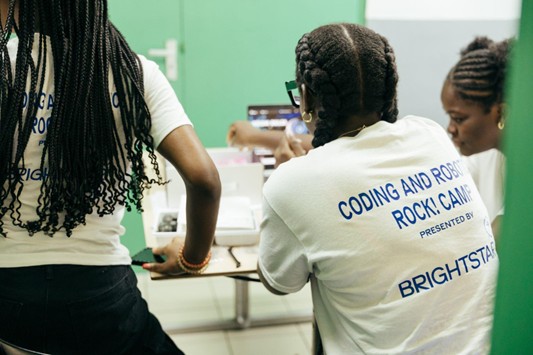
Students collaborate on coding projects during the 2025 Brightstar Coding and Robotics Rock!, developing essential digital skills via interactive technology education.
For decades, the Caribbean has watched its brightest talents migrate to the United States, Canada, and the United Kingdom, pursuing opportunities that seemed unattainable at home. However, a quiet revolution is unfolding across our islands, one that is transforming the story of Caribbean youth and their future prospects. Brightstar Lottery’s fifth annual Brightstar Coding & Robotics Rock! Camp, which took place from July 14 to 25, 2025, is more than just a technology education programme—it’s a strategic investment in increasing brain gain in our region.
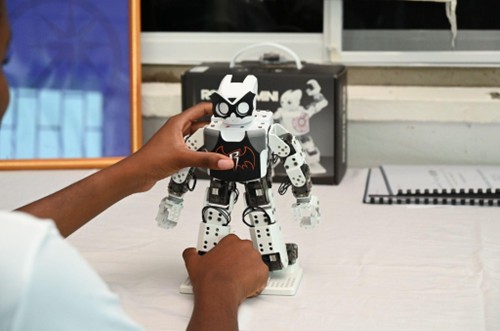
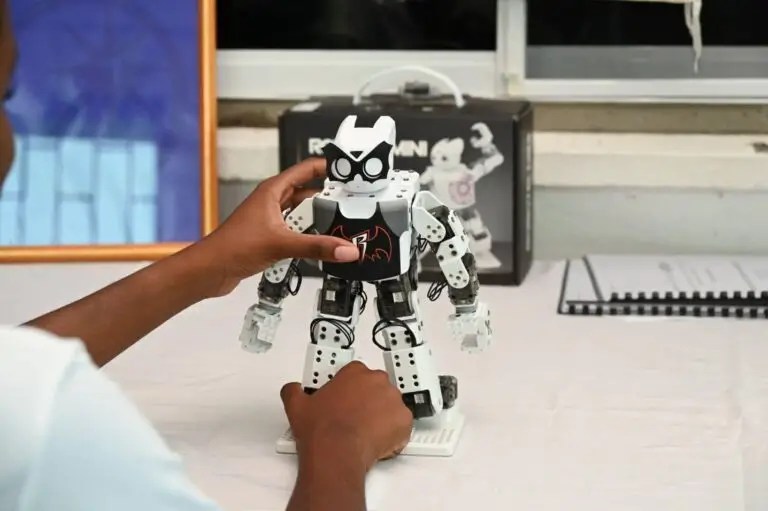
A student adjusts a humanoid robot during the fifth-annual Coding and Robotics Rock! Camp presented by Brightstar. The hands-on curriculum, developed in partnership with the Mona Geoinformatics Institute (MGI), is part of a STEM initiative aimed at fostering innovation and technological literacy among Jamaican youth
The concept of “brain gain” has become increasingly relevant as Caribbean nations recognise that retaining educated talent is crucial for sustainable development. Unlike traditional approaches that focus solely on economic incentives, Brightstar’s innovative camp tackles the root cause: the perception that meaningful technology careers do not exist in the Caribbean. “We’re not just teaching students to code; we’re showing them that the Caribbean can be a launchpad for global innovation,” explains Debbie Green, General Manager of Brightstar Jamaica. “When young people see that they can build cutting-edge robotics projects right here in Jamaica, work with international partners like the Mona Geoinformatics Institute, and collaborate with peers across the Caribbean, they begin to envision a future where staying home means staying ahead.”
This year’s camp brought together over 40 students from five Caribbean locations—Jamaica, St Kitts, St Maarten, Trinidad and Tobago, and the US Virgin Islands. The programme’s theme, “Coding Opens Doors,” took on greater significance when viewed through the lens of regional development. These doors do not only lead to individual opportunities; they open pathways to transforming entire economies.
The multi-island approach is especially crucial. Instead of creating isolated pockets of expertise, the programme fosters a connected network of young innovators who view themselves as part of a larger Caribbean tech ecosystem. This interconnectedness is essential for brain gain, as it shows that remaining in the Caribbean does not mean working in isolation. Amarez Huggins Delashley, from the camp’s 2024 cohort, notes: “The camp helped me to solve problems more easily: this made me think logically and solve complex problems. For example, solving a Rubik’s Cube, putting together a complex puzzle, etc. The Robotics Camp taught me multiple shortcuts, which are now helping me to easily access and use computers.” The economic implications are profound. Traditional Caribbean industries—tourism, agriculture, and financial services—are increasingly reliant on technology. Young people trained in coding and robotics are not
just prepared for hypothetical future jobs; they are enabled to innovate within existing industries and to develop entirely new ones.
“We’re witnessing the emergence of a generation that sees technology as a tool for Caribbean empowerment, not escape. These students are learning that they can build international-standard solutions while addressing uniquely Caribbean challenges. That’s the foundation of sustainable brain gain,” says Green. The camp’s collaboration with the Mona Geoinformatics Institute enhances academic rigour and local relevance in the curriculum. Students are not merely acquiring generic programming skills; they are investigating how technology can tackle Caribbean-specific issues, such as climate resilience, disaster preparedness, and sustainable tourism.
“Our partnership with Brightstar represents a critical shift in how we approach technology education in the Caribbean. By providing coding and robotics training in real Caribbean scenarios, from hurricane tracking, general software development and coastal monitoring to environmental stewardship, at MGI we help students see that some of the most exciting technological opportunities exist right here at home. These young innovators are not just learning to code; they are learning to build solutions for the Caribbean and beyond.”
Fun fact: students from other islands are already envisioning projects that could assist with oil spill clean-up—something that is very important for our environment here. The programme’s success is measured not only by the technical skills gained but also by the changed perspectives about the Caribbean’s potential. Participants leave with more than just coding knowledge; they carry a vision of the Caribbean as a place where innovation thrives and where young talent is nurtured.
The broader After School Advantage programme, which operates 38 centres across the English-speaking Caribbean, provides the infrastructure for this transformation. These centres ensure that the camp’s impact extends well beyond two weeks, establishing year-round communities of learning and innovation.
Programmes like Brightstar’s camp offer a path forward that does not require choosing between progress and place. By investing in technology education that is both world-class and locally relevant, Brightstar is not just training programmers—they are cultivating the architects of our region’s digital future. The true measure of success for initiatives like this will not be reflected in graduation statistics or job placement rates, but in the young Caribbean professionals who, in ten years’ time, will be leading technology companies, developing innovative solutions, and mentoring the next generation—all while calling the Caribbean home.
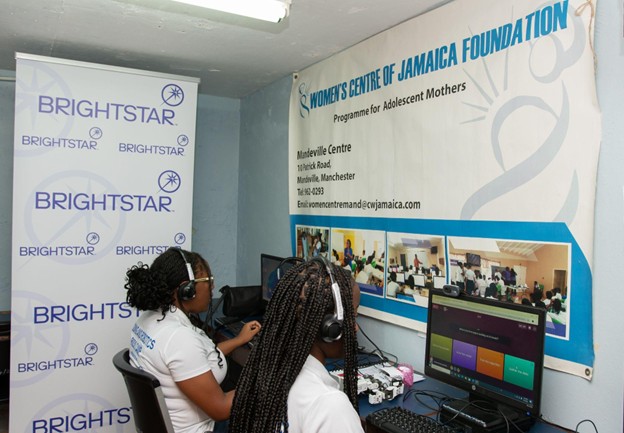
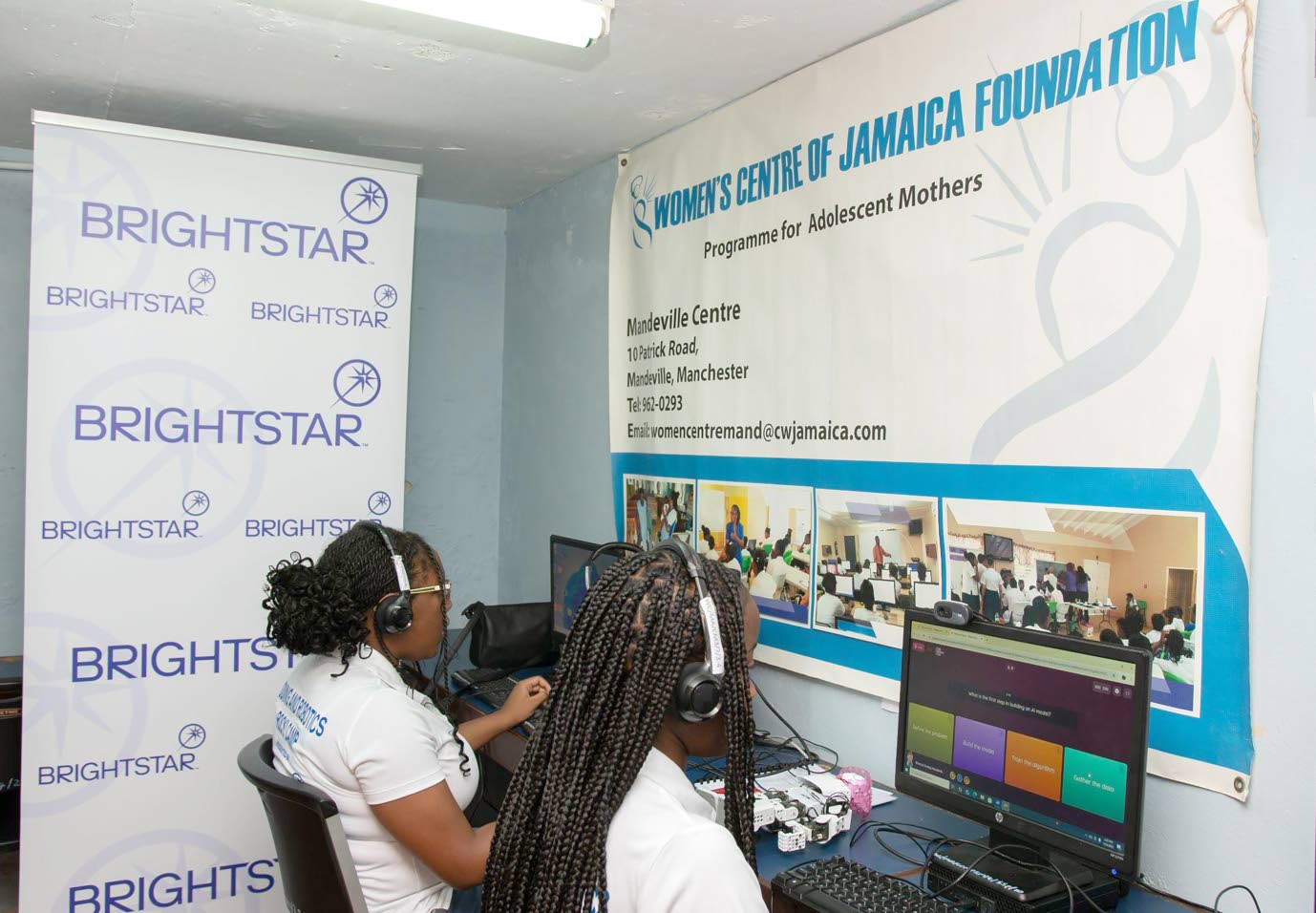
Students at the Women’s Centre of Jamaica Foundation’s Mandeville Centre participate in one of the Level II sessions during the 2025 Coding and Robotics Rock! Camp presented by Brightstar
How coding initiatives encourage educated youth to stay local
A student adjusts a humanoid robot during the fifth annual Coding and Robotics Rock! Camp presented by Brightstar. The hands-on curriculum, developed in partnership with the Mona Geoinformatics Institute, is part of a STEM initiative aimed at fostering innovation and technological literacy among Jamaican youth.
FOR decades, the Caribbean has watched its brightest talents migrate to the United States, Canada, and the United Kingdom, pursuing opportunities that seemed unattainable at home. However, a quiet revolution is unfolding across our islands, one that is transforming the story of Caribbean youth and their future prospects.
Brightstar Lottery’s fifth annual Brightstar Coding & Robotics Rock! Camp, which took place from July 14 to 25, 2025, is more than just a technology education programme — it’s a strategic investment in increasing brain gain in our region.The concept of “brain gain” has become increasingly relevant as Caribbean nations recognise that retaining educated talent is crucial for sustainable development. Unlike traditional approaches that focus solely on economic incentives, Brightstar’s innovative camp tackles the root cause: the perception that meaningful technology careers do not exist in the Caribbean.
“We’re not just teaching students to code — we’re showing them that the Caribbean can be a launchpad for global innovation,” explains Debbie Green, general manager of Brightstar Jamaica. “When young people see that they can build cutting edge robotics projects right here in Jamaica, work with international partners like the Mona Geoinformatics Institute, and collaborate with peers across the Caribbean, they begin to envision a future where staying home means staying ahead.”This year’s camp brought together over 40 students from five Caribbean locations — Jamaica, St Kitts, St Maarten, Trinidad and Tobago, and the US Virgin Islands. The programme’s theme, ‘Coding Opens Doors’, took on greater significance when viewed through the lens of regional development. These doors do not only lead to individual opportunities — they open pathways to transforming entire economies.
The multi-island approach is especially crucial. Instead of creating isolated pockets of expertise, the programme fosters a connected network of young innovators who view themselves as part of a larger Caribbean tech ecosystem. This interconnectedness is essential for brain gain as it shows that remaining in the Caribbean does not mean working in isolation.Amarez Huggins Delashley, from the camp’s 2024 cohort, notes, “The camp helped me to solve problems more easily; this made me think logically and solve complex problems. For example, solving a Rubik’s cube, putting together a complex puzzle, etc, the robotics camp taught me multiple shortcuts which are now helping me to easily access and use computers.”
The economic implications are profound. Traditional Caribbean industries — tourism, agriculture, and financial services — are increasingly reliant on technology. Young people trained in coding and robotics are not just prepared for hypothetical future jobs, they are enabled to innovate within existing industries and to develop entirely new ones.“We’re witnessing the emergence of a generation that sees technology as a tool for Caribbean empowerment, not escape. These students are learning that they can build international-standard solutions while addressing uniquely Caribbean challenges. That’s the foundation of sustainable brain gain,” says Green.
The camp’s collaboration with the Mona Geoinformatics Institute enhances academic rigour and local relevance in the curriculum. Students are not merely acquiring generic programming skills, they are investigating how technology can tackle Caribbean-specific issues such as climate resilience, disaster preparedness, and sustainable tourism.
“Our partnership with Brightstar represents a critical shift in how we approach technology education in the Caribbean. By providing coding and robotics training in real Caribbean scenarios — from hurricane tracking, general software development and coastal monitoring to environmental stewardship — at MGI we help students see that some of the most exciting technological opportunities exist right here at home. These young innovators are not just learning to code, they are learning to build solutions for the Caribbean and beyond.”
Fun fact: Students from other islands are already envisioning projects that could assist with oil spill clean-up — something that is very important for our environment here.The programme’s success is measured not only by the technical skills gained but also by the changed perspectives about the Caribbean’s potential. Participants leave with more than just coding knowledge, they carry a vision of the Caribbean as a place where innovation thrives and where young talent is nurtured.
The broader After School Advantage programme, which operates 38 centres across the English-speaking Caribbean, provides the infrastructure for this transformation. These centres ensure that the camp’s impact extends well beyond two weeks, establishing year-round communities of learning and innovation.
Programmes like Brightstar’s camp offer a path forward that does not require choosing between progress and place. By investing in technology education that is both world-class and locally relevant, Brightstar is not just training programmers — they are cultivating the architects of our region’s digital future.
The true measure of success for initiatives like this will not be reflected in graduation statistics or job placement rates, but in the young Caribbean professionals who, in 10 years’ time, will be leading technology companies, developing innovative solutions, and mentoring the next generation — all while calling the Caribbean home.
Students at the Women’s Centre of Jamaica Foundation’s Mandeville branch participate in one of the level II sessions during the 2025 Coding and Robotics Rock! Camp presented by Brightstar..