
How coding initiatives encourage educated youth to stay local
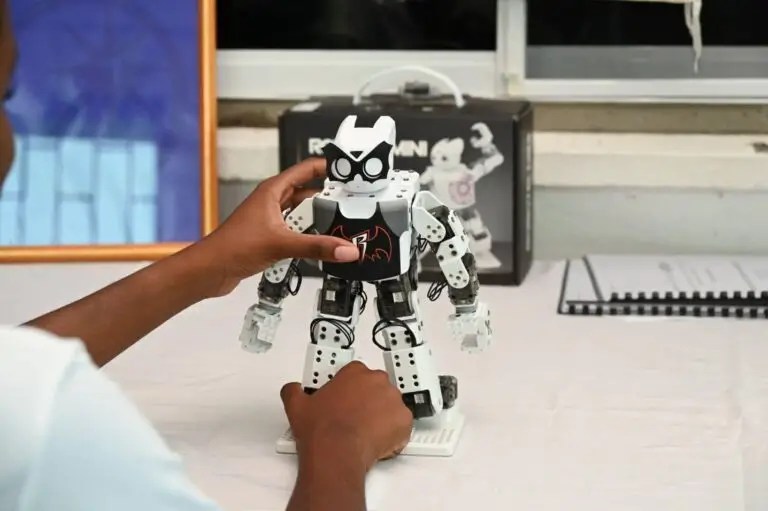
FOR decades, the Caribbean has watched its brightest talents migrate to the United States, Canada, and the United Kingdom, pursuing opportunities that seemed unattainable at home. However, a quiet revolution is unfolding across our islands, one that is transforming the story of Caribbean youth and their future prospects.
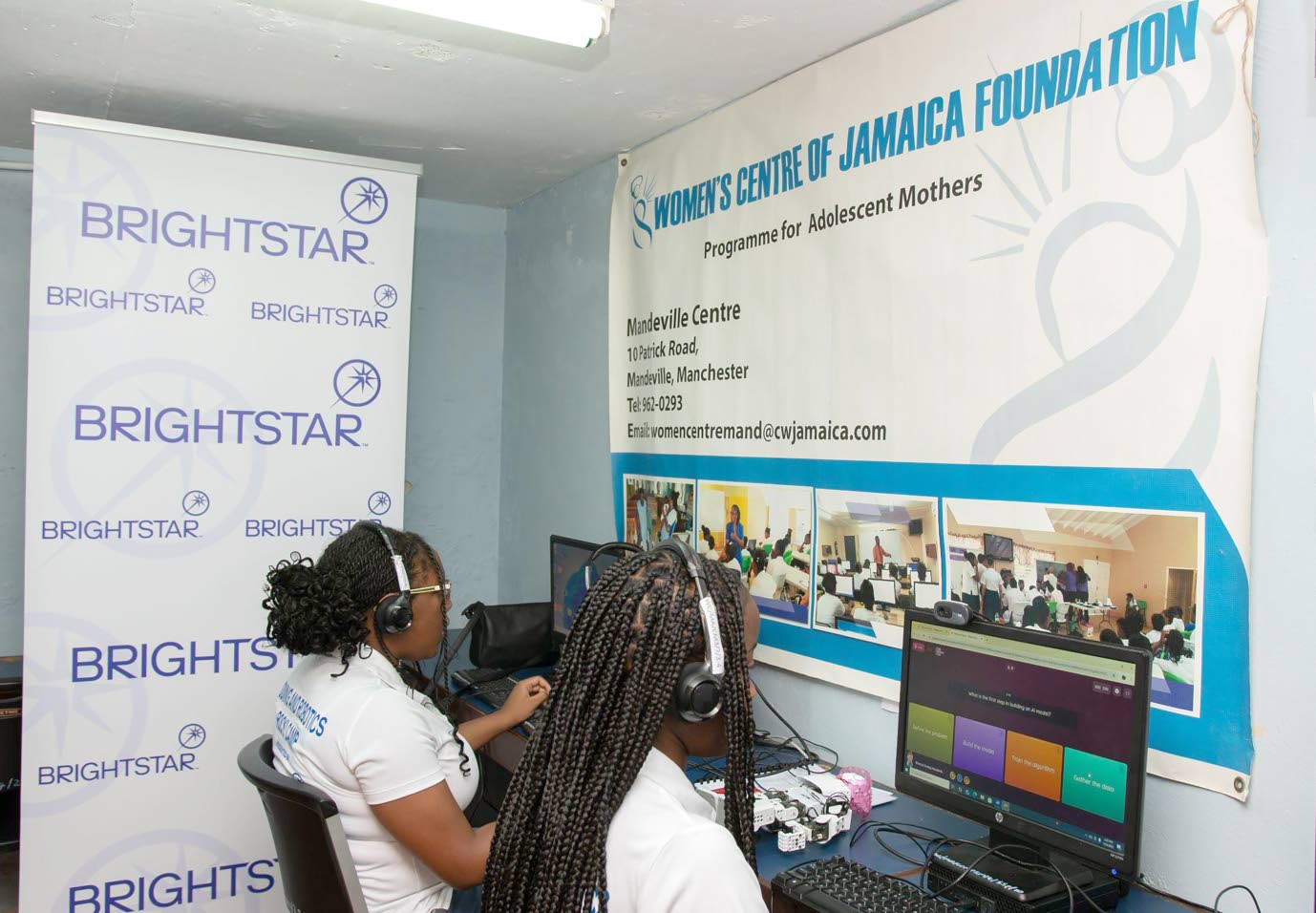
Brightstar Lottery’s fifth annual Brightstar Coding & Robotics Rock! Camp, which took place from July 14 to 25, 2025, is more than just a technology education programme — it’s a strategic investment in increasing brain gain in our region.The concept of “brain gain” has become increasingly relevant as Caribbean nations recognise that retaining educated talent is crucial for sustainable development. Unlike traditional approaches that focus solely on economic incentives, Brightstar’s innovative camp tackles the root cause: the perception that meaningful technology careers do not exist in the Caribbean.
“We’re not just teaching students to code — we’re showing them that the Caribbean can be a launchpad for global innovation,” explains Debbie Green, general manager of Brightstar Jamaica. “When young people see that they can build cutting edge robotics projects right here in Jamaica, work with international partners like the Mona Geoinformatics Institute, and collaborate with peers across the Caribbean, they begin to envision a future where staying home means staying ahead.”This year’s camp brought together over 40 students from five Caribbean locations — Jamaica, St Kitts, St Maarten, Trinidad and Tobago, and the US Virgin Islands. The programme’s theme, ‘Coding Opens Doors’, took on greater significance when viewed through the lens of regional development. These doors do not only lead to individual opportunities — they open pathways to transforming entire economies.
The multi-island approach is especially crucial. Instead of creating isolated pockets of expertise, the programme fosters a connected network of young innovators who view themselves as part of a larger Caribbean tech ecosystem. This interconnectedness is essential for brain gain as it shows that remaining in the Caribbean does not mean working in isolation.Amarez Huggins Delashley, from the camp’s 2024 cohort, notes, “The camp helped me to solve problems more easily; this made me think logically and solve complex problems. For example, solving a Rubik’s cube, putting together a complex puzzle, etc, the robotics camp taught me multiple shortcuts which are now helping me to easily access and use computers.”
The economic implications are profound. Traditional Caribbean industries — tourism, agriculture, and financial services — are increasingly reliant on technology. Young people trained in coding and robotics are not just prepared for hypothetical future jobs, they are enabled to innovate within existing industries and to develop entirely new ones.“We’re witnessing the emergence of a generation that sees technology as a tool for Caribbean empowerment, not escape. These students are learning that they can build international-standard solutions while addressing uniquely Caribbean challenges. That’s the foundation of sustainable brain gain,” says Green.
The camp’s collaboration with the Mona Geoinformatics Institute enhances academic rigour and local relevance in the curriculum. Students are not merely acquiring generic programming skills, they are investigating how technology can tackle Caribbean-specific issues such as climate resilience, disaster preparedness, and sustainable tourism.
“Our partnership with Brightstar represents a critical shift in how we approach technology education in the Caribbean. By providing coding and robotics training in real Caribbean scenarios — from hurricane tracking, general software development and coastal monitoring to environmental stewardship — at MGI we help students see that some of the most exciting technological opportunities exist right here at home. These young innovators are not just learning to code, they are learning to build solutions for the Caribbean and beyond.”
Fun fact: Students from other islands are already envisioning projects that could assist with oil spill clean-up — something that is very important for our environment here.The programme’s success is measured not only by the technical skills gained but also by the changed perspectives about the Caribbean’s potential. Participants leave with more than just coding knowledge, they carry a vision of the Caribbean as a place where innovation thrives and where young talent is nurtured.
The broader After School Advantage programme, which operates 38 centres across the English-speaking Caribbean, provides the infrastructure for this transformation. These centres ensure that the camp’s impact extends well beyond two weeks, establishing year-round communities of learning and innovation.
Programmes like Brightstar’s camp offer a path forward that does not require choosing between progress and place. By investing in technology education that is both world-class and locally relevant, Brightstar is not just training programmers — they are cultivating the architects of our region’s digital future.
The true measure of success for initiatives like this will not be reflected in graduation statistics or job placement rates, but in the young Caribbean professionals who, in 10 years’ time, will be leading technology companies, developing innovative solutions, and mentoring the next generation — all while calling the Caribbean home.
 Jamaica Highlights