Digicel Foundation Equips Teachers’ Colleges with State-of-the-Art Smart Labs

(L–R) Dr. Kasan Troupe, Permanent Secretary
in the Ministry of Education, Skills Youth and
Information; Principal of The Mico University
College, Dr. Asburn Pinnock; CEO of the
Digicel Foundation, Charmaine Daniels; and
Digicel Foundation Chair, Joy Clark, cut the
ribbon to officially open a Smart Lab at The
Mico University College. The lab is the second
of five being installed at teachers’ colleges
across the island.

The Digicel Foundation has officially handed over two state-of-the-art Smart Labs to St. Joseph’s Teachers’ College and The Mico University College, marking another milestone in its mission to advance education through technology and innovation.


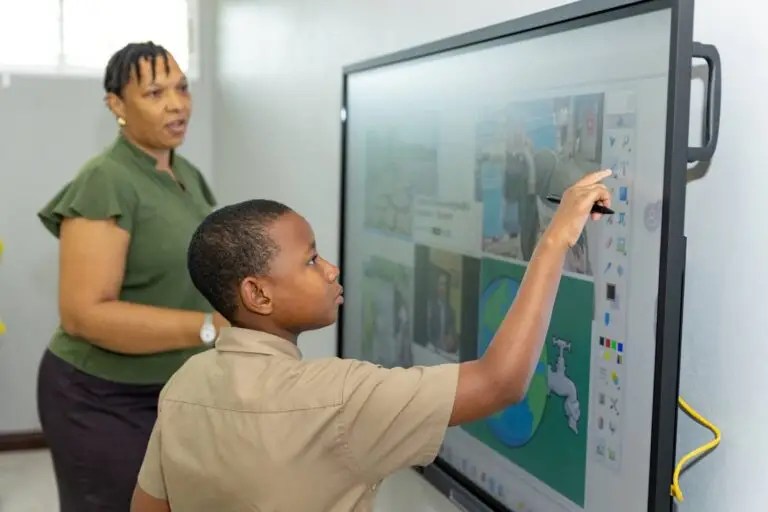
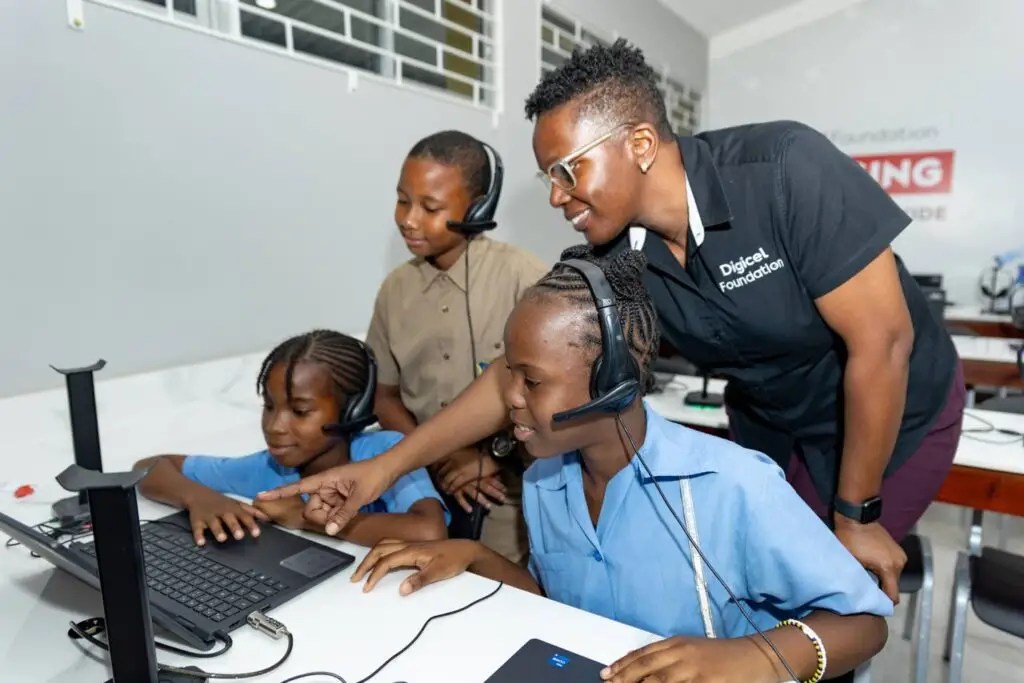
The Smart Labs, each outfitted with 24 laptops and a Mimio-compatible smart board,
are part of the Foundation’s commitment to ensuring that teacher training institutions
are equipped with modern tools to enhance teaching and learning outcomes.
Speaking at the handover ceremony of the Smart Lab at St. Joseph’s Teachers College
on Thursday, October 09, 2025, Charmaine Daniels, CEO of the Digicel Foundation,
said the investment reflects the Foundation’s dedication to building a more inclusive and
technology-driven education system.


“Teachers are the backbone of our society. Every doctor, engineer or scientist begins
with a teacher who believed in them. And today, in this digital age, we want to give our
teachers the tools that will make their work more impactful and more efficient,” Daniels
said. “This Smart Lab has been fully retrofitted and outfitted with advanced technology,
including 24 laptops and an interactive Smart Board powered by Mimio Studio
Educational software.”


At St. Joseph’s Teachers’ College, the newly installed Smart Lab has already been
embraced by faculty and students. Winsome Francis, Principal of St. Joseph’s Teachers’
College, expressed her gratitude for the initiative, noting its alignment with the college’s
mission to prepare 21st-century educators.


“This Smart Lab is a game-changer for our students,” said Francis. “It allows us to
expose future teachers to the technology they will use in the classroom, helping them to
innovate and connect with learners in new and exciting ways. We are thankful to the
Digicel Foundation for making this possible.”

Meanwhile, at The Mico University College, the second of the two Smart Labs was
officially handed over earlier this week. Dr. Asburn Pinnock, President of The Mico
University College, said the lab will enhance teaching practice.
“This Smart Lab embodies the intersection of education and technology that will now
serve as a powerful hub of creativity, collaboration and digital literacy,” Dr. Pinnock
stated. “The Lab will provide a dynamic space for teachers to explore innovative
teaching methods and a training ground for lecturers to model technology integration
and instruction.”


Representing the Ministry of Education, Skills, Youth and Information, Dr. Kasan
Troupe, Permanent Secretary, commended the Foundation for its continued partnership
and support of national education priorities.
“We applaud the Digicel Foundation for understanding the mission and vision of
transformation in education,” said Dr. Troupe. “This investment means that our teachers
will be equipped with the skillset to prepare our young people for the global digital
economy. As this lab comes available, I encourage our teachers to embrace the new
learning opportunity.”
The Smart Labs at St. Joseph’s Teachers’ College and The Mico University College are
the first two of five labs in teacher training colleges the Digicel Foundation will roll out
this financial year as part of its STEM and digital literacy programme.

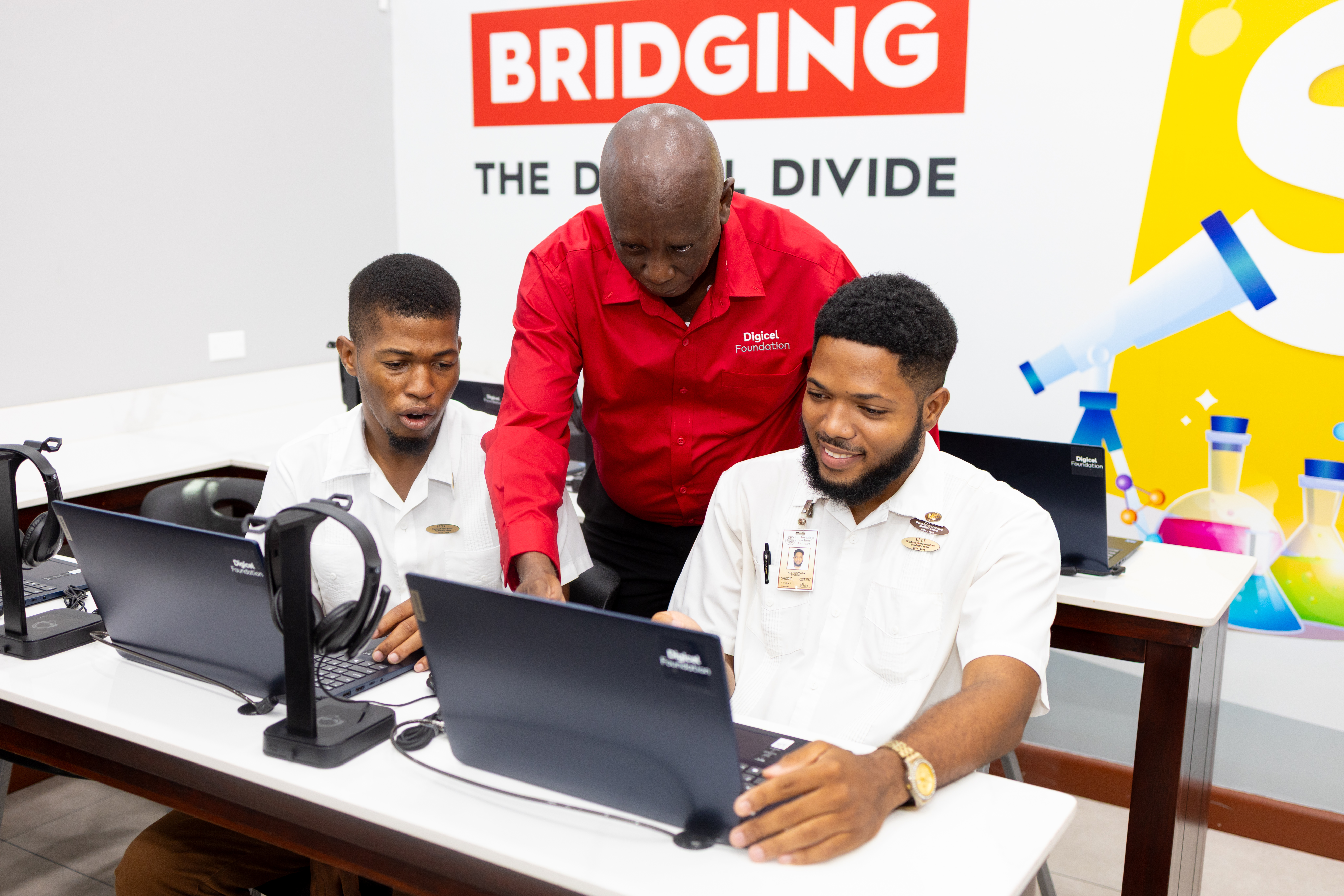
Digicel Foundation Board Director, Wayne
Smith, engages with St. Joseph’s Teachers’
College Student Union President, Sariek
Edwards (left), and Vice President, Alex
Hepburn, inside the newly opened Smart Lab.
The lab is the first of five being installed at
teachers’ colleges across the island.

Drone training innovation for Trench Town’s youth

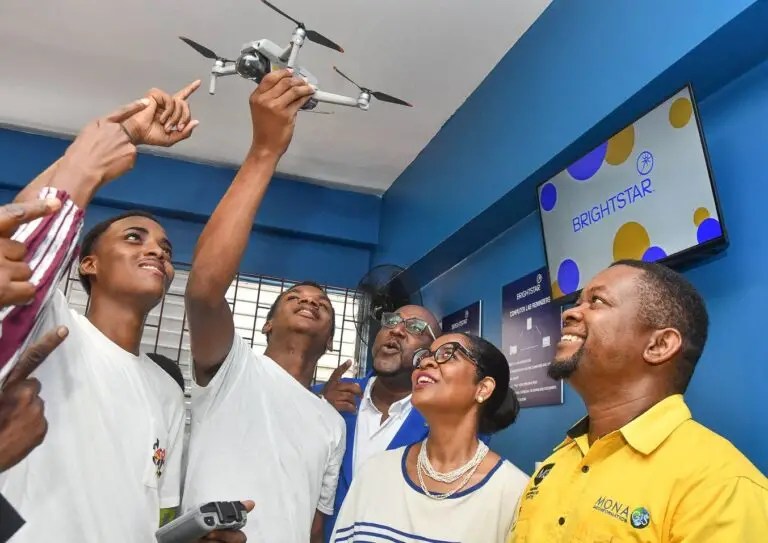
Trench Town youngsters Steve Lawrence (left) and Everton Levy enjoy their introduction to drone technology with Andrew Thomas (centre), senior telecom engineer at Brightstar, Debbie Green (second right), general manager Brightstar, and Luke Buchanan, executive director Mona GeoInformatics Institute.

A new chapter of technological innovation was unveiled in south St Andrew community of Trench Town on Tuesday as Brightstar Lottery Jamaica (BLJ) commissioned an after-school advantage centre, equipped to facilitate drone technology training for the youth in the area.

The handover ceremony, which was held at the Trench Town Community Development Committee (CDC), marked the company’s 15th donation of an after-school advantage centre and the beginning of its third annual drone technology workshop, an initiative aimed at equipping young people with hands-on experience in drone operations.

In the keynote address, general manager at BLJ Debbie Green pointed out how drone technology has been transforming the world and argued that this innovation was necessary to ensure that Jamaica’s youth are not left behind in the ever-changing nature of the technological world.

“Drone technology isn’t just some distant future. It is real, it is present, and it’s shaping industries right now. Drones are rewriting what is possible. The global drone market is projected to exceed US$100 billion within the next few years. The question is now: whether our young people will participate in this economy,” said Green.According to Green, she has high hopes for the possibilities of the centre and urged the youth in the community to make the most out of the opportunity they have been given.

“It’s not just about access to computers, it’s about access to emerging technologies while they’re still emerging. It’s about ensuring that our Caribbean youth aren’t merely consumers of innovation, but creators of it. To the students here today, you are part of a community that has always punched above its weight — that has always reached higher,” she said, as she underlined the Trench Town’s cultural significance as the hometown of musical legends Bob Marley, Peter Tosh, and several others.“That same creative audacity that placed Trench Town on the world map through music now positions you to put it on the map through technology. The opportunities before you are boundless. You are a part of a community that speaks boldness. Your actions here today require curiosity, courage, and commitment. This centre is your launch pad. These drones are your tools, but the altitude you reach, that’s for you to determine,” added Green.

In the meantime, Lascelles Page, who delivered the vote of thanks, said he was invigorated by Green’s words of inspiration.

Page told the Jamaica Observer he was excited to see innovation that can impact the youth in his community.

“I think it’s a great opportunity for youth to come and learn. The training is great especially with the computers being here too. So I’m really grateful for that, I love to see this because this is my hometown, I grew up here, you know? So seeing this is just… I really appreciate it,” said Page.

He added that his introduction to drone technology has now broadened his horizons and has given him new passions and dreams in terms of possible career routes.

With opportunity now at his fingertips, Page declared that he is determined to make the most of it.

“I feel like learning how to use and fly one of these drones will open up new career paths for me because, as I said, technology is the future. So there will be jobs, like at Grand Gala where they use the drones to do the lights, I think that’s great.

“Somebody has to be the one who controls all of those drones. So I feel like doing this will help me unlock that door to get into this field. It’s not something that I thought about before, so that’s why I think it’s a great opportunity for me,” said Page.

Lascelles Page delivering the vote of thanks as Brightstar Lottery Jamaica (BLJ) commissioned an after-school advantage centre, equipped to facilitate drone technology training for the youth in Trench Town.
Debbie Green (left), general manger Brightstar Lottery Jamaica, and Zann Locke acting president, Trench Town Community Development Committee, share the moment following the ribbon cutting to signal the opening of an after-school advantage centre, equipped to facilitate drone technology training for the youth in Trench Town on Tuesday.

Nearly 100 Caribbean Youth Transform Into Tech Innovators at Brightstar Lottery’s Milestone Fifth Coding Camp

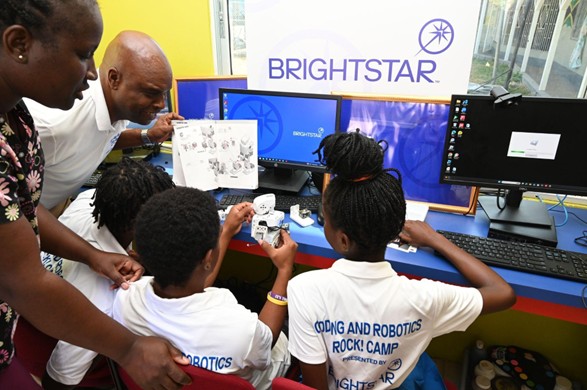
Students at the 2025 Brightstar Coding and Robotics Rock! Camp examine robotics components and reference materials under the guidance of staff volunteers and Centre Supervisors, developing technical skills through collaborative learning.

Brightstar Lottery (“Brightstar”), successfully completed its fifth annual Coding and Robotics Rock! Camp with 100 Caribbean students graduating from the programme. Comprised of students from five Caribbean territories – Jamaica, St. Kitts and Nevis, St. Maarten, Trinidad and Tobago and the US Virgin Islands – the Brightstar Coding and Robotics Rock! Camp proved that geography cannot limit Caribbean youth’s technological potential.

From July 14-25, students from Brightstar’s After School Advantage Centres immersed themselves in a cutting-edge curriculum developed with the Mona Geoinformatics Institute (“MGI”) at The University of the West Indies. Under the theme “Coding Opens Doors”, participants didn’t just learn technology – they became creators, innovators, and digital architects of the Caribbean’s technological future.

“The digital literacy gap isn’t merely a technological challenge; it’s a matter of economic sovereignty for Caribbean nations,” said Shelly Ann Hee Chung, Brightstar’s Director, Antilles. “Through our Coding & Robotics Rock! Camp, we cultivated a generation of innovative thinkers who transformed from technology consumers to creators, establishing a foundation for sustainable digital economies across our islands.”

The Coding and Robotics Rock! Camp featured two distinct learning tracks. Level 1 students mastered web development fundamentals, learning HTML for content creation, CSS for design, and JavaScript for interactivity. Their capstone projects included personalised websites featuring Home and About Me pages, Coding Careers pages exploring technology opportunities, Coding Tools pages highlighting development resources, and Contact Us pages – all inspired by the camp’s “Coding Opens Doors” theme.

Level 2 participants advanced into artificial intelligence (“AI”) and robotics, exploring AI applications, creating machine learning models using Google Teachable Machines, and building functional robots using VEX robotics platforms. Students engaged with cutting-edge technologies, including Robotic Process Automation and participated in VR.VEX virtual reality activities.

“In the rapidly evolving digital ecosystem, early exposure to computational thinking proves as fundamental as traditional literacy,” said Debbie Green,  General Manager, Brightstar Jamaica. “Our multi-island approach to the Coding & Robotics Rock! Camp demonstrates our commitment to democratizing access to these critical skills, ensuring that geographical constraints don’t limit any child’s opportunity to participate in the digital future.”

The programme’s success was measured not only in technical skills acquired but in the transformation of student perspectives on technology careers. Participants discovered how coding opens doors to industries ranging from healthcare and finance to entertainment and environmental conservation, directly addressing the Caribbean’s need for homegrown technology talent.

Throughout the camp, students worked in virtual breakout rooms, fostering collaboration across territories while building individual expertise. The programme’s hands-on approach yielded extraordinary results. Students created working web calculators, interactive image carousels, and AI models addressing everything from hurricane preparedness to sustainable tourism. Their final presentations demonstrated not just technical proficiency but creative problem-solving that directly addressed Caribbean realities.

“By designing content that’s accessible to students regardless of their technical background, we are helping to cultivate the next generation of innovators who can use mapping, software engineering, data analysis, and geospatial thinking to solve real-world problems in their communities,” said Luke Buchanan, Executive Director, MGI.

The 2025 Brightstar Coding and Robotics Rock! Camp’s success arrives at a crucial moment. As Caribbean governments prioritise digital transformation and seek homegrown technology talent, Brightstar’s investment in youth development provides exactly the skilled workforce these ambitions require.

This fifth annual achievement positions Brightstar as more than a technology company – it’s a catalyst for Caribbean excellence, proving that strategic investment in youth education yields transformational results that can benefit entire regions for generations to come.

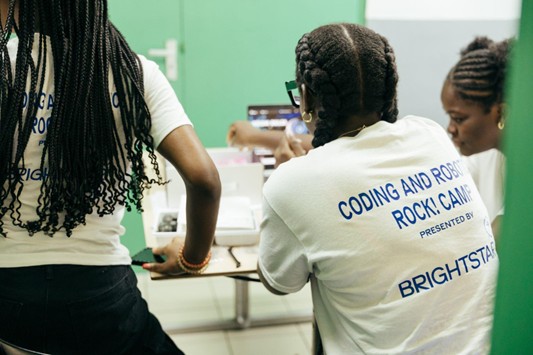
Students collaborate on coding projects during the 2025 Brightstar Coding and Robotics Rock!, developing essential digital skills via interactive technology education.

Caribbean Brain Gain: How Coding Initiatives Encourage Educated Youth to Stay Local

For decades, the Caribbean has watched its brightest talents migrate to the
United States, Canada, and the United Kingdom, pursuing opportunities that
seemed unattainable at home. However, a quiet revolution is unfolding
across our islands, one that is transforming the story of Caribbean youth and
their future prospects. Brightstar Lottery’s fifth annual Brightstar Coding & Robotics Rock! Camp, which took place from July 14 to 25, 2025, is more than just a technology
education programme—it’s a strategic investment in increasing brain gain in
our region.

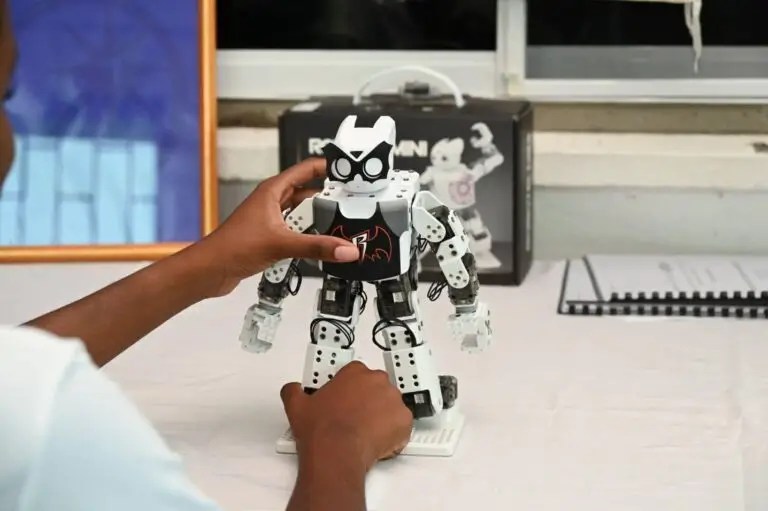
A student adjusts a humanoid robot during the fifth-annual Coding and Robotics Rock! Camp presented by Brightstar. The hands-on curriculum, developed in partnership with the Mona Geoinformatics Institute (MGI), is part of a STEM initiative aimed at fostering innovation and technological literacy among Jamaican youth

The concept of “brain gain” has become increasingly relevant as Caribbean
nations recognise that retaining educated talent is crucial for sustainable
development. Unlike traditional approaches that focus solely on economic
incentives, Brightstar’s innovative camp tackles the root cause: the
perception that meaningful technology careers do not exist in the Caribbean.
“We’re not just teaching students to code; we’re showing them that the
Caribbean can be a launchpad for global innovation,” explains Debbie Green,
General Manager of Brightstar Jamaica. “When young people see that they
can build cutting-edge robotics projects right here in Jamaica, work with
international partners like the Mona Geoinformatics Institute, and collaborate
with peers across the Caribbean, they begin to envision a future where
staying home means staying ahead.”


This year’s camp brought together over 40 students from five Caribbean
locations—Jamaica, St Kitts, St Maarten, Trinidad and Tobago, and the US
Virgin Islands. The programme’s theme, “Coding Opens Doors,” took on
greater significance when viewed through the lens of regional development.
These doors do not only lead to individual opportunities; they open pathways
to transforming entire economies.


The multi-island approach is especially crucial. Instead of creating isolated
pockets of expertise, the programme fosters a connected network of young
innovators who view themselves as part of a larger Caribbean tech
ecosystem. This interconnectedness is essential for brain gain, as it shows
that remaining in the Caribbean does not mean working in isolation.
Amarez Huggins Delashley, from the camp’s 2024 cohort, notes: “The camp
helped me to solve problems more easily: this made me think logically and
solve complex problems. For example, solving a Rubik’s Cube, putting
together a complex puzzle, etc. The Robotics Camp taught me multiple
shortcuts, which are now helping me to easily access and use computers.”
The economic implications are profound. Traditional Caribbean
industries—tourism, agriculture, and financial services—are increasingly
reliant on technology. Young people trained in coding and robotics are not

just prepared for hypothetical future jobs; they are enabled to innovate
within existing industries and to develop entirely new ones.

“We’re witnessing the emergence of a generation that sees technology as a
tool for Caribbean empowerment, not escape. These students are learning
that they can build international-standard solutions while addressing
uniquely Caribbean challenges. That’s the foundation of sustainable brain
gain,” says Green.
The camp’s collaboration with the Mona Geoinformatics Institute enhances
academic rigour and local relevance in the curriculum. Students are not
merely acquiring generic programming skills; they are investigating how technology can tackle Caribbean-specific issues, such as climate resilience,
disaster preparedness, and sustainable tourism.


“Our partnership with Brightstar represents a critical shift in how we
approach technology education in the Caribbean. By providing coding and
robotics training in real Caribbean scenarios, from hurricane tracking,
general software development and coastal monitoring to environmental
stewardship, at MGI we help students see that some of the most exciting
technological opportunities exist right here at home. These young innovators
are not just learning to code; they are learning to build solutions for the
Caribbean and beyond.”


Fun fact: students from other islands are already envisioning projects that
could assist with oil spill clean-up—something that is very important for our
environment here.
The programme’s success is measured not only by the technical skills gained
but also by the changed perspectives about the Caribbean’s potential.
Participants leave with more than just coding knowledge; they carry a vision
of the Caribbean as a place where innovation thrives and where young talent
is nurtured.


The broader After School Advantage programme, which operates 38 centres
across the English-speaking Caribbean, provides the infrastructure for this
transformation. These centres ensure that the camp’s impact extends well
beyond two weeks, establishing year-round communities of learning and
innovation.


Programmes like Brightstar’s camp offer a path forward that does not
require choosing between progress and place. By investing in technology
education that is both world-class and locally relevant, Brightstar is not just
training programmers—they are cultivating the architects of our region’s
digital future.
The true measure of success for initiatives like this will not be reflected in
graduation statistics or job placement rates, but in the young Caribbean
professionals who, in ten years’ time, will be leading technology companies, developing innovative solutions, and mentoring the next generation—all
while calling the Caribbean home.

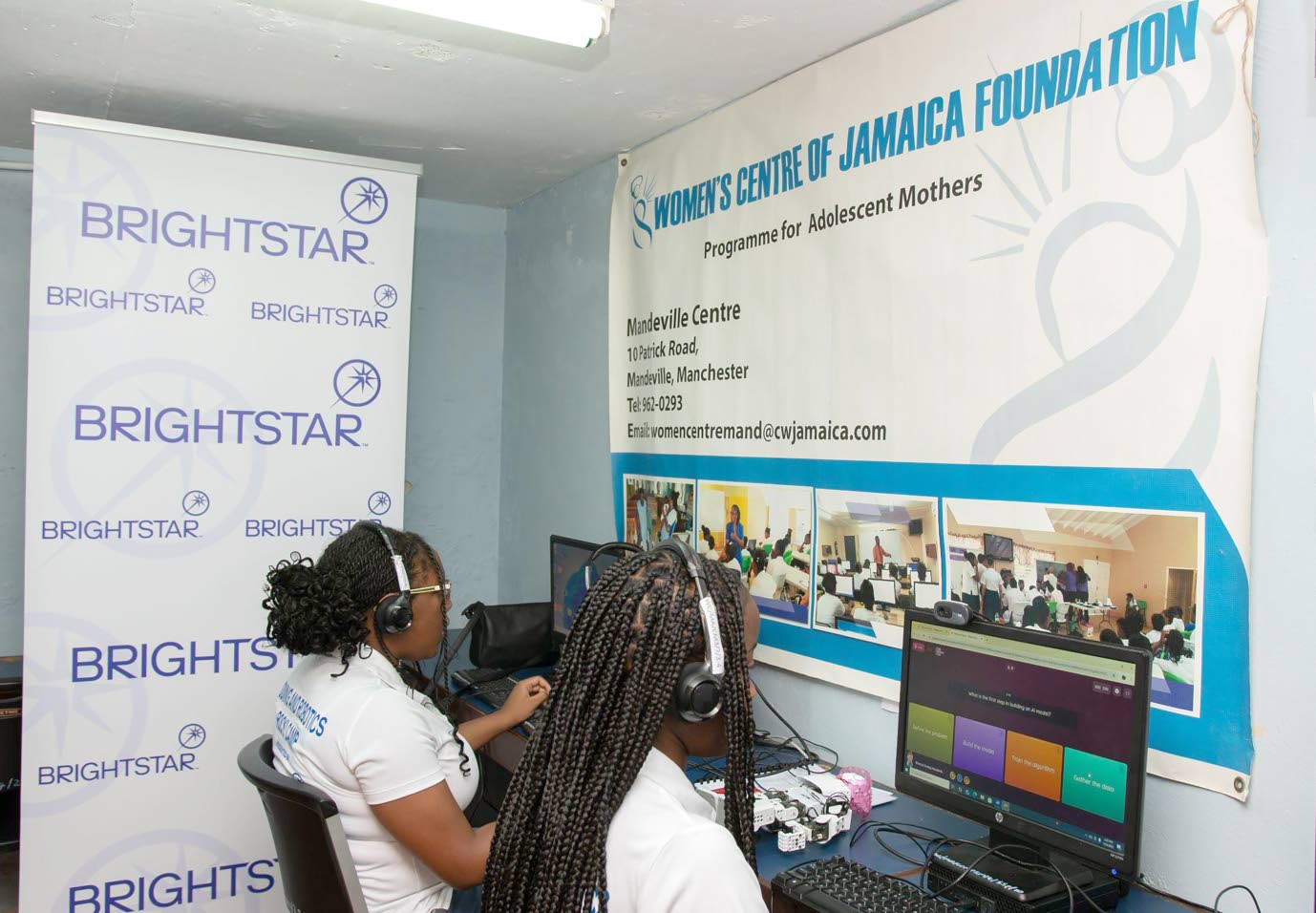
Students at the Women’s Centre of Jamaica Foundation’s Mandeville Centre participate in one of the Level II sessions during the 2025 Coding and Robotics Rock! Camp presented by Brightstar

Caribbean brain gain

How coding initiatives encourage educated youth to stay local

A student adjusts a humanoid robot during the fifth annual Coding and Robotics Rock! Camp presented by Brightstar. The hands-on curriculum, developed in partnership with the Mona Geoinformatics Institute, is part of a STEM initiative aimed at fostering innovation and technological literacy among Jamaican youth.

FOR decades, the Caribbean has watched its brightest talents migrate to the United States, Canada, and the United Kingdom, pursuing opportunities that seemed unattainable at home. However, a quiet revolution is unfolding across our islands, one that is transforming the story of Caribbean youth and their future prospects.

Brightstar Lottery’s fifth annual Brightstar Coding & Robotics Rock! Camp, which took place from July 14 to 25, 2025, is more than just a technology education programme — it’s a strategic investment in increasing brain gain in our region.The concept of “brain gain” has become increasingly relevant as Caribbean nations recognise that retaining educated talent is crucial for sustainable development. Unlike traditional approaches that focus solely on economic incentives, Brightstar’s innovative camp tackles the root cause: the perception that meaningful technology careers do not exist in the Caribbean.

“We’re not just teaching students to code — we’re showing them that the Caribbean can be a launchpad for global innovation,” explains Debbie Green, general manager of Brightstar Jamaica. “When young people see that they can build cutting edge robotics projects right here in Jamaica, work with international partners like the Mona Geoinformatics Institute, and collaborate with peers across the Caribbean, they begin to envision a future where staying home means staying ahead.”This year’s camp brought together over 40 students from five Caribbean locations — Jamaica, St Kitts, St Maarten, Trinidad and Tobago, and the US Virgin Islands. The programme’s theme, ‘Coding Opens Doors’, took on greater significance when viewed through the lens of regional development. These doors do not only lead to individual opportunities — they open pathways to transforming entire economies.

The multi-island approach is especially crucial. Instead of creating isolated pockets of expertise, the programme fosters a connected network of young innovators who view themselves as part of a larger Caribbean tech ecosystem. This interconnectedness is essential for brain gain as it shows that remaining in the Caribbean does not mean working in isolation.Amarez Huggins Delashley, from the camp’s 2024 cohort, notes, “The camp helped me to solve problems more easily; this made me think logically and solve complex problems. For example, solving a Rubik’s cube, putting together a complex puzzle, etc, the robotics camp taught me multiple shortcuts which are now helping me to easily access and use computers.”

The economic implications are profound. Traditional Caribbean industries — tourism, agriculture, and financial services — are increasingly reliant on technology. Young people trained in coding and robotics are not just prepared for hypothetical future jobs, they are enabled to innovate within existing industries and to develop entirely new ones.“We’re witnessing the emergence of a generation that sees technology as a tool for Caribbean empowerment, not escape. These students are learning that they can build international-standard solutions while addressing uniquely Caribbean challenges. That’s the foundation of sustainable brain gain,” says Green.

The camp’s collaboration with the Mona Geoinformatics Institute enhances academic rigour and local relevance in the curriculum. Students are not merely acquiring generic programming skills, they are investigating how technology can tackle Caribbean-specific issues such as climate resilience, disaster preparedness, and sustainable tourism.

“Our partnership with Brightstar represents a critical shift in how we approach technology education in the Caribbean. By providing coding and robotics training in real Caribbean scenarios — from hurricane tracking, general software development and coastal monitoring to environmental stewardship — at MGI we help students see that some of the most exciting technological opportunities exist right here at home. These young innovators are not just learning to code, they are learning to build solutions for the Caribbean and beyond.”

Fun fact: Students from other islands are already envisioning projects that could assist with oil spill clean-up — something that is very important for our environment here.The programme’s success is measured not only by the technical skills gained but also by the changed perspectives about the Caribbean’s potential. Participants leave with more than just coding knowledge, they carry a vision of the Caribbean as a place where innovation thrives and where young talent is nurtured.

The broader After School Advantage programme, which operates 38 centres across the English-speaking Caribbean, provides the infrastructure for this transformation. These centres ensure that the camp’s impact extends well beyond two weeks, establishing year-round communities of learning and innovation.

Programmes like Brightstar’s camp offer a path forward that does not require choosing between progress and place. By investing in technology education that is both world-class and locally relevant, Brightstar is not just training programmers — they are cultivating the architects of our region’s digital future.

The true measure of success for initiatives like this will not be reflected in graduation statistics or job placement rates, but in the young Caribbean professionals who, in 10 years’ time, will be leading technology companies, developing innovative solutions, and mentoring the next generation — all while calling the Caribbean home.

Students at the Women’s Centre of Jamaica Foundation’s Mandeville branch participate in one of the level II sessions during the 2025 Coding and Robotics Rock! Camp presented by Brightstar..

How new schools should be designed

Architect recommends flexible, adaptable spaces that foster critical thinking skills

Ravi Sittol, principal and founder of Sittol Architects and Associates, speaking at last Friday’s event staged by the National Education Trust (NET) at the Overseas Examination Commission to raise awareness of the new building standards code for schools in Jamaica. (Joseph Wellington)

A local architect has proposed that new school buildings be designed into flexible and adaptable spaces that foster critical thinking skills.

Ravi Sittol, founder and principal of Sittol Architects and Associates, made the recommendation in a presentation on Friday to raise awareness of the new building standards code for schools in Jamaica.The event, titled ‘Engage 360: The New Building Standards for Schools’, was hosted by the National Education Trust (NET) at the the Overseas Examination Commission in Kingston.

“We are speaking about integrative technology, inclusive design, comfort and well-being. Modern education increasingly moves beyond traditional teaching methods. Teaching methods are changing and we need to adapt, embracing more flexible, informal and collaborative learning spaces,” Sittol argued.“Learning is no longer confined to the classroom. Instead, it occurs across a variety of settings, encouraging exploration, creativity and connection. Learning…happens along the corridors, outside in the green areas where children are playing. They could be in the corridor where there is a breakout space,” Sittol suggested.

Pointing out that newer building models feature more adaptable furniture that can be changed to suit different lecture styles and settings, Sittol stated that in outdoor areas the setting does not have to be typical with a jungle gym and swing sets.He said the new building standards recommend “different materials and textures” so learning can happen in different locations.

Another design parameter highlighted by Sittol is the facilitation of future expansions at schools.

“You may plan for 500 students and as population increases and communities develop, you need to have modular designs, service distribution, structural consideration, master planning, vertical planning and growth, phase in plans and interim land views. The design of educational facilities must anticipate and accommodate future growth.

“Strategic planning during the initial design phase can ensure that buildings are capable of expansion, adaptation or reconfiguration without requiring major infrastructural alterations. These flexibilities support long-term cost efficiency, sustainability and responsiveness to changing academic demands,” he said.

Sittol also raised the issue of climate resilience, saying that newer buildings must be designed in a way to minimise economic loss and costly repairs during times of extreme weather.

“As Jamaica and the world confront the increasing impacts of global climate change, including rising air and sea temperatures and more intense hurricanes, there is a critical need to establish resilient building standards. Schools, especially in Jamaica which often serve as emergency shelters, must be designed to ensure the safety and protection of occupants during and after such events,” Sittol stated.

IGT Fuels Educational Technology Growth

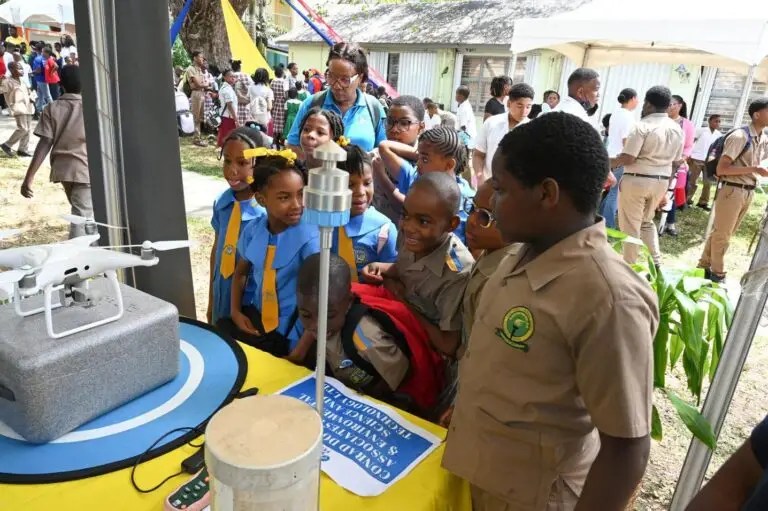
Young students from the IGT After School Advantage Centre at Dunrobin Primary School eagerly gather around a drone and meteorological equipment, engaging in hands-on learning about technology, weather forecasting, and environmental science at The UWI Faculty of Science and Technology’s Science Festival.

“Inever thought I could be a scientist until today,” whispered an awestruck student as she programmed a robot for the first time at The University of the West Indies (UWI) Science Festival. Her experience, alongside 49 other students from underserved communities, was made possible through International Game Technology’s (IGT) strategic investment in Caribbean educational technology (EdTech). The company strategically chose March 14 — Albert Einstein’s birthday and worldwide Science Education Day — for the students’ attendance, adding symbolic weight to an already transformative experience.

“EdTech is revolutionising education, and IGT is proud to be at the forefront of this transformation. Sponsoring ASA students for The UWI Science Festival is part of our broader mission to integrate technology into learning and create sustainable pathways for success,” said Debbie Green, general manager of IGT Jamaica.

After School Advantage (ASA) is the company’s flagship community initiative, devoted to providing youth with access to technology at digital learning centres in communities where IGT operates. The programme ensures students have access to participate in science, technology, engineering, and maths (STEM) educational opportunities while developing the knowledge and skills for the jobs of tomorrow. Since 2011, IGT and its subsidiaries have opened 40 ASA computer labs across the English-speaking Caribbean. As part of the company’s ongoing commitment to supporting its global communities, IGT aims to continually enhance the technological awareness of students and prepare them to contribute to the social and infrastructural development of the Caribbean.

The UWI Science Festival serves as a platform for students to engage with cutting-edge technologies and scientific concepts through interactive experiences. Professor Tannecia Stephenson, deputy dean of the Faculty of Science and Technology and lead on the Science Festival, emphasised the impact of IGT’s support.“IGT’s support enables more students, particularly in underserved schools, to participate in the Science Festival’s immersive STEM experiences. Through experiments, tours, and expert talks, students gain exposure to science applications and career paths. This investment nurtures future innovators poised to create solutions for global and regional challenges,” she said.

The festival is aligned with The UWI’s strategic approach to education and innovation.“The UWI’s Triple A strategy — Access, Alignment, and Agility — guides its approach to STEM education and innovation. The festival highlights research, industry partnerships, and technologies, engaging students from Jamaica and the Caribbean. This aligns with initiatives like the BOOST Scholarship programme for science teachers in underserved schools and the ‘FiWi Science’ initiative, which celebrates Jamaica’s scientific culture and legacy,” Professor Stephenson explained.

IGT’s sponsorship enables students from diverse backgrounds to access educational experiences that might otherwise be beyond their reach. By exposing them to emerging technologies and scientific advancements, the company is playing a crucial role in shaping the future workforce of the Caribbean.

“By exposing students to emerging technologies and scientific advancements, we are nurturing a generation of critical thinkers and problem solvers who will drive the Caribbean’s technological evolution,” Green added.

Through this partnership, IGT and The UWI are not only enhancing students’ technical skills but alsofostering an entrepreneurial mindset that will be essential for success in an increasingly digital economy. The initiative exemplifies how private sector involvement in education can accelerate the adoption of EdTech solutions and create opportunities for sustainable development across the region.

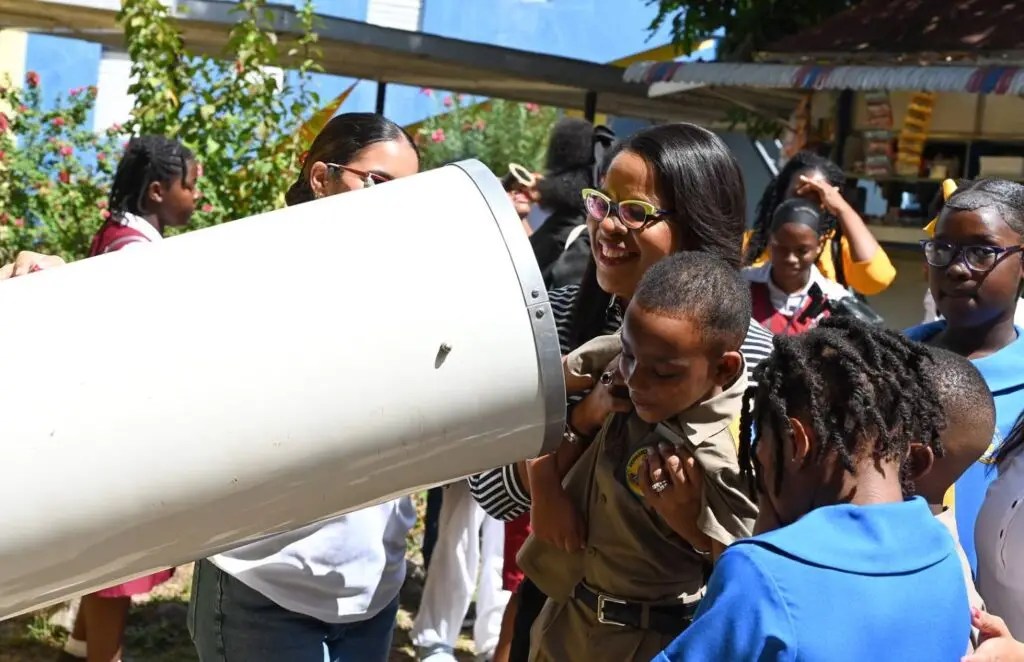
International Game Technology (IGT) Jamaica General Manager Debbie Green lifts a young student from the IGT After School Advantage Centre at Dunrobin Primary School for a closer look through a powerful telescope during the festival. Surrounded by his fellow students, this hands-on experience nurtures students’ love for astronomy and inspires the next generation to explore the wonders of the universe.

Digicel Foundation impacts thousands of students with SIT programme

Kavelle Hylton, Digicel Foundation SIT programme partner and CEO of STEM Builders Learning Hub, engages students at the Jessie Ripoll Primary School in interactive discussions on online safety.

The Digicel Foundation’s Safer Internet Together (SIT) programme has already impacted more than 5,000 students across Jamaica, equipping them with the knowledge to navigate the digital world safely and responsibly.

Launched on Safer Internet Day in February, the programme is now in its fifth week and has visited 20 primary and high schools, with a goal of reaching 150 schools by year-end. Kavelle Hylton, CEO of STEM Builders Learning Hub, who partners with Digicel Foundation to deliver the interactive lessons, highlighted the programme’s impact: “Technology is a powerful tool, but it must be used responsibly. Through the SIT programme, we are empowering not just students, but also parents, teachers, and community members with the skills they need to stay safe online.”

A dedicated volunteer team of nearly 200 Digicel employees, known as the SIT Squad, has been mobilised to support the initiative.Mona Heights Primary School Principal Alex Hepburn is among those commending Digicel Foundation for the initiative.

“The SIT programme has been invaluable in helping our students understand online safety. We want them to understand that there are certain nuisances in the online space and therefore it is very important to teach them how to navigate it responsibly,” said Hepburn.In the meantime St Jude’s Primary School Principal Susanna Ainsworth also expressed support for the programme.

“This initiative has empowered our students and staff to promote online safety, digital responsibility, and cyber awareness. We are thankful for the Digicel Foundation for its dedication to creating a safer online environment for our school community,” said Ainsworth.

The SIT programme is a holistic awareness and educational campaign that goes beyond the classroom.

In addition to engaging students, the initiative includes sessions for parents and teachers, helping them understand online risks and how to guide children in safe internet usage.

It also extends to business owners, service group members and the elderly, ensuring that digital literacy and cybersecurity awareness reach all generations.

The success of the SIT programme to date can be attributed in large part to the support of its partners, including Jamaica Public Service Company, Sunshine Snacks, Kool 97FM, and Macmillan Education.

Digicel Foundation opens St Elizabeth’s first smart lab

Deputy head boy of Santa Cruz Primary School Kemar Smith (right) explores the possibilities of the new smart lab, a cutting-edge space designed to enhance digital literacy as his teacher Kamala McKnight guides him.

THE Digicel Foundation has officially opened a state-of-the-art smart lab at Santa Cruz Primary School in St Elizabeth.

This innovative learning space is designed to bridge the digital divide and expose students to 21st-century skills and job opportunities.Charmaine Daniels, CEO of the Digicel Foundation, shared that while Santa Cruz Primary is the first school in St Elizabeth to receive a smart lab, it will not be the last.

“In a few days from now we will be right down the road at the Black River Primary School opening another smart lab and ensuring that even more students in St Elizabeth have access to cutting-edge technology and digital learning tools,” said Daniels.She shared that the lab will also serve as a hub for the foundation’s recently launched Safer Internet Together (SIT) programme, which aims to promote online safety and digital citizenship.

“As we introduce advanced digital technology in schools, it’s essential that we also educate our youths on how to use it safely and responsibly. That’s why we’ve proudly launched our SIT programme, a year-long initiative which will empower students, parents, and educators to navigate the online world confidently,” added Daniels.Senior education officer in the Ministry of Education, Youth, Skills and Information’s Region 5, Nevadeene Gallimore Miller, urged parents to continue learning beyond the smart lab.

“We want parents to assist us in ensuring that ICT [information and communication technology] penetration does not stop at the school gate. We want when your children come home with the information and the ideas that they would have been engaged in at school, that you support them,” said Gallimore Miller.

By the end of March 2025 there will be 21 smart labs established by Digicel Foundation.

Each lab costs approximately US$70,000 and is equipped with 12 laptops, 12 tablets, a printer, a smart door lock, and an interactive mimio-compatible smart board.

Since inception, Digicel Foundation has spent over US$2.5 million on projects in St Elizabeth. In 2023 the foundation opened the Santa Cruz Special Education Centre, a space dedicated to providing quality education and support for students with special needs in the parish.

Deborah Broomfield, construction project manager at the Digicel
Foundation, engages with students at Santa Cruz Primary School
inside their newly opened smart lab, which is set to transform
learning experiences, equipping students with essential digital skills
for the future.

IGT hosts 4th Coding and Robotics Rock! camp

Students from Mustard Seed Communities Mary’s Child (in white) learn about the fundamentals of robots in a coding session with Darren Fletcher, Technical Project Coordinator at Mona Geoinformatics Institute (MGI) while Luke Buchanan (left), MGI Executive Director, Debbie Green (centre), IGT General Manager and Kevin Johnson (right), MGI Software Developer watch attentively. This year’s staging of the Coding and Robotics Rock! Camp is hosted by IGT in collaboration with MGI. The virtual camp ran from July 15 – 26 with 72 participants from five Caribbean countries: Jamaica, Barbados, St. Kitts and Nevis, Trinidad and Tobago, St. Maarten. This is the fourth edition of the annual camp. (Photo: Contributed)

International Game Technology (IGT), a global leader in gaming technology and innovation, is pleased to announce the successful completion of its fourth annual IGT Coding and Robotics Rock! Camp for Caribbean youth, held July 15-26.

IGT partnered with the Mona Geoinformatics Institute (MGI) to host the virtual camp, under the theme “Climate Action.”

The camp serves as an extension of IGT’s global After School Advantage programme.

Debbie Green, general manager of IGT Jamaica, delivered remarks at the start of the camp, underscoring IGT’s commitment to digital learning and community empowerment.

“As part of IGT’s Sustainable Play programme, our After School Advantage initiative is devoted to providing youth with access to technology and promoting digital learning opportunities in the communities where IGToperates. This camp is a shining example of our commitment to these goals,” said Green.

Since its inception in 2021, this regional tech learning camp has seen remarkable growth. What began as a pilot programme for 36 participants across five countries has flourished into a signature IGT ASA project, significantly impacting our communities.

In 2022, the camp expanded to include a Level II component, increasing the cohort to 72 students at both the Introductory (Level I) and Intermediate (Level II) levels. Hundreds of Caribbean youth have gained valuable knowledge in coding and robotics through this camp. 

This year, students participated from Jamaica, Trinidad and Tobago, St. Kitts and Nevis, Barbados, and St.Maarten.

Jamaican participants hailed from Mustard Seed Communities – Matthew 25:40, Mary’s Child, and Jerusalem; Spring Village Development Foundation; and the Women’s Centre of Jamaica Foundation in Mandeville and Savanna-la-mar. Barbados participants were from The Learning Centre and the Rupert I. Maynard Youth Community Centre;  St. Maarten –  St. Maarten Youth Council; Trinidad and Tobago – Sophia House, Cotton Tree Foundation, Amica House and Credo Boys; and St Kitts and Nevis – Maude Crosse Preparatory School. 

This young man shared his progress from the day’s coding and robotics activity with Hilary Nembhard of SOS Children’s Village Jamaica’s Stony Hill location during the 2023 Coding and Robotics Rock! Camp. (Photo: Contributed)

The Level I course introduced students to the fascinating world of computer science, providing a foundational understanding of coding and computing, exploring careers in the industry, and developing essential skills such as website development and robotics.

Specifically, the Level I course aimed to:

  • Build awareness of coding and its applications.
  • Inform about potential careers for developers.
  • Develop basic computing and development literacy.
  • Teach the basics of computer programming.
  • Introduce website development.
  • Explore robotics.
  • Enhance problem-solving skills

For returning students in Level II, this year’s programme built upon the knowledge gained last summer, with afocus on more complex web development, including HTML, CSS, and JavaScript, and an introduction to artificial intelligence.

The Level II course aimed to:

  • Provide a refresher on last year’s content.
  • Improve website development skills with advanced techniques.
  • Introduce the principles of artificial intelligence.
  • Further develop problem-solving skills.

An exciting new feature of this year’s camp was the provision for the intermediate robotics class to develop hands-on robot creation.

Green encouraged students to embrace this learning adventure with enthusiasm and curiosity.

“The skills you acquire here will not only open doors to exciting career opportunities but also equip you to become innovators and problem-solvers in our ever-evolving digital world,” she said.

Green also extended heartfelt thanks to partners at MGI and the UWI team for their unwavering support and collaboration in making this camp a success.

“Your dedication to nurturing young minds and fostering technological skills is truly commendable,” she added.

Source: Our Today