Digicel Foundation Equips Teachers’ Colleges with State-of-the-Art Smart Labs

(L–R) Dr. Kasan Troupe, Permanent Secretary
in the Ministry of Education, Skills Youth and
Information; Principal of The Mico University
College, Dr. Asburn Pinnock; CEO of the
Digicel Foundation, Charmaine Daniels; and
Digicel Foundation Chair, Joy Clark, cut the
ribbon to officially open a Smart Lab at The
Mico University College. The lab is the second
of five being installed at teachers’ colleges
across the island.

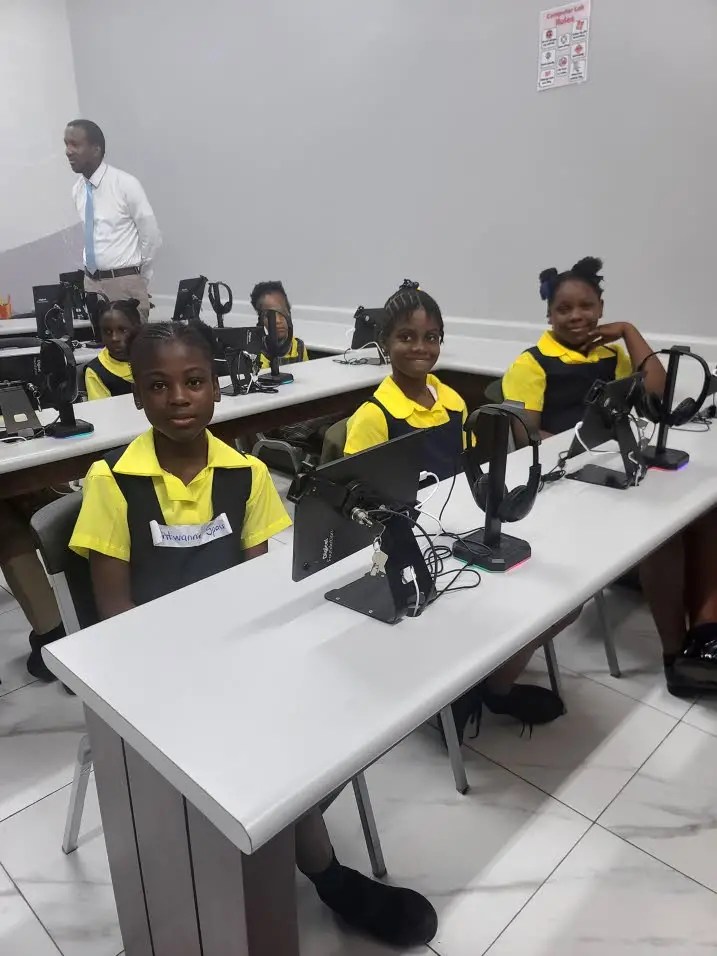
The Digicel Foundation has officially handed over two state-of-the-art Smart Labs to St. Joseph’s Teachers’ College and The Mico University College, marking another milestone in its mission to advance education through technology and innovation.


The Smart Labs, each outfitted with 24 laptops and a Mimio-compatible smart board,
are part of the Foundation’s commitment to ensuring that teacher training institutions
are equipped with modern tools to enhance teaching and learning outcomes.
Speaking at the handover ceremony of the Smart Lab at St. Joseph’s Teachers College
on Thursday, October 09, 2025, Charmaine Daniels, CEO of the Digicel Foundation,
said the investment reflects the Foundation’s dedication to building a more inclusive and
technology-driven education system.


“Teachers are the backbone of our society. Every doctor, engineer or scientist begins
with a teacher who believed in them. And today, in this digital age, we want to give our
teachers the tools that will make their work more impactful and more efficient,” Daniels
said. “This Smart Lab has been fully retrofitted and outfitted with advanced technology,
including 24 laptops and an interactive Smart Board powered by Mimio Studio
Educational software.”


At St. Joseph’s Teachers’ College, the newly installed Smart Lab has already been
embraced by faculty and students. Winsome Francis, Principal of St. Joseph’s Teachers’
College, expressed her gratitude for the initiative, noting its alignment with the college’s
mission to prepare 21st-century educators.


“This Smart Lab is a game-changer for our students,” said Francis. “It allows us to
expose future teachers to the technology they will use in the classroom, helping them to
innovate and connect with learners in new and exciting ways. We are thankful to the
Digicel Foundation for making this possible.”

Meanwhile, at The Mico University College, the second of the two Smart Labs was
officially handed over earlier this week. Dr. Asburn Pinnock, President of The Mico
University College, said the lab will enhance teaching practice.
“This Smart Lab embodies the intersection of education and technology that will now
serve as a powerful hub of creativity, collaboration and digital literacy,” Dr. Pinnock
stated. “The Lab will provide a dynamic space for teachers to explore innovative
teaching methods and a training ground for lecturers to model technology integration
and instruction.”


Representing the Ministry of Education, Skills, Youth and Information, Dr. Kasan
Troupe, Permanent Secretary, commended the Foundation for its continued partnership
and support of national education priorities.
“We applaud the Digicel Foundation for understanding the mission and vision of
transformation in education,” said Dr. Troupe. “This investment means that our teachers
will be equipped with the skillset to prepare our young people for the global digital
economy. As this lab comes available, I encourage our teachers to embrace the new
learning opportunity.”
The Smart Labs at St. Joseph’s Teachers’ College and The Mico University College are
the first two of five labs in teacher training colleges the Digicel Foundation will roll out
this financial year as part of its STEM and digital literacy programme.
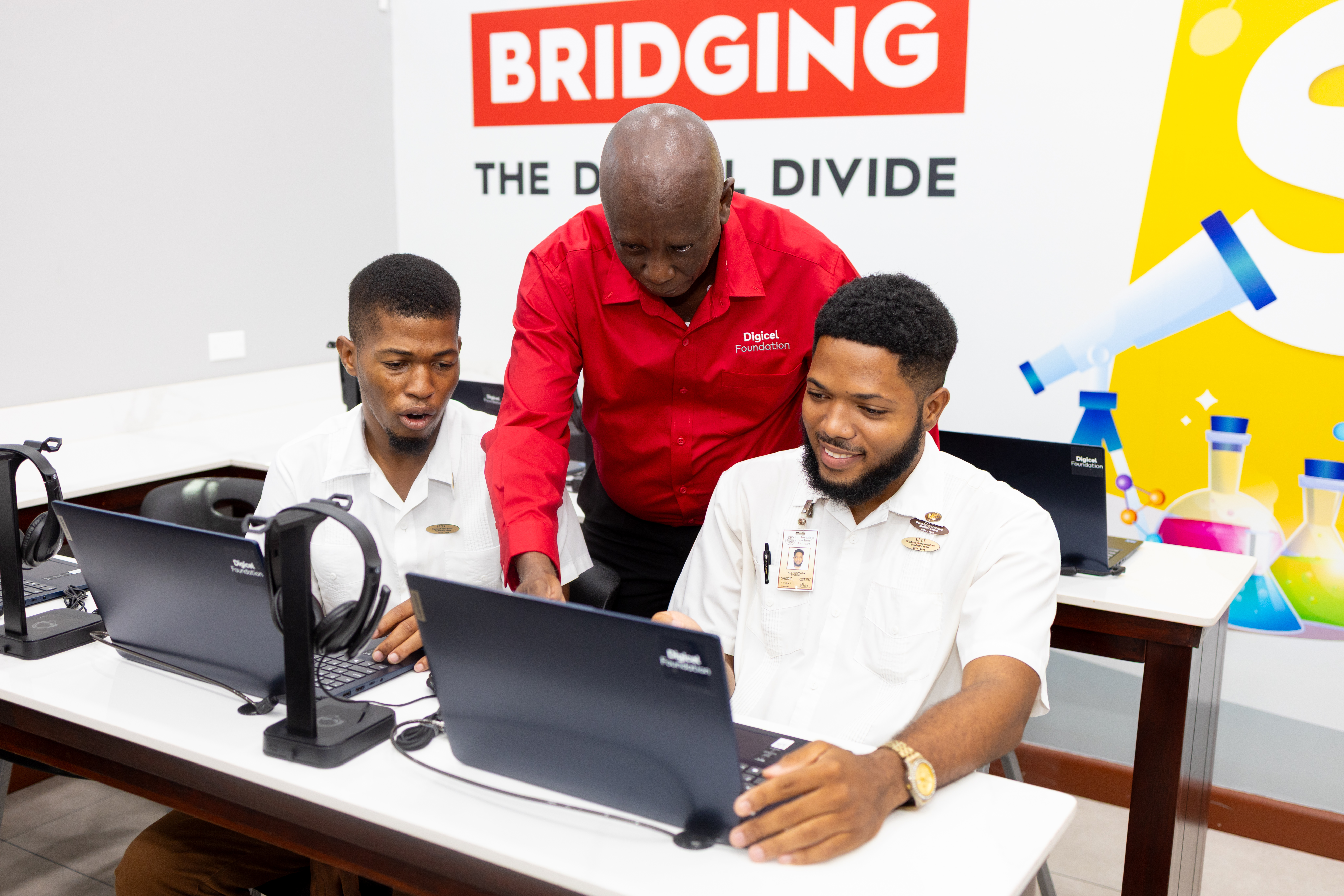
Digicel Foundation Board Director, Wayne
Smith, engages with St. Joseph’s Teachers’
College Student Union President, Sariek
Edwards (left), and Vice President, Alex
Hepburn, inside the newly opened Smart Lab.
The lab is the first of five being installed at
teachers’ colleges across the island.
Nearly 100 Caribbean Youth Transform Into Tech Innovators at Brightstar Lottery’s Milestone Fifth Coding Camp

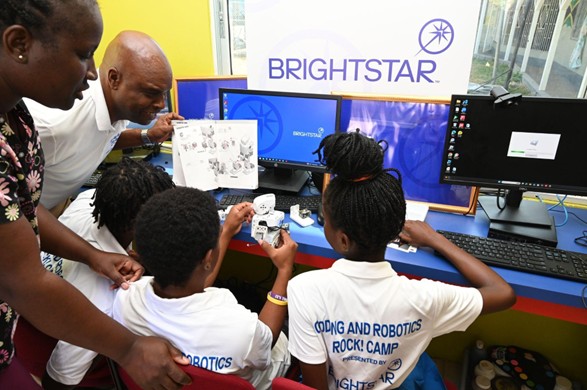
Students at the 2025 Brightstar Coding and Robotics Rock! Camp examine robotics components and reference materials under the guidance of staff volunteers and Centre Supervisors, developing technical skills through collaborative learning.

Brightstar Lottery (“Brightstar”), successfully completed its fifth annual Coding and Robotics Rock! Camp with 100 Caribbean students graduating from the programme. Comprised of students from five Caribbean territories – Jamaica, St. Kitts and Nevis, St. Maarten, Trinidad and Tobago and the US Virgin Islands – the Brightstar Coding and Robotics Rock! Camp proved that geography cannot limit Caribbean youth’s technological potential.

From July 14-25, students from Brightstar’s After School Advantage Centres immersed themselves in a cutting-edge curriculum developed with the Mona Geoinformatics Institute (“MGI”) at The University of the West Indies. Under the theme “Coding Opens Doors”, participants didn’t just learn technology – they became creators, innovators, and digital architects of the Caribbean’s technological future.

“The digital literacy gap isn’t merely a technological challenge; it’s a matter of economic sovereignty for Caribbean nations,” said Shelly Ann Hee Chung, Brightstar’s Director, Antilles. “Through our Coding & Robotics Rock! Camp, we cultivated a generation of innovative thinkers who transformed from technology consumers to creators, establishing a foundation for sustainable digital economies across our islands.”

The Coding and Robotics Rock! Camp featured two distinct learning tracks. Level 1 students mastered web development fundamentals, learning HTML for content creation, CSS for design, and JavaScript for interactivity. Their capstone projects included personalised websites featuring Home and About Me pages, Coding Careers pages exploring technology opportunities, Coding Tools pages highlighting development resources, and Contact Us pages – all inspired by the camp’s “Coding Opens Doors” theme.

Level 2 participants advanced into artificial intelligence (“AI”) and robotics, exploring AI applications, creating machine learning models using Google Teachable Machines, and building functional robots using VEX robotics platforms. Students engaged with cutting-edge technologies, including Robotic Process Automation and participated in VR.VEX virtual reality activities.

“In the rapidly evolving digital ecosystem, early exposure to computational thinking proves as fundamental as traditional literacy,” said Debbie Green,  General Manager, Brightstar Jamaica. “Our multi-island approach to the Coding & Robotics Rock! Camp demonstrates our commitment to democratizing access to these critical skills, ensuring that geographical constraints don’t limit any child’s opportunity to participate in the digital future.”

The programme’s success was measured not only in technical skills acquired but in the transformation of student perspectives on technology careers. Participants discovered how coding opens doors to industries ranging from healthcare and finance to entertainment and environmental conservation, directly addressing the Caribbean’s need for homegrown technology talent.

Throughout the camp, students worked in virtual breakout rooms, fostering collaboration across territories while building individual expertise. The programme’s hands-on approach yielded extraordinary results. Students created working web calculators, interactive image carousels, and AI models addressing everything from hurricane preparedness to sustainable tourism. Their final presentations demonstrated not just technical proficiency but creative problem-solving that directly addressed Caribbean realities.

“By designing content that’s accessible to students regardless of their technical background, we are helping to cultivate the next generation of innovators who can use mapping, software engineering, data analysis, and geospatial thinking to solve real-world problems in their communities,” said Luke Buchanan, Executive Director, MGI.

The 2025 Brightstar Coding and Robotics Rock! Camp’s success arrives at a crucial moment. As Caribbean governments prioritise digital transformation and seek homegrown technology talent, Brightstar’s investment in youth development provides exactly the skilled workforce these ambitions require.

This fifth annual achievement positions Brightstar as more than a technology company – it’s a catalyst for Caribbean excellence, proving that strategic investment in youth education yields transformational results that can benefit entire regions for generations to come.

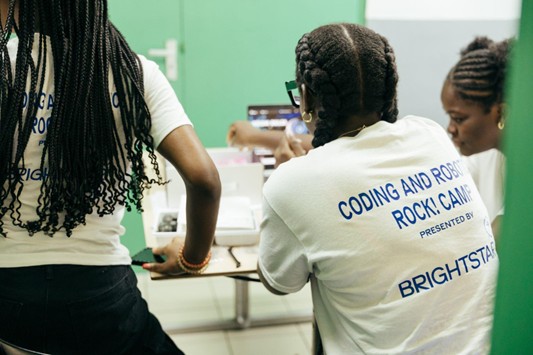
Students collaborate on coding projects during the 2025 Brightstar Coding and Robotics Rock!, developing essential digital skills via interactive technology education.

How new schools should be designed

Architect recommends flexible, adaptable spaces that foster critical thinking skills

Ravi Sittol, principal and founder of Sittol Architects and Associates, speaking at last Friday’s event staged by the National Education Trust (NET) at the Overseas Examination Commission to raise awareness of the new building standards code for schools in Jamaica. (Joseph Wellington)

A local architect has proposed that new school buildings be designed into flexible and adaptable spaces that foster critical thinking skills.

Ravi Sittol, founder and principal of Sittol Architects and Associates, made the recommendation in a presentation on Friday to raise awareness of the new building standards code for schools in Jamaica.The event, titled ‘Engage 360: The New Building Standards for Schools’, was hosted by the National Education Trust (NET) at the the Overseas Examination Commission in Kingston.

“We are speaking about integrative technology, inclusive design, comfort and well-being. Modern education increasingly moves beyond traditional teaching methods. Teaching methods are changing and we need to adapt, embracing more flexible, informal and collaborative learning spaces,” Sittol argued.“Learning is no longer confined to the classroom. Instead, it occurs across a variety of settings, encouraging exploration, creativity and connection. Learning…happens along the corridors, outside in the green areas where children are playing. They could be in the corridor where there is a breakout space,” Sittol suggested.

Pointing out that newer building models feature more adaptable furniture that can be changed to suit different lecture styles and settings, Sittol stated that in outdoor areas the setting does not have to be typical with a jungle gym and swing sets.He said the new building standards recommend “different materials and textures” so learning can happen in different locations.

Another design parameter highlighted by Sittol is the facilitation of future expansions at schools.

“You may plan for 500 students and as population increases and communities develop, you need to have modular designs, service distribution, structural consideration, master planning, vertical planning and growth, phase in plans and interim land views. The design of educational facilities must anticipate and accommodate future growth.

“Strategic planning during the initial design phase can ensure that buildings are capable of expansion, adaptation or reconfiguration without requiring major infrastructural alterations. These flexibilities support long-term cost efficiency, sustainability and responsiveness to changing academic demands,” he said.

Sittol also raised the issue of climate resilience, saying that newer buildings must be designed in a way to minimise economic loss and costly repairs during times of extreme weather.

“As Jamaica and the world confront the increasing impacts of global climate change, including rising air and sea temperatures and more intense hurricanes, there is a critical need to establish resilient building standards. Schools, especially in Jamaica which often serve as emergency shelters, must be designed to ensure the safety and protection of occupants during and after such events,” Sittol stated.

IGT Fuels Educational Technology Growth

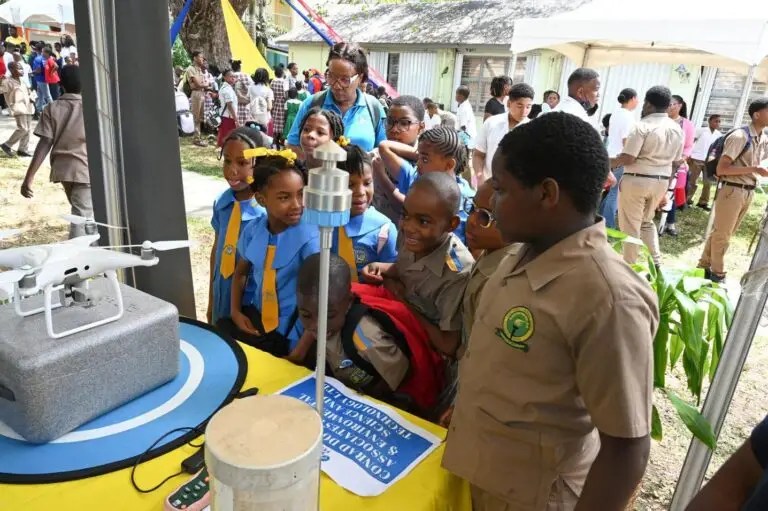
Young students from the IGT After School Advantage Centre at Dunrobin Primary School eagerly gather around a drone and meteorological equipment, engaging in hands-on learning about technology, weather forecasting, and environmental science at The UWI Faculty of Science and Technology’s Science Festival.

“Inever thought I could be a scientist until today,” whispered an awestruck student as she programmed a robot for the first time at The University of the West Indies (UWI) Science Festival. Her experience, alongside 49 other students from underserved communities, was made possible through International Game Technology’s (IGT) strategic investment in Caribbean educational technology (EdTech). The company strategically chose March 14 — Albert Einstein’s birthday and worldwide Science Education Day — for the students’ attendance, adding symbolic weight to an already transformative experience.

“EdTech is revolutionising education, and IGT is proud to be at the forefront of this transformation. Sponsoring ASA students for The UWI Science Festival is part of our broader mission to integrate technology into learning and create sustainable pathways for success,” said Debbie Green, general manager of IGT Jamaica.

After School Advantage (ASA) is the company’s flagship community initiative, devoted to providing youth with access to technology at digital learning centres in communities where IGT operates. The programme ensures students have access to participate in science, technology, engineering, and maths (STEM) educational opportunities while developing the knowledge and skills for the jobs of tomorrow. Since 2011, IGT and its subsidiaries have opened 40 ASA computer labs across the English-speaking Caribbean. As part of the company’s ongoing commitment to supporting its global communities, IGT aims to continually enhance the technological awareness of students and prepare them to contribute to the social and infrastructural development of the Caribbean.

The UWI Science Festival serves as a platform for students to engage with cutting-edge technologies and scientific concepts through interactive experiences. Professor Tannecia Stephenson, deputy dean of the Faculty of Science and Technology and lead on the Science Festival, emphasised the impact of IGT’s support.“IGT’s support enables more students, particularly in underserved schools, to participate in the Science Festival’s immersive STEM experiences. Through experiments, tours, and expert talks, students gain exposure to science applications and career paths. This investment nurtures future innovators poised to create solutions for global and regional challenges,” she said.

The festival is aligned with The UWI’s strategic approach to education and innovation.“The UWI’s Triple A strategy — Access, Alignment, and Agility — guides its approach to STEM education and innovation. The festival highlights research, industry partnerships, and technologies, engaging students from Jamaica and the Caribbean. This aligns with initiatives like the BOOST Scholarship programme for science teachers in underserved schools and the ‘FiWi Science’ initiative, which celebrates Jamaica’s scientific culture and legacy,” Professor Stephenson explained.

IGT’s sponsorship enables students from diverse backgrounds to access educational experiences that might otherwise be beyond their reach. By exposing them to emerging technologies and scientific advancements, the company is playing a crucial role in shaping the future workforce of the Caribbean.

“By exposing students to emerging technologies and scientific advancements, we are nurturing a generation of critical thinkers and problem solvers who will drive the Caribbean’s technological evolution,” Green added.

Through this partnership, IGT and The UWI are not only enhancing students’ technical skills but alsofostering an entrepreneurial mindset that will be essential for success in an increasingly digital economy. The initiative exemplifies how private sector involvement in education can accelerate the adoption of EdTech solutions and create opportunities for sustainable development across the region.

International Game Technology (IGT) Jamaica General Manager Debbie Green lifts a young student from the IGT After School Advantage Centre at Dunrobin Primary School for a closer look through a powerful telescope during the festival. Surrounded by his fellow students, this hands-on experience nurtures students’ love for astronomy and inspires the next generation to explore the wonders of the universe.

Schools urged to maximise use of smart labs

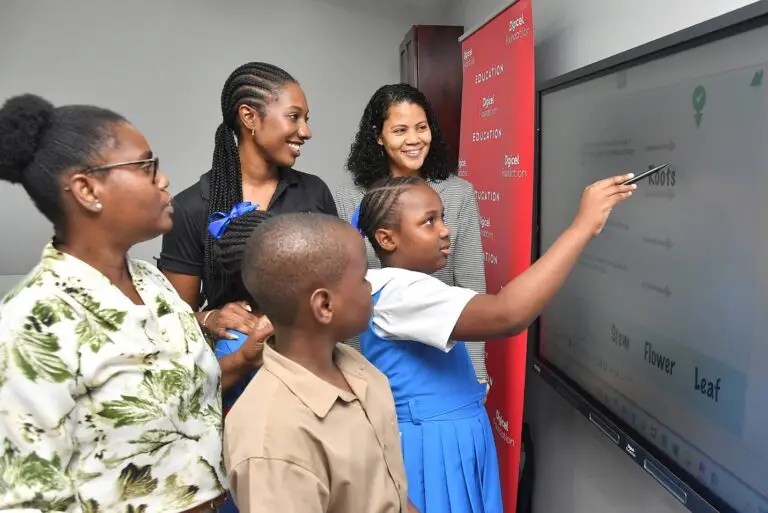
Amira Anderson of Mountain View Primary and Infant School interacts with the Coldax Smart touchscreen device donated by Digicel Foundation. Looking on from left are Mountain View Primary Principal Michelle Robinson, student Steve Richards, senior operations manager at Digicel Foundation Jodi-Ann McFarlene; and Leanne Spence, product training and development manager at Coldax Smart. Occasion was the official handing over ceremony of a smart lab by Digicel Foundation to Mountain View Primary and Infant School on Wednesday. (Photo: Naphtali Junior)

With Mountain View Primary and Infant School becoming the 12th school to receive a new smart lab from the Digicel Foundation, permanent secretary at the Ministry of Education Dr Kasan Troupe is urging teachers to maximise the use of technology in schools and give students more opportunities to engage with the devices.

“Teachers, do not be afraid of it. It is for use, for learning, for exploring,” she said at the handing-over ceremony of a smart lab on Wednesday at the Mountain View Primary and Infant School.

Dr Troupe expressed disappointment that, based on her observations, some schools have not been making full use of these devices mainly due to the fear of students damaging them. However, she is urging teachers to take a different approach by spending more time training students to use the devices instead of locking them away.

“I have had the opportunity to go into some schools and see the labs closed because teachers are fearful that the students will damage the equipment. We just need to train the students how to utilise the devices. But do not lock it away from the children. Please give them access, please excite them as they continue to champion their future with the support of the Digicel Foundation, the Ministry of Education, and the families who continue to partner in education,” she urged.

Dr Troupe used the opportunity to laud the Digicel Foundation for its support and commitment, especially with the challenges still affecting the education sector.

“Whenever you invest in education you invest in the future of our country and the Digicel Foundation has always been with us. When COVID came, we knew not what to do and we had our students with special needs who were at a disadvantage because they were out of the space, and the Digicel Foundation was the first entity to partner with the Ministry of Education to make sure that there was access to our students with special needs,” she saidAdditionally, enrichment programme specialist at the Ministry of Education Shauner Murray echoed Dr Troupe’s sentiments, emphasising the need to prioritise sustainability to ensure long-term durability of the devices.

“There ought to be a way to help stakeholders to understand the value of what they have so that after the initial planting of these seeds, these ventures can be sustained. Sustainability has to be a key aspect of our understanding. Sustainability is critical so that this immeasurable value will not just serve those who are current, but will serve those who are to come, especially the younger children entering grade one,” said Murray.

She urged parents, teachers and other representatives in the Ministry of Education to protect these investments and maximise their potential.

In the meantime, board chairman at the Mountain View Primary and Infant School Howard Chamberlain Jr expressed gratitude for the Digicel Foundation’s contribution, noting that the smart lab will have a positive impact on student performance at the school, especially in the Primary Exit Profile (PEP).

He said the lab will play a major role in bridging the digital divide among students at the school.

“We are placed in an area, in a community where the majority of the students that come to us are at-risk [and] majority of the students that come to us are from low-income families, and as such our role and our job is very important to ensure that we guide them on a path that they can further enrich their lives and develop their communities,” he said.

The lab, he added, is an important step for students and teachers to embrace the importance of involving more technology in schools.

“This smart lab comes at an important time where we are pivoting or shifting our focus to see how best we can push the use of technology in education here at Mountain View; we hear about AI coming up, kids using phones, and stuff like that, and we are having this tug-of-war with them, to push them to the sort of book and pencil that we grew up on, but the truth of the matter is that this generation has changed. They are far ahead of us and some of these technology and these intellectual programmes, we have to embrace them and find ways to include them in education,” he said.

The smart lab is outfitted with laptops, tablets and a smart board that will be used to facilitate teaching and learning at the school.

The Digicel Foundation smart labs project is an initiative aimed at equipping 21 schools across Jamaica with technology to enhance learning and bridging the digital divide in schools.

Source: Jamaica Observer