Environmental sustainability begins with you

Beach clean-ups are one of the ways we can positively impact the environment.

Dear Editor,

Our natural environment is facing unprecedented threats. Phenomena such as climate change, deforestation, and pollution threaten the delicate balance of our planet’s ecosystems.

More than ever the importance of environmental sustainability cannot be overstated. It is our moral responsibility to protect and preserve our fragile ecosystems. While large-scale initiatives and policy changes are vital, it’s essential to recognise that everyday actions can collectively create significant change.

Here are a few ways we can each play our part in ending environmental neglect:

*Reduce, reuse, recycle: Reducing, reusing, and recycling can be one of the most effective ways we can save natural resources, protect the environment, and save money. One way to reduce is to reuse. Instead of using plastic bags, bring reusable bags when shopping or packing food. Recently, the Digicel Foundation, under its environmental campaign called Good Energy, Clean Environment, revamped its staff initiative to collect and recycle plastic bottles. You too can reduce plastic and waste by improving recycling habits at home, school, and work.

*Conserve energy: There are small habits in our daily lives that can help to conserve energy. These acts include turning off lights, appliances, and electronics when not in use.

Earlier this year, the Government began the phasing out of the importation, export, manufacture, distribution, and sale or purchase of incandescent light bulbs. Jamaicans will soon have to switch to light-emitting diode (LED) bulbs. The switch to more energy-efficient bulbs can significantly lower electricity consumption and reduce greenhouse gas emissions.

*Beach clean-ups: Digicel Foundation’s annual beach clean-ups on International Coastal Cleanup (ICC) Day, which will be celebrated on September 16 this year, are not just about removing debris from shorelines, they are symbolic acts of care for our oceans and a reminder of the urgent need to reduce our plastic consumption. These clean-ups educate volunteers to reduce single-use plastics, promote responsible waste disposal, and raise awareness about the devastating impacts of pollution on marine ecosystems. Persons can visit the Jamaica Environment Trust’s (JET) website to learn how they can participate in ICC Day.

*Educate yourself and others: I cannot stress enough the importance of staying informed about environmental issues, sharing your knowledge with friends and family, encouraging conversations about sustainability, and advocating for informed decisions.

Simple, everyday actions can create a more sustainable world. Ultimately, these actions will not only improve the environment but also inspire others to join in the effort, leading to a brighter and greener future for all.

Miguel “Steppa” Williams

Director of strategic planning and community development

Digicel Jamaica Foundation

Source: The Jamaica Observer https://www.jamaicaobserver.com/letters/environmental-sustainability-begins-with-you/


Digicel Foundation donates STEM kits to Spanish Town High

The Digicel Foundation is helping to improve students’ performances in the science, technology, engineering and mathematics (STEM) areas with the donation of equipment and educational material to boost the Spanish Town High School’s science lab and STEM programme.

The donation was made possible through a $3,000,000 partnership between the Digicel Foundation and the University of the West Indies (UWI) Building Out Our STEM Teachers (BOOST) programme.

Speaking at the handover ceremony held recently, Dr Andre Coy, associate dean for external engagement in the Faculty of Science and Technology at the UWI, Mona, shared that the STEM kits will equip students with the tools and resources necessary to excel in the rapidly evolving fields of science and technology.

Dr Coy said, “We get the best STEM teachers and we put them in schools that want to do STEM but don’t necessarily have the resources to do so. They don’t have the number of teachers they need and they don’t have the equipment they need. The BOOST programme is aimed at nurturing these schools.”

EQUIPMENT

The donated equipment includes advanced robotics kits, scientific laboratory apparatus, computer programming tools, and interactive learning materials.

According to Dr Coy, Digicel Foundation’s investment will contribute to the purchasing of STEM equipment benefiting participating BOOST schools across Jamaica. He said, “We recognised we needed a partner to help us with equipping the science labs and the Digicel Foundation did not hesitate. Once they heard STEM, they said yes.”

Acting Principal of Spanish Town High, Leopold Porter, expressed gratitude for the donation, emphasising the transformative effect it will have on the students and the community. “Thank you so much for coming to Spanish Town High and for seeing a need and filling that need. This is where the village, the community, the businesses and institutions make a marked difference in their lives. That out of this kind gesture, even more interest in will be taken in their academics in STEM and they will be the better for it, Spanish Town as a community will be better for it,” he said.

Meanwhile, Shadae Smith, the science teacher at Spanish Town High School, described her experience teaching science as ‘life-changing’. “I have learned to be patient and how I can use little and stretch it to be so much. I have been nurturing the minds of young scientists while also growing and developing the passion and love I have for STEM.”

Miguel ‘Steppa’ Williams, director of strategic planning and community development at the Digicel Foundation, said the equipment donation represents Digicel Foundation’s unwavering commitment to promoting equitable access to quality STEM education.

“STEM is something that is core in what we invest in. It’s good to invest in this level at the tertiary level, hitting the high school level, while we continue to work with the primary age, and continue to work across the community-based organisations.”

The UWI BOOST programme was conceptualised by the Faculty of Science and Technology to enhance STEM education in Jamaica by providing a continuous stream of quality science and mathematics teachers through an innovative ‘back-end’ incentivised scholarship scheme.

The programme is being executed in collaboration with the National Baking Company Foundation, the Faculty of Humanities and Education, the Office of Student Financing, The Mico University College, the Students’ Loan Bureau, the Jamaica Teaching Council, the National Education Inspectorate, the American Friends of Jamaica, NCB Foundation and Chemical, Medical and Scientific Supplies Limited.

Source: Jamaica Gleaner | Digicel Foundation donates STEM kits to Spanish Town High

Corporates to the Rescue

Excerpt from the Jamaica Observer column published Monday, March 22, 2021

By Jean Lowrie-Chin

Reports that some The University of the West Indies students who were recently in quarantine at a campus residence were short on food got a quick response from corporate donors. Their good spirits were soon restored thanks to the generosity of Caribbean Broilers, GraceKennedy, Island Grill, Jamaica Broilers, National Baking Company, Wisynco, Rainforest, and Tastee. Gratitude to Minna Israel, special advisor to the vice chancellor for her nimble coordination.

Food For The Poor assists corn farmers

For hundreds of farmers across Jamaica, a single bag of corn seeds represents a great improvement not only for the quality of their harvest, but also for the betterment of their lives.

More than 1,200 bags of corn seeds were donated by Food For The Poor Jamaica to be distributed through the Jamaica Agricultural Society and the Rural Agricultural Development Authority across all parishes.

Omar Dennis, a farmer of 15 years, has seen positive changes since he received the seeds in August 2016.

Dennis, who is the sole breadwinner of his family, said reaping the produce from the donated corn seeds has benefited his family. In the past, he sometimes struggled to send his two children, ages 8 and 11, to school due to lack of funds.

“Now I am sure that I will be going home with money for my family. It feels good to know that I am able to provide food for them and I am sure that my children can go to school,” Dennis said.

Dennis expressed gratitude to Food For The Poor Jamaica for providing the seeds, which he could not afford to buy.

Corn seeds are very expensive. One bag of corn seed would actually cost us approximately J$30,000, so it is really a great venture,” he added.

Dennis Roberts, who has farmed for 30 years, expressed happiness with the high-quality crop that the corn seeds produced.

“It’s among the best quality that we have seen since planting corn for over the last 20 years,” he said.

Roberts added that the corn was able to survive the drought and resist diseases better than what he had grown in the past.

He also praised the charity for its contribution to farmers.

“We will save as a result of not having to purchase fertilisers, which means we will earn a greater profit,” Roberts said.

David Mair, executive director of Food For The Poor Jamaica, said the charity and its donors recognise the importance of agriculture to Jamaica’s development.

“Distributions such as this and our continued support of members of the agricultural sector represent our belief that agriculture is critical to Jamaica achieving socioeconomic growth,” Mair said.

Food For The Poor Jamaica contributes to farmers across Jamaica through its agricultural ministry and a number of initiatives.

ffp-3

Source: http://jamaica-star.com/article/news/20170130/food-poor-assists-corn-farmers

Food For The Poor Going Places

ffp-2

In 35 years of operation, the role of Food For The Poor (FFP) Jamaica, as well as the scope of its operations, has grown significantly as the charity continues to enable and enrich beneficiaries within and far beyond local shores.

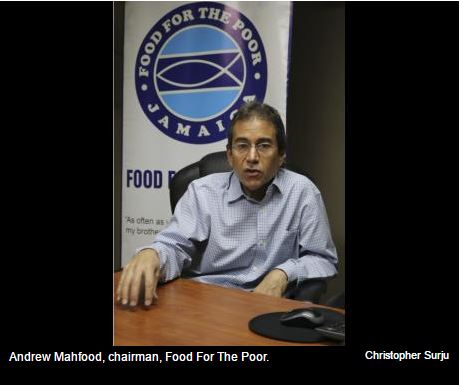
As news of the humanitarian crisis in Haiti spread, following the widespread devastation by Hurricane Matthew last October, Jamaicans turned to FFP as a channel for their good intentions, a situation which Chairman Andrew Mahfood admits caught him off-guard.

“The Haiti relief, that was amazing. We started to get a couple calls right after the hurricane, and I am not sure if it’s because of how close it came to us, but the outpouring of support from Jamaica to us, to give to Haiti, was something we hadn’t seen before. Seventeen containers were shipped and J$12 million raised,” Mahfood told The Gleaner.

From humble beginnings at Emerald Road, Kingston, from which goods brought into the island through the Catholic Relief Service in 1982 were distributed, the phenomenal growth of the local chapter of this charitable non-profit organisation has been consistent with that of its parent company. Food For The Poor is the largest charity organisation in Jamaica, with Food For The Poor Incorporated, located in Florida, United States of America (USA), being the largest international relief and development organisation in the USA, assisting the poor in 17 Latin American and Caribbean countries.

“We did start as Food For The Poor, giving away food, but now the objectives of the organisation are so vast – housing, medical, social outreach, education, prison ministries, water and sanitation and agriculture,” the chairman explained.

He offered an explanation as to why more donors are looking to share of their bounty through the non-denominational entity. “I think what is happening is that we are connecting more with corporate Jamaica and through the good efforts of the media and the reporting on all the stuff that we do, that connection is growing. They are seeing the wide range of things that we are doing.”

People flock from far and wide to the head office of Food For The Poor (FFP) Jamaica at Ellerslie Pen, Spanish Town, in St Catherine, as soon as the doors open, from Monday to Friday.

There, some 135 staffers comprising what FFP Chairman Andrew Mahfood describes as “a good team out there” attend to the varied requests for assistance.

Investigators are the first responders, whether it’s a request for immediate help from a fire victim or to build a home for a family.

“Somebody has to actually go and visit the premises and say, ‘Yes, we’ve been to the location and we’ve seen the conditions they live under.’ So we get the picture and all of us see that it’s a genuine case,” Mahfood told The Gleaner.

Individuals seeking help may contact the organisation directly or through a church in their area, a pastor, justice of the peace, or member of parliament. However, FFP is working to help Jamaicans to help themselves, as well as others, Mahfood explained.

“The organisation has always felt that we have to get our recipients self-sufficient and into projects that are sustainable for them to provide an income. We believe that Jamaica provides a great opportunity for recipients to come together – either in a community and do a big agricultural project. Food For The Poor has the ability to fund those projects – put in homes, to put in, say, a community centre, to put in a place where people can go and pray, as well as schools. These are things that it can do in these communities.”

Source: http://jamaica-gleaner.com/article/lead-stories/20170130/food-poor-going-places

Gleaner Honour Awards A Big Deal, Say Recipients

gleaner-awards

Being recognised by The Gleaner through its annual Honour Awards carries a lot of weight. Representatives of four category winners – the Jamaica Public Service Company (JPS) for science and technology; the Calabash International Literary Festival for arts and culture; Food For the Poor, recipient for voluntary service; and National Commercial Bank for education – made that clear during yesterday’s second of three category luncheons hosted by the media house at its North Street, central Kingston, head office.

On Monday, February 20, The Gleaner will choose from the awardees the man, woman or company deemed best to have contributed significantly to improving Jamaica’s quality of life, at any time in the preceding 12 months, or is likely to bring about such a change in the immediate future.

For those honoured yesterday, the recognition has been invaluable.

“Clearly, when anybody in the arts is acknowledged for the work they do, it’s a big deal, because there is no monetary reward in the arts. So what you hope and pray for is that your work makes a difference in other ways. So when you get an award such as this one, it allows you to get more recognition, more prominence to be able to do work that you may not have been able to do otherwise. It gives you legitimacy and a stamp of approval that is so important in the arts,” Justine Henzell, co-founder and producer of the Calabash International Literary Festival, shared.

Andrew Mahfood, chairman of Food For the Poor, said it would serve as motivation to do even more for its charges.

“The organisation is humbled by this award from The Gleaner for voluntary service. We have a lot of work to do [because] there are a lot more people who are living in poverty conditions and we hope to be able to help them,” he disclosed.


Goes Way Beyond JPS


Meanwhile, Gary Barrow, chief technology officer for the JPS, spoke to the far-reaching impact of the award.

“We are really very excited because we think that this goes way beyond JPS. We are fortunate that the introduction of the new technology actually allows us to help Jamaica in terms of growth and prosperity, which is a critical part of our vision statement – that we are the people unleashing Jamaica’s growth and prosperity. So we understand the role energy plays in economic growth and we believe there is a really big opportunity out there to help us to use technology to accelerate that growth.”

Author Marlon James was also recognised with a special award in the arts and culture category.

The final category award luncheon is slated for Wednesday, February 1, when winners in the categories public service and business will be recognised, ahead of the February 20 grand gala event at The Jamaica Pegasus hotel in New Kingston.

christopher.serju@gleanerjm.com

22 Prisoners Get Early Release – Food For The Poor Pays Fines For More Non-Violent Inmates

ffpj-prison-release

Twenty-two inmates of the island’s prisons are now back with their families, having secured early release through the generosity of donors of the international relief and development organisation, Food For The Poor.

For more than 18 years, Food For The Poor has secured the release of non-violent offenders in Jamaica by paying their fines at Christmas and Easter. This act of kindness is also done for inmates in Guyana, Haiti, and Honduras.

Every year, poor Jamaicans are imprisoned for minor, non-violent offences because of their inability to pay their court fines, even if the amounts they are fined are minimal.

PRAYERS ANSWERED

The prayers of a former inmate in the St Catherine Adult Correctional Centre were answered when he was told that he would be freed late last year after being unable to pay his fine. Most of his money had been used to take care of his sick mother.

“It’s always just me and my mother. When I actually realised that I was going to be locked up, I couldn’t believe that this was happening to me but I prayed a lot and asked God to just keep me out of trouble and keep me sane so I could one day see my mother again,” said the non-violent offender.

According to the former inmate, Food For The Poor’s kindness in paying his fine has renewed his belief and hope in God.

“Food For The Poor coming to pay my fine today so that I can go home to my mother proves to me that God is real,” added the inmate.

Another former inmate broke down in tears when her name was announced as one of the persons whose fines had been paid by the charity.

“When I heard my name, I thought I was being asked to do an item on the programme. Little did I know it was much more than that. When the announcement was made the tears just started to flow, and I couldn’t stop crying,” she said.

David Mair, executive director of Food For The Poor Jamaica, said the prison release tradition is one that the organisation intends to continue because of the impact it has on inmates.

http://jamaica-gleaner.com/article/news/20170122/22-prisoners-get-early-release-food-poor-pays-fines-more-non-violent-inmates

Food For The Poor assists family, elderly with houses

ffp-house

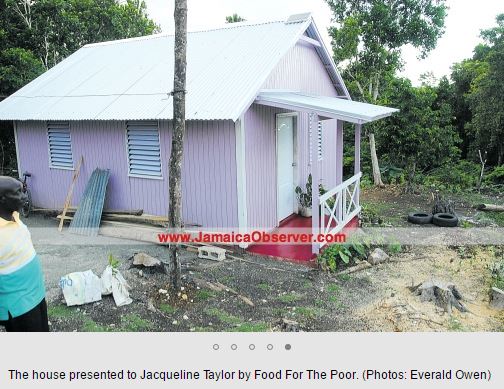
A Portland family and an elderly man are the latest beneficiaries of houses from philanthropic organisation Food For The Poor (FFP) after their plight was highlighted by the Jamaica Observer North East in 2015.

The family of four, which includes a wheelchair-bound man, was desperately in need of a house to get out of the crammed space they shared in the back room of a relative’s house in Waybridge, Portland, for years.

Observer North & East reported in 2015 that Jacqueline Thompson, her two daughters and her physically challenged son all shared a single bed in a room which an aunt allowed them to stay in, after they had been living in the garage for some time.

At the time, Thompson stressed that she needed help to get back on her feet.

“I am feeling happy about getting my house. I thank God as I can’t leave him out,” she said.

Thompson also thanked justice of the peace and pastor of the Church of God in Christ at Long Road, Roy Titus, who tried desperately to get assistance for the family. He described their situation as “dire,” then.

She also thanked the Ministry of Housing for the land space, Food For The Poor for the house, the Observer for highlighting her need, and the parish council and the National Insurance Scheme for their assistance.

“I am a happy person now. It was a long and horrible wait; I cried sometimes. The children are very happy, especially my son Okeno,” Thompson shared.

The house, which is located at Darlingford Housing Scheme in Manchioneal in the parish, was handed over last October. Thompson said FFP has also pledged to donate furniture.

A visually impaired elderly man was also the beneficiary of a house from FFP.

Urnal Taylor lived in a dirt-floor, one-bedroom house in Boston in the parish for years, before FFP read of his plight in the

Observer and presented him with the keys for a new house.

“This house is beautiful as much as mi can’t see it. I am comfortable and mi have space. Thanks to all the people who helped me, and the gentleman here, Pastor Titus. The blessings on his shoulders can’t come off. Welcome; welcome,” he said with a broad grin on his face.

http://www.jamaicaobserver.com/regional/Food-For-The-Poor-assists-family–elderly-with-housesObserver-North-and-East-article-spurs-action——-_87286

My Desire Is To Serve!

dane-richardson

To bring about the kinds of changes that will help people live healthier and more productive lives, volunteer organisations listen and learn to identify pressing problems that get too little attention.

This is why community service is important. Volunteerism teaches compassion and understanding, and has emerged through a process of identifying what is needed to assist people and where the greatest impact can be achieved.

Dane Richardson, now at the helm of Digicel Foundation, an organisation that has invested $3 billion in communities islandwide, is no stranger to volunteerism. Although earlier in his life he began a trajectory in pursuit of medicine, Richardson always felt there was something missing but could not immediately identify what it was.

It was while teaching at the Portmore Community College that he began connecting the dots towards his true calling, while pushing for solutions to assist students who needed remedial work.

“There were students at that level, but they could not read. Then I realised that the school itself had broader issues, where students were matriculating but not transitioning. This is where I was thrust into programme management and administration and I started designing programmes and meeting with different key stakeholders while trying to solve these issues,” Richardson said.

Having carved out a definitive career goal, Richardson joined the Jamaica AIDS Support for Life as programme development and grants manager. The Jamaica AIDS Support for Life is one of the leading health-care agencies in Latin America and the Caribbean, addressing the socio-economic challenges facing, and advocating for, Jamaicans living with and affected by HIV and AIDS, STIs, and intimate-partner violence.

According to Richardson, his experience at Jamaica AIDS Support for Life assisted him in understanding and acknowledging the capacity each person has to develop their true potential.

“I realised there is a lot more that can be done here in Jamaica. I was thrust more deeply into dealing with social issues and working with persons dealing with other issues who are less fortunate than us,” Richardson said.

“There are persons who are facing real and significant challenges in our country, and my eyes were opened to the fact that many Jamaicans are looking for someone who can be their voice and looking out for their best interest. I was able to take stock of my own life and do things to help others, not just myself,” Richardson said.

GIVING BACK

With the Digicel Foundation built on the premise of giving back, Richardson joined the organisation in 2013 as programme manager with primary responsibility for education. In 2015, he was promoted to head of programmes and a year later, he was again promoted to director of operations.

As programme manager for education, Richardson intensified the efforts of the organisation to empower teachers to improve the literacy and numeracy levels among students in primary schools, through the use of information communications technology (ICT).

“Digicel Foundation works in three areas – education, special needs, and community development. We cannot solve all the problems, however, we can galvanise support from other partners and, most important, the Government to ensure sustainability. At the end of the day, Jamaicans are the ones that will benefit,” Richardson said.

“We have had many achievements across the island over our 12-year history. At this juncture, we intend to look back at what has worked, what has not worked and build going forward; and really look at what is relevant to make the foundation stronger,” he added.

The Digicel Jamaica Foundation is a non-profit organisation that utilises funds on a charitable basis and remains a vested partner in the social development of communities by increasing access for the special-needs community to improve their quality of lives, by expanding access to education through technology, by supporting and empowering survivors of domestic violence, and by fostering a spirit of self-reliance through sustainable enterprise within communities.

“My aspiration has always been to head an organisation and to put in the machinery to effect change. Every aspect of what will transpire is team work, and we will work together as a team to effect necessary changes in the lives of Jamaicans,” Richardson said.

keisha.hill@gleanerjm.com

Source: http://jamaica-gleaner.com/article/news/20170120/my-desire-serve

Food for the Poor assists inmates to get early release

robin-mahfood

More than 300 former inmates were able to spend Christmas at home with their families, thanks to generous donors of the international relief and development organisation Food For The Poor (FFTP).

For 18 years, the charity has secured the release of non-violent offenders in Guyana, Haiti, Honduras and Jamaica by paying their accumulated fines at Christmas and at Easter.

Hundreds of the poor, including women, in the Caribbean and Latin America are imprisoned for minor offences because of their inability to pay their court fines, even though the amounts are minimal.

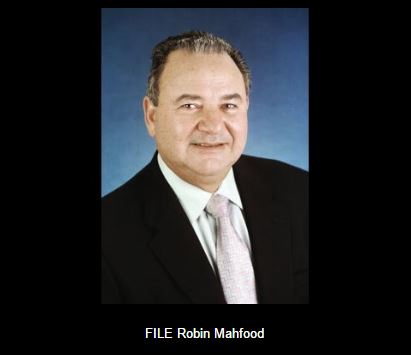
“These prisons can quickly become a black hole of despair, especially for someone locked up with murderers because they do not have the money to pay a fine for a minor offence,” said Robin Mahfood, president/CEO of FFTP.

“Words do not convey the gratitude we have for our loving donors and staff who have not lost faith in a segment of people who are often forgotten or written off as a lost cause,” said Mahfood.

In Jamaica, 21 non-violent prisoners were released from their cells. Four women were freed from the Fort Augusta Adult Correctional Centre, four men from Richmond Park, one man from Tamarind Farm, two men from Tower Street, and 10 men from the St Catherine Adult Correctional Centre.

Among the released is a 63-year-old bus driver who was placed behind bars on December 1 for not wearing the required bus uniform.

He was faced with two options for the offence: pay a fine of $32,000, or spend 60 days in prison. He opted to be jailed because he could not afford the fine.

“I have a daughter attending university, and college expenses are quite costly, but I want to give her a better life. This is why I didn’t have the funds to pay the fine,” he said.

“It has been hard in prison, especially when you think about not having the freedom you are used to. Being on lockdown is not easy.”

When the man found out that FFTP had paid his outstanding fine for his early release, he said, “I feel good! I didn’t have it to pay, and to know that people who don’t know me would just do this for me, it makes me feel really good inside.”

Immediately upon release from the different prisons, the former inmates were each greeted by FFTP staff who provided them with food, supplies and offered words of encouragement.

http://jamaica-star.com/article/news/20161228/food-poor-assists-inmates-get-early-release