
As COVID-19 Cases Spike, Risks to Economic Recovery Remain High
Kingston, Jamaica – February 19, 2021: The EPOC met on February 5, 2021 to review the macro fiscal programme of the Government of Jamaica (GOJ) and the monetary performance of the Bank of Jamaica (BOJ) for the fiscal year 2020/21. The following were key highlights noted by EPOC:
- The GOJ tables third Supplementary budget as Tax Revenues projected to fall below previous targets
- Macro-fiscal risks increase as GDP growth projections weaken
- Pace of global economic recovery remains uncertain as global demand for vaccines outstrip supply
- International Reserves remain strong due to higher than expected increase in Remittance Inflows
Based on the performance of the fiscal and monetary indicators, the GOJ and the BOJ are on track to meet the selected quantitative targets under the GOJ Economic Reform Programme (ERP) as at the end of December 2020, with the exception of the Tax Revenues target. The implementation of the majority of the Priority Actions for the GOJ ERP continues to be delayed relative to the timelines established in November 2019, due, in large part, to the impact of the COVID-19 pandemic. The timelines and scope of these priority commitments are to be reviewed.
Fiscal Performance and Outlook
GDP, Tax Revenue Projections Revised Downwards in 3rd Supplementary Budget
- As the Jamaican economy continues to be impacted by the COVID-19, the projections for GDP contraction had to be revised downwards from 7.9% to 11.6% for the current fiscal year. This has also led to Tax revenues projection being revised downwards by $6.7B from $515.6B to $508.9B, which has been reflected in the Third Supplementary budget, which was laid in Parliament by the Minister of Finance on January 19, 2021.
- While Revenues & Grants of $398.3B for April-December 2020 were marginally higher than the budget target, what is more important to note, is that the performance of Tax Revenues, April-December 2020, of $346.5B with all the efforts of the Tax Administration of Jamaica (TAJ), are slightly behind budget, but is significantly lower (by $68.3B) than the outturn for the previous year of $414.7B for the same period.
- Fourth Quarter (Q-4) Tax Revenue Projections are Optimistic
Tax Revenues for Q-4 (Jan-March 2021) are projected at $162.4B which is $2.3B behind Q-4 (Jan-March 2020) tax revenue outturn of $164.6B. While tax revenues are trending in the right direction, the projections for the last quarter seem to be quite ambitious bearing in mind the spike in the spread of the virus, the restrictions on movement and the resultant impact on the economic activity.
- Fiscal Deficit Increases
Total Expenditure as tabled in the third Supplementary budget is projected to close the Fiscal year at $654.5B. When taking into account the projected tax revenues, the economy will see a projected and increased fiscal deficit of $78B or 4% of GDP.
- Projected Primary Surplus to fell to $58.2B or 3% of GDP due mainly to projected reduction in tax revenues. Notwithstanding the lower revenue projection, the GOJ remains committed to achieving the revised primary surplus target of 3.0% of GDP, through a reduction of non-debt expenditures by $3.5B.
- Public Sector Wages and Salaries Fiscal rule – 9% of GDP
It is apparent that Jamaica will not achieve the legislated target of Wages and Salaries being 9% of GDP in the current fiscal year and with GDP not returning to pre-COVID levels over the next two years; it will be a challenge for Jamaica to achieve this fiscal rule in the 2021/22 and 2022/23 fiscal years.
- Debt to GDP increases beyond initial projections
As a result of downward projections in GDP to 11.6% and the predictable fall off in tax revenues, along with the projected fall off in the Primary surplus, it is expected that the Debt to GDP ratio will increase beyond the previous projection of 102.9% to 110% of GDP.
Monetary Performance
Inflation rate remains within BOJ’s target range
- The 12-Month Point-to-Point Inflation of 5.2% at December 2020 remains within BOJ’s target range of 4.0% – 6.0%.
BOJ overnight Policy Rate at 0.5% per annum remains unchanged
- Subject to inflation remaining well behaved, the BOJ has remained accommodative in its monetary policy stance with the aim of supporting recovery in economic activity.
Net International Reserves remain buoyant at US$2.98B as at the end of January 2021 due to higher than anticipated Remittance Inflows and reduced imports.
- Net Remittance inflows of US$1,892.6M for the period April – November 2020 was up US$446.2M (30.8%) relative to the corresponding period in 2019.
The BOJ projects that, all things being equal, the NIR should close around these levels at the end of the current fiscal year.
Foreign exchange market remains volatile since the December 2020 quarter
GDP Continues to be Impacted by the Fallout in Tourism
STATIN reported that the economy contracted by 10.7% for July–September 2020 relative to the similar period in 2019. This performance reflected the continued negative impact of COVID-19 and the measures implemented to limit its spread. The real GDP decline for the period primarily reflected a 65.2% downturn in the Hotel and Restaurants industry, due to an 86.5% (734,385) fall in visitor arrivals. There were bright spots where higher levels of output were achieved in Agriculture, Forestry & Fishing (up 2.5%) and Construction (up 7.0%). Real GDP for the July-September 2020 quarter grew 8.3% relative to the April-June 2020 quarter, reflecting an indication of quarterly improvements in economic activities.
EPOC’s OUTLOOK on Growth in GDP is Cautious Due to High Levels of Uncertainty
As the globe traverses the various phases of the pandemic and countries are in a race to vaccinate their populations to achieve herd immunity, the COVID-19 pandemic still maintains a hold globally. Many countries continue to face varying levels of the spread of the virus and the outlook and pathway to recovery at best remain highly uncertain.
The Planning Institute of Jamaica (PIOJ) and the BOJ expect a contraction within the range of 10% – 12% in FY2020/21, which is consistent with the Ministry of Finance and Public Service’s projection of a contraction of 11.6%. The BOJ noted that, in its most recent assessment of the impact of COVID-19 on the Jamaican economy, economic activities have improved relative to previous projections.
The BOJ forecasts a partial recovery of 3% in FY 2021/22, which could trend up to 6% if there is a strong recovery in the tourism sector. However, there continues to be significant downside risks with the increasing number of positive daily cases being recorded recently, necessitating a nationwide tightening of curfew restrictions by the GOJ. The implementation of more stringent containment measures, despite being a reasonable response to the worsening COVID-19 situation in the country, is likely to result in further disruptions in economic activities.
Achieving Herd Immunity – Critical to full Economic Recovery
The updated global outlook of 5.5% reflects the expectations of increased economic activities later in the year as multiple vaccine approvals and vaccination launches in some countries have raised hopes of an eventual end to the COVID-19 pandemic.
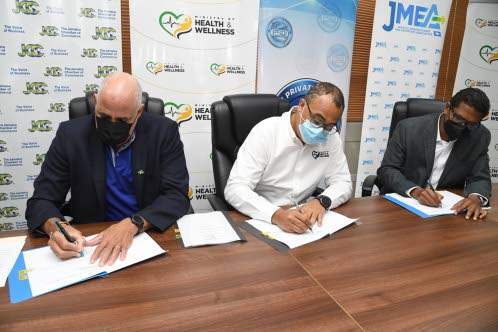
Against this background, EPOC noted that the vaccination of the population and achieving herd immunity in the shortest possible period is the single most important imperative that can return Jamaica to a sustainable economic growth path. Private Sector Associations have entered into a Memorandum of Understanding (MOU) with the Ministry of Health and Wellness (MOHW) to participate in Jamaica’s COVID-19 Vaccination program. Notably, Private sector bodies and entities have indicated their willingness to fund the vaccination of their employees and dependents and to look at contributing to vaccinating the at-risk population. As Vaccines become available, this public-private sector partnership should see Jamaica significantly surpassing the initial target of 16% inoculation of the population.
Monetary Policy Outlook
Jamaica’s Net International Reserves are adequate and the BOJ has indicated that it will maintain an accommodative monetary stance until there are clear signs of that economic activity is returning to pre-COVID levels.
Fiscal Outlook
Jamaica faces the greatest shock to its economy in history and is struggling through the pandemic to get back to pre-COVID levels of growth and tax revenues. Once again, we face a period of fiscal consolidation as the recently amended fiscal rules, which allowed for a gentler correction of the current fiscal deviation, will see Jamaica having to return to primary surplus targets close to 6% in 2021/22 and 7% in 2022/23 to put Jamaica on a credible trajectory to achieve a 60% Debt to GDP target in 2027/2028.
Bank of Jamaica Dividend of $33B Payable in April 2021
The Minister of Finance and the Public Service announced, in the tabling of the fiscal year 2021/22 budget on February 18, 2021, a one off Bank of Jamaica Dividend of $33B, which will ease the level of fiscal consolidation required. This will also give the GOJ some fiscal space to provide a stimulus package to the economy, which will include a Vaccination programme, social and business support, along with significant infrastructure and capital expenditure.
Public-Private Sector Partnerships Critical to Recovery
With the limited fiscal space, EPOC believes that the private sector will have to play a major role in driving economic recovery and Public-Private partnerships will be instrumental in returning Jamaica to a growth path.
EPOC firmly believes that the prioritization and the coordinated implementation of the recommendations of the COVID-19 Economic Recovery Task Force, led by Dr. the Hon. Nigel Clarke will certainly put Jamaica on a firm path of recovery.
EPOC urges all Jamaicans to remain vigilant and adhere to the COVID-19 Protocols
Jamaica is now at a critical juncture in our economic recovery path. As such, EPOC urges all Jamaicans to remain vigilant while adhering to the COVID-19 protocols to safeguard our lives and livelihoods.
Again, we express our gratitude and thanks to the GOJ, our health care workers, the MOHW and the security forces who have been working assiduously, putting their lives at risks to manage and curtail the spread of the virus.
 Jamaica Highlights