COVID-19 Vaccines Roll out Locally

Excerpt from Jamaica Observer Column published Monday, 15, 2021

By Jean Lowrie-Chin

Just as Prime Minister Andrew Holness predicted, there is now a rush on the recently arrived COVID-19 vaccine. Accusations are rife as we hear about people not on the Government priority list and are under 60 years old receiving the vaccine. The selfish behaviour of some Jamaicans could jeopardise the health of our vulnerable seniors, pushing our health system over the edge on which it now teeters.

It brings dread to us at the Caribbean Community of Retired Persons (CCRP), having sent to the four regional health authorities carefully prepared documents with the names of over 2,000 individuals over 60 years of age.

On Saturday the Ministry of Health & Wellness (MOHW), apparently in response to these reported breaches, issued the following news release: “The Ministry of Health and Wellness wishes to advise the public that for the period Sunday, March 14 to Friday, March 19, 2021 only health care workers and members of the Jamaica Constabulary Force (JCF) and the Jamaica Defence Force (JDF) will be inoculated with the COVID-19 vaccine. Persons who are not in these categories should not present themselves at any of the vaccination sites across the island.”

We can only imagine the deluge of calls and messages being sent to MOHW personnel begging special favours. They are already under tremendous pressure, so, please, give the hard-working staff a break.

As an incentive to low-income elders, Finance Minister Dr Nigel Clarke has announced that those who receive the vaccine will be eligible for a $10,000 grant. Forget that nonsense about bribery, as the only people to benefit are the recipients; it is a welcome incentive for taking a vaccine which will protect these vulnerable individuals.
Herd Immunity is the Only Way Out

Excerpt from Jamaica Observer column published Monday, February 22, 2021

By: Jean Lowrie-Chin

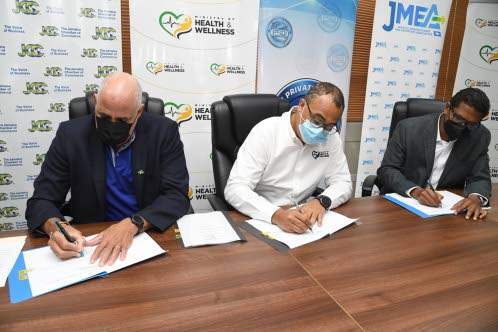
Herd immunity is the only way out of Jamaica’s economic slump, and so the private sector has pledged to partner with the Government to get us back on track. At last Friday’s press briefing, Economic Programme Oversight Committee (EPOC) Chairman Keith Duncan said that private sector bodies had signed a memorandum of understanding (MOU) to this effect with the Ministry of Health and Wellness.

“Notably,” he added, “private sector bodies and entities have indicated their willingness to fund the vaccination of their employees and dependents and to look at contributing to vaccinating the at-risk population.”

COVID-19 has left us with a 65.2 per cent downturn in tourism and restaurant businesses. However, Duncan noted two “bright spots” — agriculture, forestry and fishing up by 2.5 per cent and construction up by seven per cent. Remittances have also increased by some 30 per cent. I have never seen so much construction activity and enthusiasm for real estate. One colleague opined that people are seeing this as a safe way to protect their assets.

We wait anxiously for the COVID-19 vaccine, concerned that our Caribbean neighbours seem to have stolen the march on us. We are puzzled, because our health ministry was early with prevention promotion, contact tracing, quarantining of communities, and informative press briefings. Our friends in the US were impressed with the national consensus on the importance of mask-wearing, when there were so many mixed messages around it in that country. The reporting website created for travellers was thought to be innovative, but now there are questions about the security of the information.

This pandemic is the most challenging situation that Jamaica has ever faced, but as we have done in other disastrous situations, we will recover and be stronger from the hard lessons we are learning. 

Bold Moves to Heal Jamaica

Excerpt from Jamaica Observer column published 15 February 2021

By: Jean Lowrie-Chin

Jamaica is faced with a spike in Covid-19 cases, more road deaths and, in the words of PSOJ President Keith Duncan, “an epidemic of violence”. When a busload of people is warned by police to put on masks, and as soon as he turns his back they remove them and consider it a joke, clearly they do not value their own lives. The same applies to the total lack of regard for the road code mostly by taxi drivers and motorcyclists. The Commissioner of Police noted that contract killings are on the rise because killers are charging less.

We can understand that some teachers and parents are fearful about keeping schools open and re-opening others, but with the breakdown in households, schools are not only places of learning but also places of protection. That advertisement depicting a girl child in fear of an older male relative is a sad reality for too many.

Statistics show that more than 50 percent of unattached youth in the 16-24 age group is affected by crime, and more than 70 percent of crimes are committed by that group.  To address this issue, the government has created the HOPE Programme so participants can learn, earn and save. There is also the Jamaica National Service Corps, a one-year training programme for 26,000 youths conducted by the JDF, at the end of which some participants are accepted into the Force.

In a JIS report by Latonya Linton earlier this month, Minister of National Security, Hon. Dr. Horace Chang, told Parliament that the Government has launched the ‘Plan Secure Jamaica’ initiative. He noted that it is “the most coordinated, inclusive and enduring security programme that has ever been introduced in Jamaica. It is geared towards creating a safe, secure, cohesive and just society.”

He described main aspects of the programme: “strengthening the national security architecture; strengthening the criminal justice system; enhancing youth and community development; protecting and securing borders, maritime space and key sectors of the economy; strengthening national integrity systems; and increasing and sustaining public support for law enforcement and public order.”

The cost of the programme is estimated at $176 billion over seven years. Dr Chang said his was “the first Government to put in place such a robust security plan, with the necessary institutional arrangements to ensure a sustainable, whole-of-government approach to the social investment and social transformation component of crime-fighting.”

He said the country can look forward to the new Firearms Act, amendments to the Criminal Justice (Suppression of Criminal Organisations) Act (the ‘anti-gang’ legislation), and regulations for the Major Organised Crime and Anti-Corruption Agency.

The Crime Monitoring Oversight Committee (C-MOC) comprising representatives of both political parties, the Private Sector, Civil Society and the Churches has established a timetable to monitor the implementation of national security measures. EPOC has helped to keep our economy on track; we are hoping the same for C-MOC.

Vaccines Please!

Excerpt from Jamaica Observer column published 25 January 2021

By: Jean Lowrie-Chin

Jamaican seniors are very anxious to receive Covid vaccines, so we are heartened that the PSOJ will be joining with the Ministry of Health to speed the process. JIS reports also that the New Indian High Commissioner to Jamaica, His Excellency Rungsung Masakui, is exploring arrangements with Jamaica for his country to provide vaccines to fight the coronavirus (COVID-19) pandemic: “Our capacity is huge; it is 300 million per month,” he noted. “So we can think of collaborating in this area by sharing our products or by sharing our experiences.” We are certainly looking forward to this.

COVID-19 Solutions

Excerpt from Jamaica Observer column published 25 January 2021

By: Jean Lowrie-Chin

My friend Paula Kerr-Jarrett is hoping that Jamaica will begin using CommonPass soon. She says tourism in Aruba is now booming because their Government, led by Prime Minister Evelyn Wever-Croes, have subscribed to this digital health pass, which, according to a report on the World Economic Forum website, “enables safer travel by allowing people to document their COVID-19 test and vaccination status on their mobile phone and share it in a privacy-preserving manner with airline staff and immigration officials.”

We understand from Paula that this was developed by the non-profit organisation The CommonTrust Network, funded by Commons Project Foundation (more information available at press@thecommonsproject.org). She believes that by registering for CommonPass which is a free service, we could see faster recovery of our tourism industry.

Paula also shared positive experiences from the use of drug, Ivermectin in the treatment of Covid-19. Users have reported that by taking the drug three days in a row after getting a positive result, they were symptom free. “This is a low-cost way of treating Covid,” she noted.

She shared a report which noted, “Ivermectin has been used for more than 30 years for the treatment of several diseases. More than one million doses of the drug are administered daily, particularly in low- and middle-income countries. Due to the low prevalence of adverse events with the use of this drug, ivermectin is considered to have a good safety profile and its potential benefit in other diseases is currently under investigation. An in vitro study of ivermectin in SARS-CoV-2 in Australia showed a significant reduction of viral load in infected cells. Subsequently, a descriptive study of 704 critical patients with COVID-19 showed a reduction in mortality, hospitalization, and intensive care unit length-of-stay in those patients who received the drug.”

We do hope the Ministry of Tourism and the Ministry of Health and Wellness will explore the benefits of Common Pass and treatment of Covid-19 with Ivermectin.