Twins Excelling Despite Difficulties

twins-excel

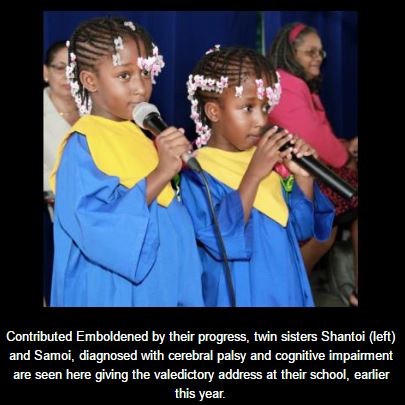
Despite being diagnosed with Cerebral Palsy and Cognitive Impairment, exceptional twin sisters Shantoi and Samoi Miller, all of seven years old, are outstanding and inspiring students and the celebrated shining stars at the Early Stimulation Programme (ESP) Centre of Excellence.

At this young age, the two girls have faced severe odds, overcome several major health and development obstacles, and are now beacons of hope, showing the value of the early stimulation in the lives of children with special needs.

Enrolled at the stimulation centre over the last three years, their teachers Aunties Melissa Robinson and Norma-Jean Powell quickly realised that the girls needed extra attention to develop their skills and talents.

Issues such as forgetting letters and numerals, not being able to keep up in class, and refusing to eat plagued the girls’ development.

But help was on the way, as Digicel Foundation stepped in and provided critical funding under a programme designed to assist children like Shantoi and Samoi.

The poundation, having assisted some 34,000 persons with special needs since its inception, saw the Early Stimulation Programme as a right fit for the organisation’s input.

The school was able to move into a newly renovated environment with additional tools for intervention. The teachers were more motivated to deliver better results for each child, and the twin girls went from being shy and reserved to outspoken and ready to face new adventures.

Their excitement about going to school could not be contained and they developed a level of confidence that made them no longer worried about what people had to say about their special needs.

At the end of their programme, they were both chosen as valedictorians for their graduating class.

Digicel Foundation chairman Jean Lowrie-Chin, in celebrating the achievement of the twin girls, believes that there are many other children like Shantoi and Samoi who can benefit from the efforts of the organisation.

“It really warms my heart when we are able to help, and to see how lives can be changed because of our partnerships.” Lowrie-Chin said.

Shantoi and Samoi are inspiring classmates, parents, teachers and partners with their contagious warmth and can-do attitude towards life.

The ESP Centre of Excellence is among 45 special-needs projects benefitting from some US$11 million in funding from the Digicel Foundation.

http://jamaica-star.com/article/news/20170109/twins-excelling-despite-difficulties
Editorial | The Gap Between Research And Policy

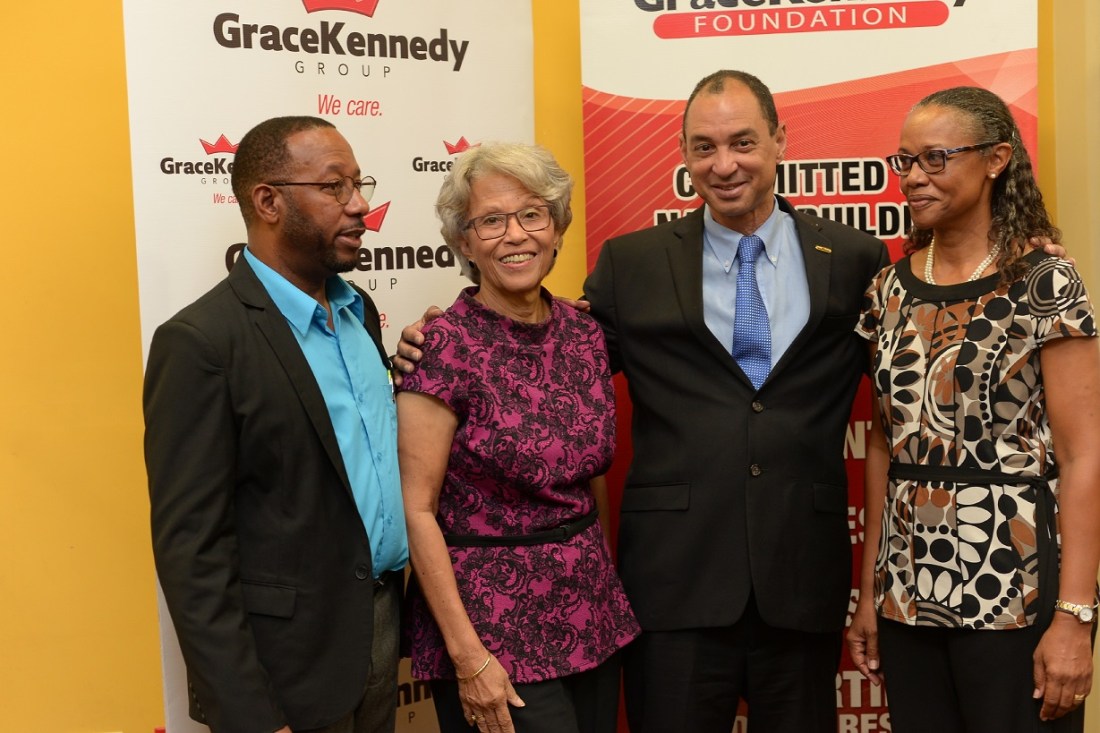
Against the backdrop of the usual noise associated with political campaigns, a serious message may have been missed this week when the GraceKennedy Foundation renewed its commitment to research work at the University of the West Indies. The foundation funds research activities through the Carlton Alexander Chair in Management Studies and the James Moss-Solomon Chair in Environmental Management.

Chief executive officer of GraceKennedy, Senator Don Wehby, said the UWI must be known as a centre for solutions and a leader in promoting innovation and innovative thinking.

Increasingly, society is looking to tertiary institutions, like the UWI, to use their enormous human resources to bend the curve of technology in the 21st Century and deliver greater opportunities for economic growth and development to future generations.

As Jamaica faces challenges in social justice, health, agriculture, climate change and other areas relevant to national development, it is imperative that new research be undertaken to find ways of mitigating the impact of these challenges on society. These decades-old obstacles throw up numerous opportunities for academics to demonstrate the reach and impact their work can have.

Research is an expensive business and will not flourish without appropriate and consistent funding. Most of the research in tertiary institutions comes from external sources, including philanthropic organisations and private-sector entities. For these investors, it is assumed that they would be keen to measure the success of their investment by effective outcomes.

The results of such research cannot just be displayed during exhibitions at a designated time each year. This new knowledge gathered through research must be used in policy development. The results of research are critical in influencing development of policy, helping to shape legislation, and even to alter behaviours that are found to be detrimental to the common good.

UNDERSTANDING SCIENCE

It may take some convincing to get politicians to understand the science behind the research work, and even harder to get new policy implemented. However, we now have a minister of science and technology in Dr Andrew Wheatley, who has qualifications in biochemistry and chemistry and is a research scientist.

It may, therefore, be left to him to work with the scientific community to convey the idea of research-based evidence by demonstrating to his parliamentary colleagues how the findings were tested, debated and reviewed before achieving consensus.

Recent pronouncements by Dr Wheatley that Jamaica is not lagging in scientific research have been challenged by a letter writer to The Gleaner. The reader, who describes himself as a Jamaican with a scientific background, who has left the island to pursue opportunities overseas, decried the fact that “large-scale investment in scientific research is lacking”.

He suggested that there needs to be a scientific research culture in Jamaica. He lamented the lack of funding as one reason why persons passionate about science have become discouraged.

CRITICAL STEPS

It is indeed a fact that for the country’s research to serve the community well and command global attention funding, it is critical to provide qualified academics and procure equipment and infrastructure to facilitate their work.

Traditionally, policymakers tend to be heavily influenced by what is popular rather than evidence-based research, and this is why research-informed evidence is not assigned the place of importance it deserves in policymaking. It is time to bridge that substantial gap between research and policy.

Source: http://jamaica-gleaner.com/article/commentary/20161126/editorial-gap-between-research-and-policy

GraceKennedy Foundation Renews $11m Funding For Research

gracekennedy-foundation-support-of-uwi-a-model-partnership

The GraceKennedy Foundation has renewed funding for the Carlton S. Alexander Chair in Management Studies and the James Moss-Solomon Senior Chair in Environmental Management at the University of the West Indies (UWI).

The Chairs are respectively held by Professor Ian Boxill, who has been in the post since 2010, and Professor Mona Webber, who was appointed on October 1 this year.

During a forum held on November 22 at the Regional Headquarters at the UWI, both professors spoke about their research, community work, and their relevance to current problems being faced by the country.

Among Boxill’s research and contributions over the past year is a programme with the Sandals Group and Island Tours to identify ways of leveraging Jamaica’s attractions, improving the tourist experience, expanding linkages, and earning more revenue for the country. He has also conducted a needs assessment with the Jamaica Manufacturing Association to identify the areas where greater support is needed by the sector to increase its effectiveness. Manufacturing contributed 8.6 per cent to GDP in 2015.

Webber’s account of her research opened eyes and minds as she shared about the life-giving and, possibly, life-saving work her team is conducting under the sea.

She spoke about the impact of pollution on marine health and announced that she would be delving further into examining content found in the stomachs of fish found in Jamaica’s waters. Already discovered is that some fish are consuming toxic micro plastics. Her research will have far-reaching implication for the livelihood of fishermen and the health of consumers of seafood.

Each Chair is funded by the GraceKennedy Foundation at a value of $5.5. million per annum.

CENTRE FOR SOLUTIONS

Don Wehby, CEO of GraceKennedy Ltd, commended both professors on their work, while also thanking outgoing James Moss Solomon Snr Chair, Professor Dale Webber, who was recently appointed pro-vice-chancellor, graduate studies and research.

“The UWI must be known as a centre for solutions and a leader in promoting innovation and innovative thinking among its students – the future leaders of Jamaica. Education, after all, is the ultimate problem solver … I again restate GraceKennedy’s commitment to UWI as we see it as one of our ways of answering the future’s call,” Wehby said.

Professor Archie McDonald, principal of the UWI’s Mona campus, described the partnership between the GraceKennedy Foundation and the UWI as “the quintessential merger of big business and education”.

http://jamaica-gleaner.com/article/lead-stories/20161125/gracekennedy-foundation-renews-11m-funding-research