The late Archbishop Emeritus Edgerton Clarke (centre) with fellow chairmen of Citizens Action for Free and Fair Elections the late Dr Alfred Sangster (left) and constitutional lawyer Lloyd Barnett.
We are mourning the passing of one of Jamaica’s most beloved sons: the humble, eloquent Archbishop Emeritus Edgerton Clarke.
Archbishop’s homilies were special — gently delivered but with the fire of the Holy Spirit igniting our spiritual aspirations. In his pastoral work he inspired our youth and showed his caring heart to the elderly. He shared his wisdom on boards of government and civil society organisations and was a past chairman of Citizens Action for Free and Fair Elections (CAFFE).
Archbishop Emeritus Clarke passed away peacefully on February 13, one day before his 96th birthday. He served as bishop of Montego Bay for 27 years before being installed as Archbishop of Kingston on November 23, 1994. He retired on February 14, 2004.
The vigil for Archbishop Emeritus Clarke will take place at Holy Cross Catholic Church on Sunday, March 2, and the mass of thanksgiving on Monday, March 3 at Holy Trinity Cathedral will begin with tributes at 1:45 pm.
Marcelo Cataldo, CEO of Digicel Group at the launch of the Foundation’s Safer Internet Together programme on Safer Internet Day, Tuesday, February 11, 2025. The programme was launched at The UWI, Mona.
On Tuesday, February 11, 2025 the Digicel Foundation launched their ‘Safer Internet Together’ (SIT) programme at The UWI, Mona. The programme, which was launched on Safer Internet Day 2025, targets STEM programmes at over 150 educational institutions. From left: Avryl Francis, Security Operations Manager, Digicel; Antoinette Heirs, Digicel Foundation Board Director; Dr Terri-Karelle Reid, Founder of Open Door Jamaica Foundation; Charmaine Daniels, Digicel Foundation CEO; and Joy Clark, Board Chair of Digicel Foundation.
The internet offers a world of possibilities, providing benefits and opportunities. It has made everyday life more convenient and knowledge more accessible. However, the online world is far from perfect. It has become a confusing, complex space for many Jamaicans to navigate. At times, the internet can seem like an unsafe place to be.
What are the dangers lurking in the digital landscape – and how can we protect ourselves? Addressing these concerns, the Digicel Foundation officially launched its Safer Internet Together (SIT) Programme on Tuesday, February 11, 2025. This year-long initiative puts the emphasis on online safety, digital responsibility and cyber awareness – for all Jamaicans.
The launch event at the Mona School of Business and Management, University of the West Indies (UWI), Mona, observed Safer Internet Day 2025, under the theme “Together, For A Better Internet.” Digicel Foundation will roll out the SIT initiative in 150 educational institutions, in partnership with the ministry of Education, Skills, Youth and Information, STEM Builders Learning Hub, United Nations Children’s Fund (UNICEF), Sunshine Snacks, Jamaica Public Service Company (JPS), and MacMillan Education.
As CEO of Digicel Foundation Charmaine Daniels pointed out [in a Letter to the Editor] the programme of activities will be inclusive, “engaging diverse groups across the country on digital literacy and online responsibility.” Daniels added: “Furthermore, in partnership with the Caribbean Community of Retired Persons (CCRP), we will conduct specialised sessions during Senior Citizens’ Month in September to help older adults recognise and protect themselves against online threats.”
Marcelo Cataldo, CEO of the Digicel Group explained the programme’s goal: “We work every day to have our Internet available to our customers, but we are also mindful of the potential risks that the internet poses for young children. With the Safer Internet Together programme, we intend to raise awareness on how to mitigate the space carefully, with the help of all our sponsors.”
“Our responsibility at Digicel is to work together to help the new generation to be safe and to be protected.”
Assistant Commissioner of Police in charge of Technology, Leonardo Brown, in a dynamic presentation at the launch, reminded participants: “The internet and connectivity never forgets; whatever you post remains somewhere.”
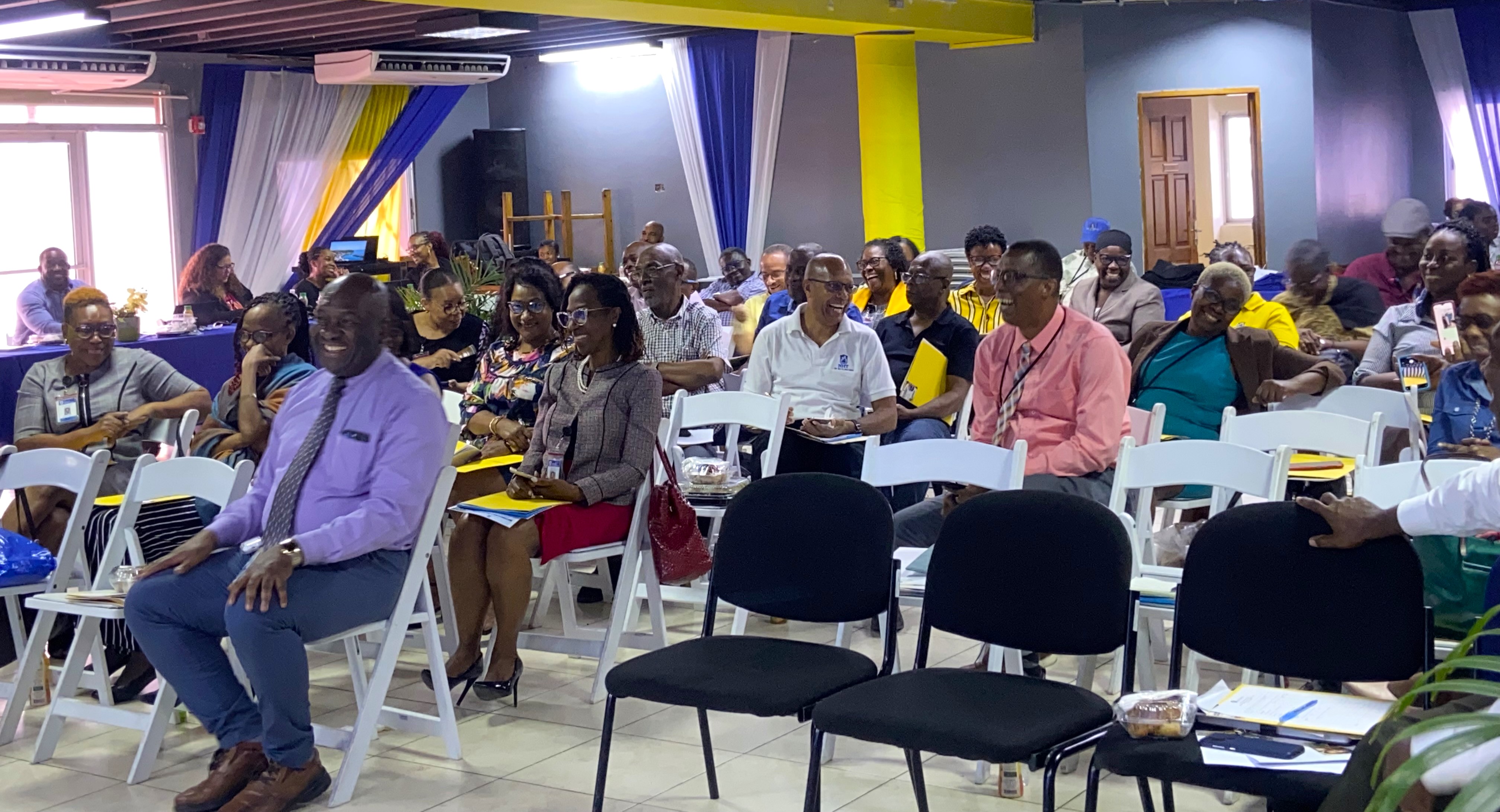
Audience member Christoph Tucker reacted: “This day provides opportunities to learn about online risks, how to stay safe online, where to get help, and how to gain a better understanding of the laws.” He stressed: “There are so many young children nowadays using tablets. We want to ensure that they’re always safe and exposed to the right content, so that they become good people within our society.”
The Digicel Foundation CEO urged stakeholders and Jamaicans, young and old: “As we observe Safer Internet Day, let us commit to making the internet a place of opportunity rather than a source of harm. Let us foster a culture of responsible digital citizenship, ensuring that everyone – regardless of age or background – can explore the online world safely and confidently.”
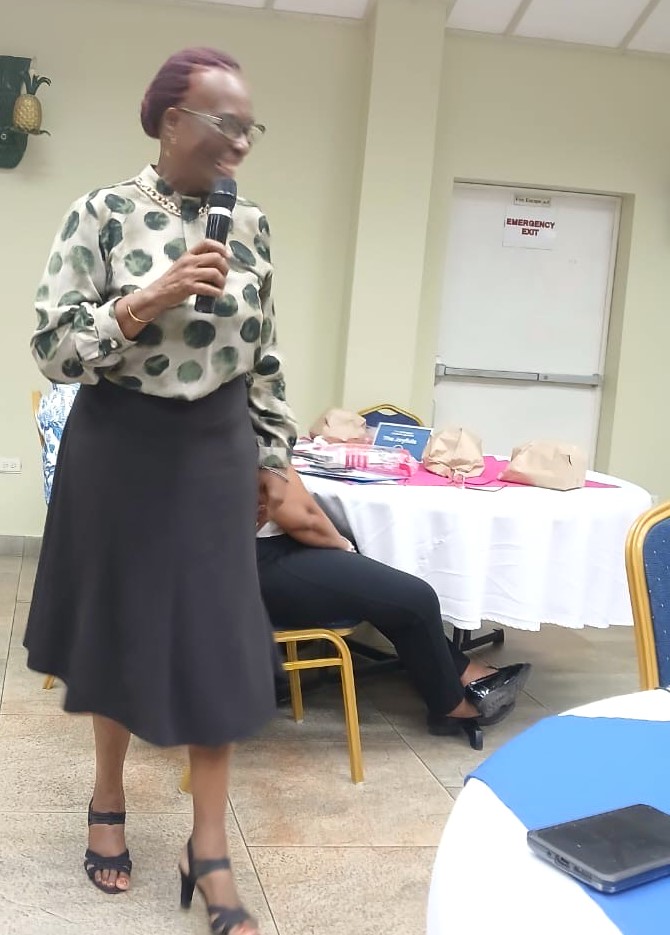
Mrs Patricia Reid-Waugh addressing a group of employees at The Ministry of Finance and the Public Service on Thursday, January 30, 2025. Mrs Reid-Waugh is a Retirement Coach and CCRP Board Director.
Patricia Reid-Waugh, Retirement Coach and Board Director of the Caribbean Community of Retired Persons (CCRP) urged prospective retirees at the Ministry of Finance and the Public Service to “consider the options that exist to continue a life full of purpose” after retirement. Speaking at a seminar on ‘Retirement, A New Adventure’ on Thursday, January 30, 2025, Mrs Reid-Waugh encouraged the group to look ahead and anticipate an adventure rather than inactivity.
She appealed to them to explore methods of continued cash flow after retirement by utilizing their years of wisdom to generate income. They were advised to contribute to the silver economy by leaning into their expertise, skills and hobbies to start small businesses or to become consultants in their respective fields.
The importance of social interaction after retirement was also addressed as she encouraged the participants to become part of a membership developed specifically for seniors – the CCRP – an organisation that aims to empower Jamaican seniors and ensure that they enjoy the quality of life they deserve. Members are able to participate in various activities that bring them together to socialize and explore topics of interest.
CCRP has been called upon to prepare prospective retirees for life after the workplace on a number of occasions. They addressed staff of several organizations on retirement, including Scotiabank, Mico Teachers’ College, Wisynco, Jamaica Public Service Company, Tax Administration Jamaica and National Housing Trust.
Patricia Reid-Waugh has written two books on retirement – “Retirement: A New Adventure” and “Retirement: The Journey and The Destination” – both of which are available locally and on Amazon.
About CCRP
CCRP Jamaica is a non-profit, non-denominational and non-political membership organization for persons 40 and over. CCRP’s Vision/Mission:
• To work towards ensuring that the vast talent, experience and wisdom of seniors will be respected.
• To ensure that our seniors will enjoy the quality of life they deserve.
• Empowerment of our seniors to continue making their contribution to the development of community, country and region.
On Thursday, January 23, 2025, Mrs Patricia Reid-Waugh, Retirement Coach and CCRP Board Director addressed a group of NHT Staff on the topic of Retirement.
International Game Technology (IGT) Jamaica General Manager Debbie Green (right) proudly leads the ribbon-cutting ceremony to officially unveil the newly upgraded After School Advantage (ASA) Centre at Dunrobin Primary School on International Day of Education, Friday, January 24. She is joined by the school’s principal, Sacheel Grant-Henry (second left), and enthusiastic students who eagerly anticipate the enhanced learning opportunities the centre will provide. The upgraded facility is part of IGT’s ongoing commitment to fostering digital literacy and educational development among young Jamaicans, equipping them with the necessary tools and resources to thrive in an increasingly technology-driven world.
A young girl beams with joy while enjoying the see-saw with the support of Digicel Foundation CEO Charmaine Daniels at the Early Stimulation Plus Development Centre in Kingston on Wednesday.
DIGICEL Foundation made ‘Play Day’ extra special for the children at the Early Stimulation Plus Development Centre in Rockfort, Kingston, by spending a morning engaging in games and fun activities.
February has been designated as Play Month by the Early Childhood Commission (ECC), a celebration endorsed by the United Nations Children’s Fund (UNICEF) Jamaica Office.This year’s theme, ‘Bringing Back the Game of Play Through Traditional Games — Out of Many, One People,’ highlights the importance of play in early childhood development while embracing Jamaica’s rich cultural heritage.
During the visit, Digicel Foundation staff and board members joined the children in classic Jamaican games such as dandy shandy and hopscotch.In addition to the interactive play activities, the Digicel Foundation also donated crayons and colouring books to the school, providing the students with creative resources to support their learning and development.
Charmaine Daniels, CEO of Digicel Foundation, emphasised the significance of supporting institutions like the Early Stimulation Plus Development Centre.“The Early Stimulation Plus Development Centre is dear to us, as it is one of the 21 special needs schools we renovated a few years ago. Play is an essential part of childhood development, and we are delighted to be part of this initiative that brings joy, inclusion, and learning to these children,” said Daniels.
She pointed out that the Digicel Foundation has been a longstanding advocate for children with disabilities, investing over US$11.8 million in special needs initiatives across Jamaica since inception.
Minister Williams noted Prime Minister Andrew Holness’ ASPIRE’ programme highlighting access, safety and security, people, infrastructure, reforms and economic resilience. She asked her audience to ‘take comfort that there has been investment in a police force that has been equipped and is undergoing training for engagement with the public.’ She noted that students now have an extra two years in high school to get them job ready and that the HEART programme offered training in various aspects of industry.
Commenting on the damage to infrastructure due to hurricanes and heavy rains, she said the government had the financial wherewithal to make significant repairs as good roads were an enabling factor for the country. She referred to Jamaica’s lowest ever unemployment rate and said that we had more broad-based opportunities instead of just a few industries. She noted that our Debt to GDP had moved from 147% to 70%, citing financial stability and fiscal responsibility.
She noted that the Government will be using AI and big data for greater efficiency. This cannot come too soon as one guest spoke about her frustration in getting land titles for her parents in Jamaica. After unanswered calls, she had to travel here, using the funds that would have been better spent on investment. Productivity continues to be a major challenge for the public sector.
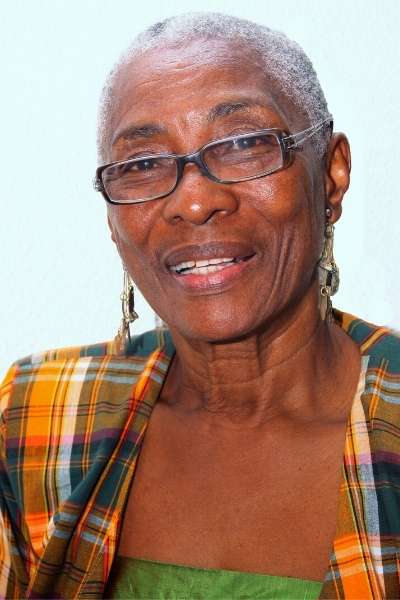
We can never forget Dr Velma Pollard’s spirited dance to the live mento band at a CCRP outing to Milk River Hotel & Mineral Spa. Her joie-de-vivre, reflected in her warm smile, would charm her fellow members at various outings. The celebrated writer, who passed away at 87 on February 1, never rested on her laurels and was a mentor to many.
“Rest peacefully, Velma Pollard,” wrote the Observer’s Bookends coordinator Sharon Leach. “I will always remember your kindness, your interest in my writing, and your encouragement… and more than anything else, your relentless support of the Sunday Observer’s Bookends.”
In lauding Dr Pollard’s achievements, Culture Minister Olivia “Babsy” Grange remarked on her affirmation of Jamaican patois and her publications From Jamaican Creole to Standard English: A Handbook for Teachers and Dread Talk: The Language of Rastafari.
“Along with her sister, Dr Erna Brodber, also a critically acclaimed author, Pollard organised an annualEmancipation watchnight vigil in Woodside, where members of the community and the wider Jamaica could come and reflect on the significance of Emancipation,” noted Minister Grange.
Blogger Emma Lewis wrote a memorable tribute, ending with: “… her delightful, sometimes sharp humour, her warmth and her encouraging and sympathetic manner endeared her to many. She will be missed by Jamaicans of all ages, especially younger writers. Her passing leaves a gap in Jamaica’s cultural narrative, which she so effortlessly and warmly expressed.”
My deepest sympathy to Dr Pollard’s beloved family and friends. May her great soul rest in peace.
Cedella Marley and her brother Stephen Marley are all smiles during their late father’s 80th birthday celebrations at Bob Marley Museum on Thursday, February 6, 2025.Garfield Robinson
Euphoria filled the air as we joined the throng to celebrate Bob Marley’s 80th birthday at Emancipation Park. The concert was laced with television interviews with the legend himself, who dropped lines such as, “Possessions make you rich? I don’t have that kind of richness — my richness is life forever.” We could see his ‘forever’ in the fans of all ages, dancing and singing along to his music.
His ‘forever’ echoed from the stage with surprising acts like Jah Fabio and Antidoping from Mexico as well as Nonpalidece from Argentina declaring their love for Bob Marley and Jamaica. We heard the clean creations of Aza Lineage, Warrior King, and Bushman, taking forward the icon’s legacy of lyrical wisdom. We embraced Bushman’s appeal to our broadcast media to refrain from carrying vulgar lyrics, noting that the “bleeps” do not help, as young people will mentally fill in those blanks.
The Julian Marley we saw and heard was an impressive artiste, matured from his earlier years and projecting his father’s charisma. A Jamaica Cultural Development Commission (JCDC) release quoted him on his recent tour with brothers Ziggy, Ky-Mani, Stephen, and Damian: “What we all walked away with was how our father’s music was really a godsend. Despite the passage of time, it still resonates with audiences in a powerful way…” Grandson Skip Marley, son of Cedella Marley, had the young ladies in the audience mesmerised with his love songs, reminiscent of Marley’s Turn Your Lights Down Low. They honoured Marley’s genius well.
This led us to ponder Marley’s challenging lyrics calling out hypocrites and ‘talking blues’. From Timothy White’s biography of Bob Marley, Catch A Fire: The Life of Bob Marley, we learn of the early trials of young Marley when he was sent to Kingston from Nine Miles, St Ann, for what his family thought would be a better life with a wealthier side of his family. He lived with and did chores for an elderly woman. When he was sent by her to Coronation Market, he saw a friend of his mother and tearfully begged to be sent back to Nine Miles. He was taken back to St Ann where he enjoyed harmonious family life until he moved to Trench Town as a teenager. White related the marginal conditions under which Marley lived, including the ragged bed which was provided for him at Clement “Coxsone” Dodd’s studio.Marley’s lyrics on inner-city living and society’s indifference to the poor’s suffering may have moved some in authority, but certainly not enough. At an event held last week, former Trench Town resident Owen “Ity” Ellis bemoaned the conditions of the community made famous by Marley in Trench Town Rock and No Woman Nuh Cry. These are laden lines:
“… I remember when we used to sitIn the government yard in Trench Town
Oba-obaserving the hypocrites
As they would mingle with the good people we meet.”
Such conditions there and in other poverty-stricken communities became a breeding ground for gangs, attracting desperate young people from fractured families. I give Prime Minister Andrew Holness credit for being one of the most vociferous leaders in condemning gang violence and Project Star, brainchild of Keith Duncan, for giving us hope for a more peaceful and equitable future. Let us have faith and realise Marley’s Redemption Song:
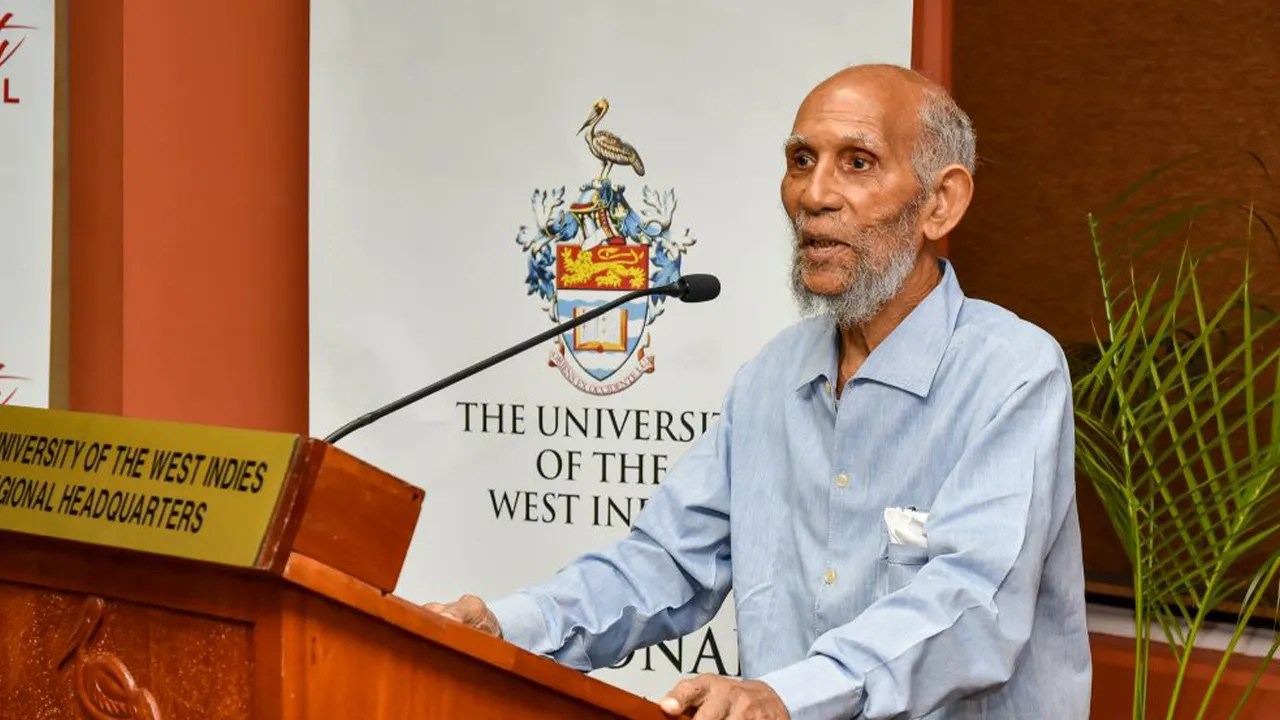
Jamaica said farewell recently to two pillars of education, St Lucia born Professor Sir Roy Augier and Dr Alfred Sangster. Only last December, an alert Sir Roy’s 100th Birthday was celebrated at Aquinas Centre. There was an outpouring of love and gratitude from his former students on social media as they commented on his mentorship.
In their tribute to Prof Augier, the Caricom Secretariat wrote: “Professor Augier was well known for his seminal contribution to advanced studies in history. He served in key leadership roles, guiding the Caribbean Examinations Council (CXC), a CARICOM Regional Institution, over many years. His distinguished service at The University of the West Indies included both the Cave Hill and Mona campuses. Sir Roy’s influence on the presentation, interpretation and perception of Caribbean history was solidified by his contributions to several important publications, including the pivotal work, ‘The Making of the West Indies’.
Dr Alfred Sangster
Dr Alfred Sangster was the visionary and dynamic head of the College of Arts, Science and Technology (CAST) from 1970 to 1976, adding 50 academic programmes and growing the student population from 1,500 to 6,000. He brought CAST to University status with its renaming as the University of Technology UTECH, retiring the year after. Dr Sangster was the founding Chair of the Citizens for Free and Fair Elections, served on the Public Service Commission and played lead roles in regional and international groups.
In his tribute to Dr Sangster, UTECH President Dr Kevin Brown noted, “In addition to his administrative accomplishments, Dr. Sangster authored the influential book ‘The Making of a University – From CAST to Utech’ published by Ian Randle Publishers in 2010. This seminal work chronicles the evolution of the institution and provides invaluable insights into the challenges and triumphs of building a university.”
Our deepest sympathy to the loved ones of Sir Roy Augier and Dr Alfred Sangster.









 Jamaica Highlights