The Hero Caribbean Premier League are pleased to welcome eZone as their official logistics partner for the 2018 tournament. The event takes place between 8 August and 16 September and will be in seven countries. The services that eZone offer are a vital part of being able to deliver a world class entertainment product.
eZone will also be presenting the player who scores the fastest fifty of the 2018 tournament with a prize of US$5,000. Last year’s winner was Evin Lewis of the St Kitts & Nevis Patriots who made his half-century in 19 balls on his way to 97 not out against Barbados Tridents.
Paul Pantin of eZone said: “We are thrilled to be continuing our partnership with the Hero CPL for the second year. Connecting the Caribbean through logistics is what we do best and we look forward to bringing our expertise and support to the CPL team once again.”
Speaking of the second year of the deal, Barrie Corcoran, the CFO of Hero CPL said: “The logistical challenges involved in moving six teams of players and support staff, camera crew and CPL staff between seven nation states are massive. eZone showed us last year with their professionalism and ability to solve problems that they are a huge asset to the tournament.”
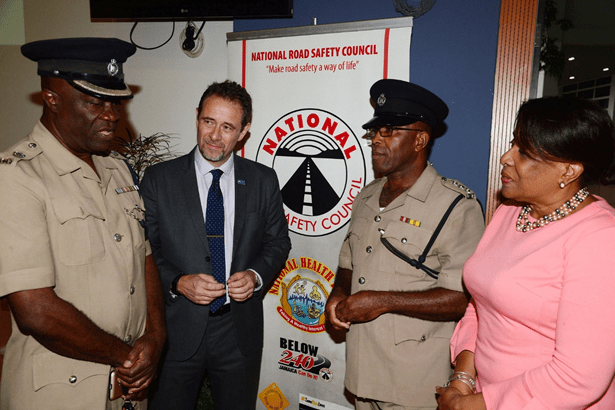
The National Road Safety Council (NRSC) has partnered with researchers from the Johns Hopkins Centre for Injury Research & Policy at the Bloomberg School of Health in Baltimore, Maryland, USA, towards a comprehensive multi-disciplinary approach to prioritising road safety on a national level in Jamaica.
In partnership with the Faculty of Medical Sciences, UWI, Mona, the Jamaica National (JN) Group, and Jamaica National General Insurance (JNGI), the NRSC staged an insightful public lecture entitled “Lessons from the Past, Looking to the Future: Making the Case for Road Safety to be a National Priority.” Research Professors Andrea Gielen, ScD, and Keshia Pollack, PhD, detailed the history of road safety in the United States and compared that country’s challenges with our own.
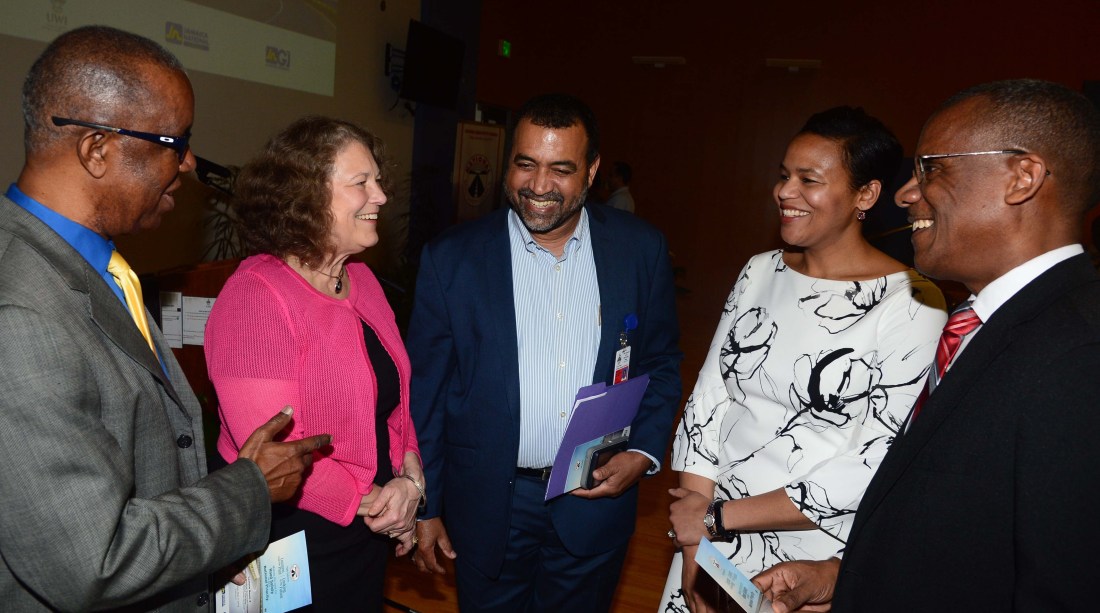
(From Left) Vice-Chairman of the National Road Safety Council (NRSC) Dr. Lucien Jones, Professor Andrea Gielen, UWI Consultant Psychiatrist Winston De La Haye, Professor Keshia Pollack, and Dean of the Faculty of Medical Sciences Dr. Tomlin Paul share a laugh following the public lecture “Lessons from the Past, Looking to the Future: Making the Case for Road Safety to be a National Priority,” put on by the NRSC on Thursday, May 3 at the University of the West Indies.
Although there has been a reduction in road fatalities through a combination of improvements in what the researchers termed the three E’s: Engineering, Enforcement, and Education, the numbers of fatalities islandwide are still too high. In recognition that no roadway deaths are acceptable, they spoke about “changing the safety culture” in Jamaica, pointing to what they called the ‘Safe Systems Approach’ which led to declines of greater than 50% in crash death rates in Sweden. The ‘Road to Zero’ campaign is a long-term goal that incorporates doubling-down on the measures that have so far proven successful, accelerating advanced technology in automobile and road design, and prioritizing safety initiatives that have been identified.
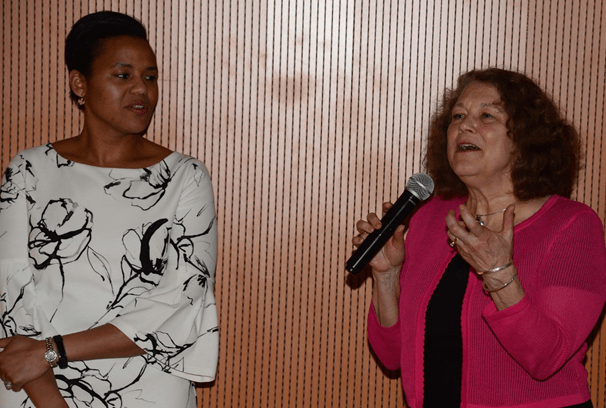
Research Professors Keshia Pollack (left), and Andrea Gielen, from the Johns Hopkins Centre for Injury Research & Policy at the Bloomberg School of Health in Baltimore, Maryland, USA, respond to questions from the audience following their public lecture “Lessons from the Past, Looking to the Future: Making the Case for Road Safety to be a National Priority,” hosted by the National Road Safety Council on Thursday, May 3 at the University of the West Indies.
Hosted by the NRSC, the Johns Hopkins Bloomberg School of Public Health researchers were in the island this week for the lecture and to begin the process of producing a gap analysis (a comparison of actual performance with potential or desired performance) and provide recommendations for programming, policy, and/or research to reduce traffic related crashes, deaths, and injuries in Jamaica.
“We love to partner with people who want to focus on injury prevention,” said Professor Pollack. “[The NRSC is comprised of] great people with great passion and energy working on what we care so much about, that it’s going to be very useful to reduce motor vehicle crash deaths on the island.”
The study will include a further review of existing data sources and reports provided by the NRSC over a twelve (12) month period. They will identify and summarize the types of crashes, mechanisms of injury, and populations affected; determine priority traffic issues to be addressed; review relevant policies and programmes provided by the NRSC to determine alignment with priorities identified; conduct a literature review on traffic safety evidence relevant to the priority traffic issues, policies, and programmes identified; and ultimately provide a summary report with recommendations for existing and future surveillance, policy, programmes, research and evaluation.
In acknowledging Jamaica’s challenges with corruption and indiscipline on our roads, Professor Pollack posited that, “maybe we should be thinking about positive rewards as much as negative consequences.” Professor Gielen added, “In the workplace we know that positive rewards are more likely to influence the right behaviour than the penalties, but [the rewards] have to be what people value.”
Professor Gielen was hopeful about the short and long-term goals of the research: “It would be great if we could not only increase knowledge and awareness of safe systems and strategies, but also really walk away with some actionable recommendations to give to all the stakeholders here.”
She reiterated, “Zero is possible. One loss of life is too much, and we hope that people will come around to that [concept] on all levels.”
SportsMax and Digicel announced today that they have secured broadcast rights for the 2018 FIFA World Cup™ Russia, for 22 countries, through an agreement signed with DIRECTV.
Following the successful carriage of the FIFA World Cup™ in 2006, 2010 & 2014 as well as the upcoming exclusive coverage of the 2020 Summer Olympics, SportsMax and Digicel have acquired the English and Spanish language media rights for all 64 matches in the 2018 FIFA World Cup™ running from June 14 to July 15. The action from Russia will be broadcast throughout the region on a combination of free-to-air TV, broadband, pay TV, radio and significantly, streaming via mobile.
In addition to the FIFA World Cup™ being broadcast on free-to-air TV (in select countries) to reach the widest possible Caribbean audience and via Digicel, SportsMax will have a dedicated FIFA World Cup™ channel available online with over 700 hours of live programming and analysis so that fans in the broadcast territories can enjoy the action in Russia, on various platforms, whenever they want.
“It’s an exciting time for SportsMax as we countdown to the 2018 FIFA World Cup™. Our partnership with DIRECTV has allowed us to take the game of football to the people who love it most, whether they are at home watching TV, in the car listening to the radio, or on the go with their smartphones and mobile devices via PlayGo. Broadcast rights vary in each of the countries, but altogether include free-to-air, broadband, pay-tv, radio and mobile platforms, offering more people more options to support their team”, said Olly McIntosh, CEO of IMC and SportsMax.
In the weeks counting down to the games, SportsMax and Digicel will be unveiling special offers for customers to access the 2018 FIFA World Cup™. The Digicel countries that will benefit and are included in the rights agreement are: Anguilla, Antigua and Barbuda, Aruba, Barbados, Bermuda, British Virgin Islands, Cayman Islands, Dominica, Guyana, Grenada, Haiti, Jamaica, Montserrat, St. Kitts and Nevis, St. Lucia, St. Vincent and the Grenadines, Suriname, Trinidad and Tobago and Turks and Caicos; while the SportsMax countries include the above mentioned as well as The Bahamas, Belize, Dominican Republic and the US Virgin Islands.
SportsMax is the leader in the Caribbean for world-class sporting events, having acquired rights and previously brought to viewers the 2006, 2010 and 2014 FIFA World CupTM; 2009 & 2013 FIFA Confederations Cup; multiple FIFA Youth World Cups; Copa Americas; the London 2012 Summer Olympics and the upcoming 2020 Summer Olympics; as well as the Olympic Winter Games Vancouver 2010, Sochi 2014 and Pyeonchang 2018.
The 2018 FIFA World Cup Russia™ will be the 21st staging of the event, slated for 12 venues and featuring 32 powerhouses in football including defending champions Germany and other tournament favourites Brazil, Spain, France, Argentina, Belgium and Portugal.
Seafood trader Rainforest is doubling solar energy capacity at its plant in Montego Bay, from 0.5 megawatt to one megawatt, at a cost of $75 million.
When the project is finalised in two to three months, Rainforest will possess the capacity to generate over 1.5 megawatts of solar power in Jamaica at its main complex in Montego Bay and its plant in Kingston.
The new photovoltaic (PV) or solar panels are being installed on a five-storey building that houses the company’s free-standing freezer at Montego Freeport.
“When we first introduced PV systems in Kingston four years ago, it cost us about US$1.65 per watt of power installed. By the time we did MoBay two years after, that came down to about US$1.38 per watt. Now it is less than a dollar, so it’s becoming far more attractive to go solar,” said Rainforest CEO Brian Jardim.
The Kingston plant was outfitted with solar panels in 2014, followed by a second phase at the MoBay complex in 2016.
Altogether, the three phases represent a US$2-million investment, Jardim said, funding for which was secured through the window for renewable energy loans set up by the Development Bank of Jamaica, DBJ, but issued through lending institutions.
“The window provided by the DBJ means very good rates. It actually comes through the commercial banks at an interest rate of six or seven per cent. That makes good financial sense, if you ask me,” Jardim said, who noted that at each stage of the project, the payback period on the investment has shortened.
“The payback period has come down from about six years in the first instance,” he said. “For the second phase, the payback was about five years. Now it is about four years.”
With the current project, all of Rainforest’s main operating and administrative buildings would have been covered with photovoltaic arrays.
The company has also implemented other conservation methods to add to those savings, including more efficient compressors, and switching from freon gas to ammonia for cooling, and utilising LED lighting for the freezers and perimeters of the Rainforest complex.
“There is also a neat little set-up that saves us a lot of money, where we embed tubes at the base of the freezers, run glycol through that and distribute that to other areas where we need temperatures that are less than freezing – that is to say, chill rooms and so on,” Jardim said.
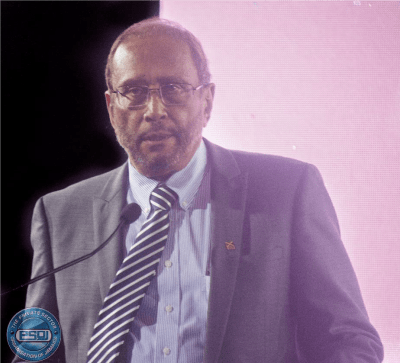
Howard Mitchell, PSOJ President; Endorsing the Launch of the JamaicaEye: The National CCTV System held at the National Indoor Sports Complex on March 14, 2018.
President of the Private Sector Organization of Jamaica (PSOJ) Howard Mitchell says there can be no progress nor prosperity unless the country develops our knowledge-based competence. Mitchell was speaking at the launch of the Ministry of National Security new initiative JamaicaEye.
“We live in a knowledge-based world, increasingly data gathering and the sharing of knowledge are critical to knowledge-based activities. We will not see progress nor prosperity unless we develop our knowledge-based competence. Communication is an integral part of knowledge-based activities,” said Mitchell.
President Mitchell went further to remind those in attendance that the PSOJ takes its responsibility as the premier based umbrella organization for the private sector very seriously. “We strive to be balanced and fair in our criticisms and we strive to be objective in our praise. It is no secret that we have been critical of the security management and strategy over the years that has been practicing in this country. And therefore, it is important that when we see a strategy worth action, that is comprehensively effective and that would make an impact that we endorse it; we give full praise to its originators.”
JamaicaEye is a three-phased implementation of a national closed-circuit television (CCTV) surveillance programme geared at a disaster response and public safety, which includes combating crime. Phase one of the project is the collaboration among key stakeholders and the MNS to establish a collective approach to CCTV surveillance.
Mitchell said that this programme is valuable, not only because of the impact it will have on crime, but is valuable because it serves as a template to show what participative democracy can do for the nation.
“I want to congratulate the Minister personally because I know of his commitment to participative democracy. He has never been shy to include all in his planning and in his deliberations and that alone makes this programme effective and it must serve as a template for all our activities in government and in civil society”, said Mitchell.
He further stated, “The PSOJ will be endorsing the system to our members individually and we will be supporting the Minister and this Ministry and all those involved in their promotion efforts.”
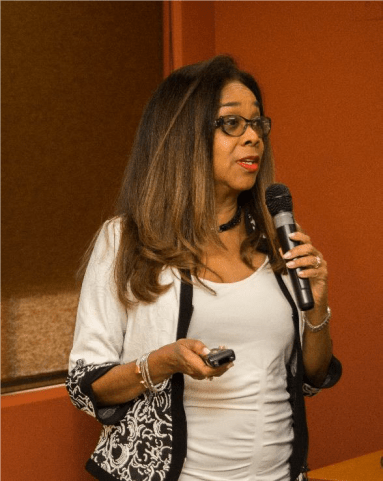
Jennifer McDonald, Chief Executive Officer, PSOJ; presenting at The UWI Mona Regional Disabilities Studies Conference on March 12, 2018.
The UWI Centre for Disability Studies (UWICDS) held its Regional Disability Studies Conference on Wednesday March
7, 2018. The theme for this conference is “Enhancing the Disability Agenda through Sports and Culture in the Caribbean.” The CEO of the PSOJ, Ms. Jennifer
McDonald, made a presentation at the Centre for Disability Studies regional
conference: “The importance of public-private partnership in the advocacy,
implementation and advancement of the lives of persons with disabilities in sports
and culture.”
McDonald informed the audience that addressing matters related to Disabilities is
one of PSOJ’s 4 core focus for 2018, which falls under Vulnerable Groups and
Gender Affairs. Other areas for advocacy includes: Innovation and Technology;
Climate Change; Crime and Public Safety.
“Jamaica possesses a strong platform with demonstrated excellence in Sports and
Culture locally, regionally and internationally” said Ms. McDonald. She reiterated
that “Our annual Boys and Girls Championships and the Jamaican festival
movement which have honed the skills of our athletes and artiste over the years.”
The actualisation of programmes and initiatives built through partnerships are
precedence of how public-private partnerships can work to improve these areas for
the advancement of Persons with Disabilities.
During her presentation McDonald quoted Sydney Thorpe, keyboard player of the
renowned Fab 5 – “People were fascinated because they had never seen a visually
challenged person playing three keyboards at a time, much less sitting on a revolving
stool, spinning and playing the keyboards … I didn’t have anything to prove to
anybody because I was in a band that was a top band,” he said.
Ms. McDonald, stated that, “the advancement of PWDs in sports and culture can
facilitate professional integration through the development of income generating
activities. These activities will also: promote increased participation of PWDs in
community life; increase the level of education of PWD through training; Educateand inform the wider public about PWDs and increase their chances of access to
basic social services.”
She further stated that, “members of the private sector can assist with the
advancement of PWDs in the areas of Sports and Culture by: having members of
their staff volunteer to work with institutions or organisations that provide services
to PWDs; making strategic decisions to support a particular sport, art form or
individual already engaging in either areas of discipline; making donations to
existing programmes or projects that will advance the exposure and improve on the
skills of PWDs in these areas.”
The UWI Centre for Disabilities Studies biennial conference is geared at bringing
together, the academic community, the public and private sector, civil society and
members from the community of persons with disabilities; in an academic
environment to articulate topics of critical importance to one of our most vulnerable
groups.
Since 1982, Food For The Poor donors have provided life-transforming work throughout the Caribbean and Latin American. Hundreds of thousands of the forgotten, the hungry and the poor have been blessed with a new opportunity in life, renewing that spark of hope for them and future generations.
Since inception, Food For The Poor donors have built more than 124,800 housing units, installed a total of 2,064 water wells, and sent more than 82,450 containers of essential goods to help people in the 17 countries where the charity serves.
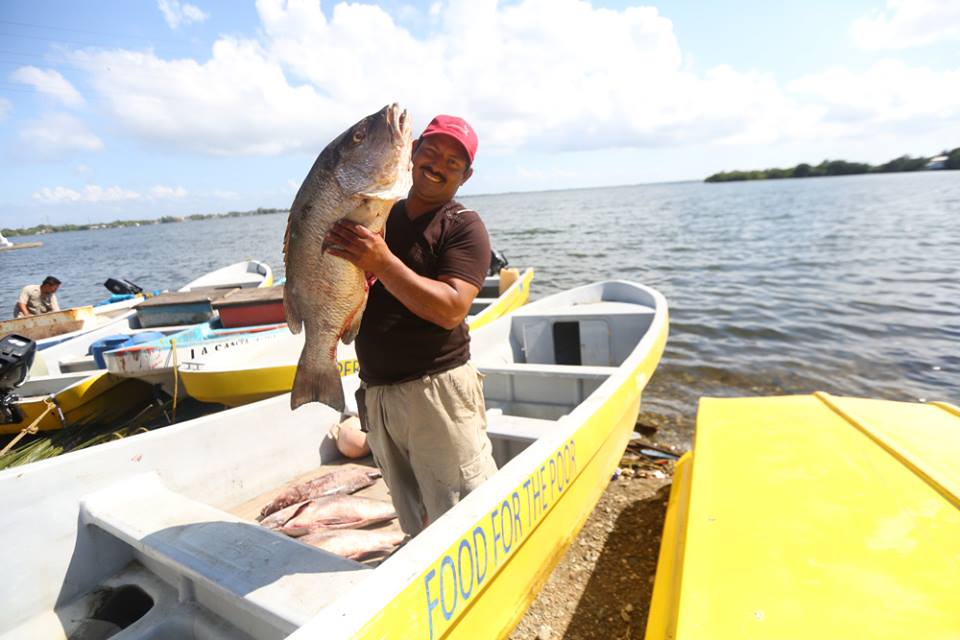
A fisherman in Honduras proudly holds up one of many fish he caught in the Caribbean Sea. Food For The Poor’s Fishing Village program supplies destitute coastal villages with fiberglass boats with outboard engines, global positioning systems, fishing tackle, 100-quart coolers, safety equipment, a gear shed with a freezer, a generator and a powerful solar-powered street light for the village common area, as well as training in deep-sea fishing. There are 15 fishing villages in Jamaica, 39 in Haiti, 15 in Honduras and one in Dominica. (Photo by Food For The Poor)
One of the largest international relief and development organizations in the United States, Food For The Poor always has been about empowering families to become self-sustaining. The charity believes an education is an important key to breaking the cycle of poverty and is committed to providing children with an education. Over last three decades, more than 450 schools have been built, repaired or expanded.
“The mission of Food For The Poor is to link the church of the First World with the church of the Third World in a manner that helps both the materially poor and the poor in spirit,” said President/CEO of Food For The Poor Robin Mahfood. “Everything that this organization has done in these 36 years has been to transform and equip people to help themselves and their families. All of this is made possible with God’s blessing. Our donors and our staff are an extension of our Lord’s mercy, and they are the ones who make helping the poor possible.”
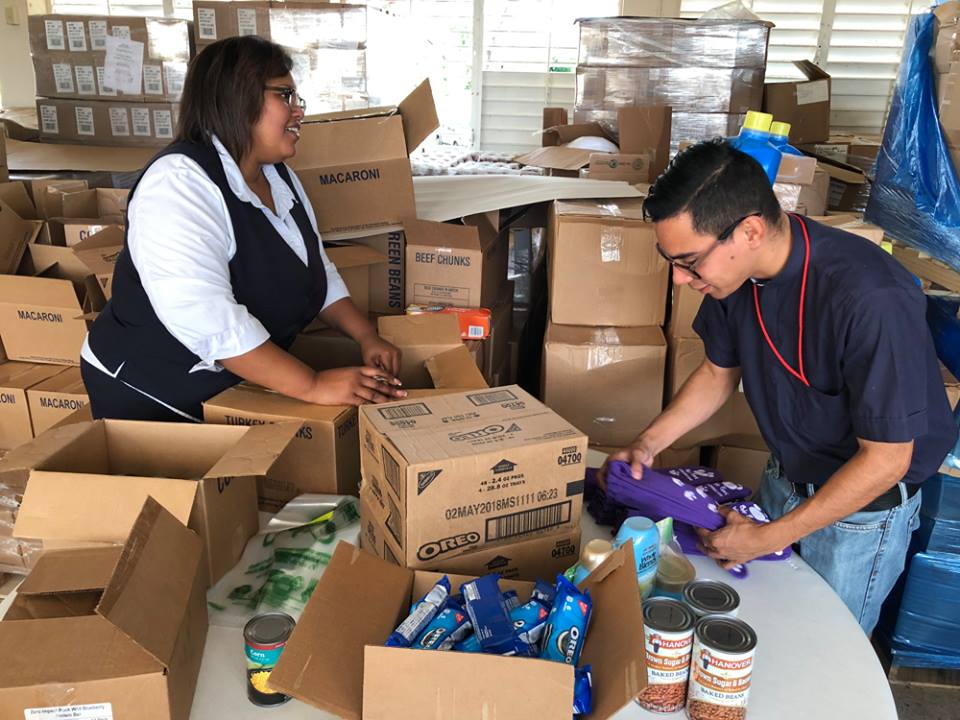
Volunteers for the Episcopal Church in Puerto Rico assemble relief items sent by Food For The Poor donors to help families recovering from Hurricane Maria. (Photo/Food For The Poor)
When it comes to natural disasters, Food For The Poor is eager to offer assistance. The charity has provided aid at the onset of the destruction caused by Hurricanes Irma and Maria in 2017, and remains involved in the ongoing recovery work. Thanks to its generous donors and partners, thousands of families in Puerto Rico are getting much needed aid, four months after Hurricane Maria destroyed much of the island. So far, Food For The Poor has shipped 69 tractor-trailer loads of aid to Puerto Rico.
Food For The Poor is working with the Catholic charity Caritas to distribute relief. Caritas Puerto Rico started in 1969 and has 200 parishes in 60 municipalities on the island. Food For The Poor also is working with the Episcopal Church to assure the distribution of the relief items. The church has 52 parishes throughout the island, warehouses and transportation, which are vital for reaching the rural communities.
Previously, Food For The Poor provided aid following Hurricane Sandy in 2012, Hurricane Matthew in 2016 and Hurricane Harvey in 2017.
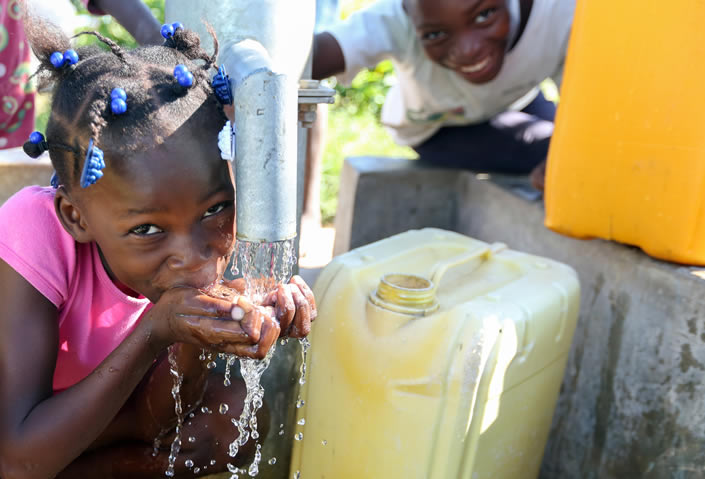
The charity also is keeping its promise to the people of Haiti to be there for the long haul following the 2010 earthquake. Since the Jan. 12, 2010, disaster, Food For The Poor has built 8,717 permanent two-room concrete block homes with water and sanitation, built or restored 44 schools in the Port-au-Prince area, and has installed 151 water filtration units. Each water filtration unit purifies and chlorinates up to 10,000 gallons of water a day for a total of 1,510,000 gallons of clean water daily.
“Food For The Poor is honored to be able to help as many people as possible to rebuild their lives following tragedies caused by natural disasters, we understand that a natural disaster can take aim at any of us at any given time, but the road to recovery is nearly impossible for poor families in rural communities,” said Mahfood. “This is why we always will do what we can for as long as we can to provide assistance for families recovering from the catastrophic disasters in the Caribbean, the United States and in the U.S. territory of Puerto Rico. We will continue to do this as we celebrate 36 years of service.”
Food For The Poor donors also build hospitals and community centers that provide technical training. The charity has implemented animal husbandry, agricultural and aquaculture projects. These projects, such as beekeeping and fishing villages, are not only a food source but they are helping the poor to generate income.
Food For The Poor, one of the largest international relief and development organizations in the nation, does much more than feed millions of the hungry poor primarily in 17 countries of the Caribbean and Latin America. This interdenominational Christian ministry provides emergency relief assistance, clean water, medicines, educational materials, homes, support for orphans and the aged, skills training and micro-enterprise development assistance. Over the last 10 years, fundraising and other administrative costs averaged less than 5% of our expenses; more than 95% of all donations, including donated goods, went directly to programs that help the poor. For more information, please visit www.FoodForThePoor.org.
The draft for the 2018 Hero Caribbean Premier League will take place on 1st March. This will be when the teams will select their lineups for the sixth edition of the tournament which will take place between 8th August and 16th September this year.
As ever, the Hero CPL will have the best cricketers taking part in the tournament, from around the world as well as from across the Caribbean. The window for this year’s event means that there are no West Indies fixtures that clash with the Hero CPL so the very best West Indian players will be available for selection.
This year the draft will take place in London, which is a reflection of the global nature of the tournament. With owners and sponsors from around the world investing in the Hero CPL and the Caribbean as a whole having the draft in London helps from a logistics point of view and helps sell the region to a global audience.
Speaking about the upcoming draft Damien O’Donohoe, CEO of Hero CPL, said: “Our draft is such an important date in the Hero CPL calendar. It is when we get to find out who will be coming to join the Biggest Party in Sport. We know that the quality of players that we have coming to this year’s tournament will generate a huge amount of excitement.
“While the Hero CPL is about bringing the Carnival atmosphere to cricket, the quality of the sport on display is just as important. The world-class cricketers that will be selected on 1st March are what make the cricket at Hero CPL so special.”
ABOUT THE HERO CARIBBEAN PREMIER LEAGUE:
First started in 2013, the Hero Caribbean Premier League (CPL) is a franchise-based T20 format cricket tournament that combines two of the most compelling aspects of Caribbean life – dramatic cricket and a vibrant Carnival atmosphere. Combining broadcast and digital viewership over 197 million fans watched the 2017 season to make it one of the fastest growing leagues in world cricket. This year’s tournament takes place between 8th August and 16th September 2018. Trinbago Knight Riders are the current Hero CPL champions and the other competing teams are Barbados Tridents, Guyana Amazon Warriors, St. Kitts & Nevis Patriots, St. Lucia Stars and Jamaica Tallawahs. For further information visit www.cplt20.com.
The Forward Step Foundation is striving to make a difference in the municipality of Portmore, St Catherine.
Founded ten years ago by Gregory Park resident Miguel ‘Steppa’ Williams, the foundation is now benefiting from the support of the Digicel Foundation, which provided a grant of US$1.2 million over two years to expand its work in social enterprise development through the Queen’s Young Leaders Programme.
The funding has already assisted the Forward Step Foundation in building its own headquarters and reducing overhead costs.
The funds provided through Digicel Foundation have also enabled Forward Step to move ahead with its media training programme, and to purchase the necessary equipment for a recording studio and digital editing programme. The Forward Step Foundation, which hosts its own lively YouTube channel, Di Streetz TV, focuses on the arts and culture as keys to development.
Training is already taking place in several other areas, including carpentry and landscaping while workshops on television- presenting and graphic design are planned. An important aspect of the foundation’s work is teaching life skills at training workshops including sessions relating to building self-esteem, confidence and teamwork.
With these funds, the Forward Step Foundation aims to boost its crafts and manufacturing training programmes. The new training will directly impact more than 50 young people age 14 to 30 years old, and involve about 500 other community members.
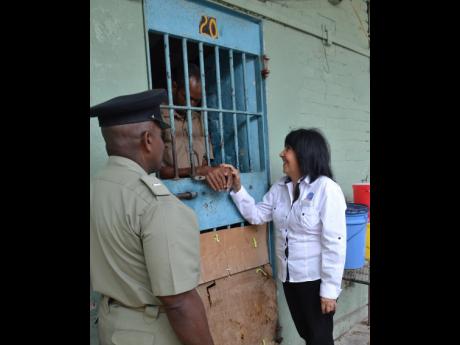
Since 2003, Sandra Ramsey has managed Food For The Poor’s (FFP) Prison Ministry Department, which has arranged for more than 8,000 prisoners being released and only 200 of these inmates have gone back to prison.
Ramsey’s work has managed to change the lives of many non-violent inmates, and her organisation ensures that it helps to provide the necessary means for inmates to become productive members of our society.
FFP’s prison ministry was established to assist with meeting the needs of inmates, ex-inmates and penal institutions.
Conducted twice each year, during Easter and Christmas, FFP’s prison releases have been far-reaching and life-changing.
With FFP’s support, the Fresh Start Programme and direct donations to the prisons, inmates are provided with the requisite skills to foster their smooth transition into society.
Ramsey’s work entails looking after the 12 correctional facilities across the island, ensuring that operations run smoothly and supplies such as medical items, food and building materials are continuously provided.
Ramsey received the Order of Distinction in the rank of Officer at the ceremony of Investiture and Presentation of National Honours and Awards last year, as she was recognised, in part, for her continuous and impactful work with FFP’s Prison Ministry.
“It’s a very emotional thing – you have to be there to experience these emotions as it gives you a completely different perspective on the inmates,” said Ramsey.
Each prison release is a surprise for the inmates. During each release, FFP pays the fines of inmates who have committed minor, non-violent offences.
“Surprising the inmates and telling them that they are going home is a heart-warming experience to be a part of – sometimes they don’t believe that they are going home,” added Ramsey.
FFP’s Prison Ministry Programme also provides assistance for the released inmates to start profitable businesses in areas such as welding, carpentry, farming and sewing.
“Once the inmates are out of prison, we interview them to see how best we can help them start their lives. Once we set them up in a particular business, we follow up with the ex-inmates by calling up and checking on them,” said Ramsey.
“The released inmates are very grateful for our work, and for the most part, they stay on the right track. They don’t want to go back to prison – all they want is a little help,” added Ramsey.







 Jamaica Highlights