Excerpt from Jamaica Observer Column published Monday , March 01, 2021
By Jean Lowrie-Chin
Clement ‘”Jimmy” Lawrence
Chairman of J Wray & Nephew Limited and Campari Group Jamaica Jimmy Lawrence retired recently after over 25 years of world-class leadership with the two companies. The elegant, understated Lawrence earned the respect of colleagues worldwide, serving on the board of the West Indies Rum & Spirits Producers’ Association (WIRSPA) and as chairman of the Spirits Pool Association, as well as the Jamaica Rum and Spirits Trade Association.
Born in St Ann, Lawrence is a York Castle High School alumnus and studied chemistry at The University of the West Indies (UWI). In an interview with the Jamaica Observer‘s H G Helps he recalled his mother’s insistence on good etiquette and shared his passion for education, sponsoring scholarships for less fortunate children.
Helps quotes Lawrence: “In terms of other plans, being a scientist, I have inventions that I have logged. I have even filed for at least one patent in the US patent office… ideas that I have but when you get engrossed into working and being part of a team it just diminishes the available time and the drive to carry these things to an end. I think in my more relaxed years — retirement — these are some of the things that I would pursue more… I look forward to retiring… it’s another phase and I want to be closer to my kids and my wife to enjoy the fruits of our labour as much as possible.”
We wish Jimmy Lawrence an enjoyable and adventurous retirement.
Excerpt from Jamaica Observer column published Monday March 01, 2021
By Jean Lowrie-Chin
Indian High Commissioner to Jamaica Masakui Rungsung Jamaica Observer photo
Here we are in March 2021, one year after the COVID-19 alert was sounded in Jamaica and we closed down our offices, started working more from home, wearing masks, sanitising; doing all the right things to stay well. Meanwhile, some of our fellow citizens were partying and going maskless about their business and taking the illness home to their elderly relatives.
You better believe that these offenders are not all poor, uneducated Jamaicans; some are well-off people whose arrogance has risen to stupidity.
With our hospitals at capacity and our medical personnel in exhaustion, we welcomed the news last Friday that a generous gift of 50,000 Oxford-AstraZeneca vaccines from the Indian Government will arrive this week. The Indian High Commissioner to Jamaica Masakui Rungsung said this was the result of the valiant efforts made with various agencies in his country: “This situation has given us sleepless nights,” he shared. Present at the announcement was Foreign Affairs Minister Senator Kamina Johnson Smith, whose diplomatic skills have brought much goodwill to Jamaica. We thank High Commissioner Rungsung and his Government for this urgently needed contribution.
Vaccine distribution
A letter widely circulated on various platforms from the Medical Association of Jamaica (MAJ) requesting information on seniors in preparation for vaccine distribution was really meant for doctors and not the general public. Information regarding individuals over 60 should be supplied to their respective general practitioners so that the MAJ can collate and share it with the Ministry of Health and Wellness.
I understand that the sequence for the administering of vaccinations is, first, health and front line workers; second, the security forces; and, third, the elderly, defined as people over 60.
A US poll has revealed an encouraging high-acceptance level of the vaccine and we are hoping that this will be the same for Jamaica. There is a lot of anti-vaccine nonsense circulating on WhatsApp. Meanwhile, those of us with elderly relatives in countries where the vaccine is being administered are reassured by their messages that there may be discomfort for one or two days, but they are well and very relieved to have the protection of the vaccine.
There are now three vaccines approved by the US Food & Drug Administration (FDA) — Pfizer-BioNTech, Moderna, and the single-shot Johnson & Johnson. We have been assured by the Center for Disease Control and Prevention (CDC) that, while they may not have 100 per cent effectiveness in preventing COVID-19, they have 100 per cent effectiveness in keeping those affected from becoming seriously ill and in need of hospital care. Well, if that is not enough assurance, I do not know what is.
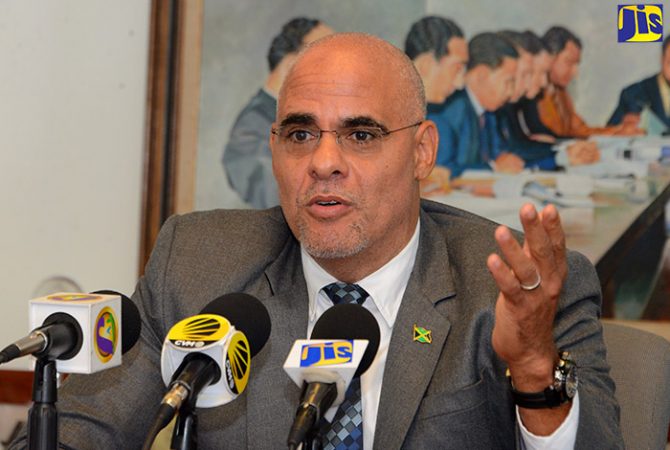
Chairman of the Economic Programme Oversight Committee (EPOC), Keith Duncan
As COVID-19 Cases Spike, Risks to Economic Recovery Remain High
Kingston, Jamaica – February 19, 2021: The EPOC met on February 5, 2021 to review the macro fiscal programme of the Government of Jamaica (GOJ) and the monetary performance of the Bank of Jamaica (BOJ) for the fiscal year 2020/21. The following were key highlights noted by EPOC:
The GOJ tables third Supplementary budget as Tax Revenues projected to fall below previous targets
Macro-fiscal risks increase as GDP growth projections weaken
Pace of global economic recovery remains uncertain as global demand for vaccines outstrip supply
International Reserves remain strong due to higher than expected increase in Remittance Inflows
Based on the performance of the fiscal and monetary indicators, the GOJ and the BOJ are on track to meet the selected quantitative targets under the GOJ Economic Reform Programme (ERP) as at the end of December 2020, with the exception of the Tax Revenues target. The implementation of the majority of the Priority Actions for the GOJ ERP continues to be delayed relative to the timelines established in November 2019, due, in large part, to the impact of the COVID-19 pandemic. The timelines and scope of these priority commitments are to be reviewed.
Fiscal Performance and Outlook
GDP, Tax Revenue Projections Revised Downwards in 3rd Supplementary Budget
As the Jamaican economy continues to be impacted by the COVID-19, the projections for GDP contraction had to be revised downwards from 7.9% to 11.6% for the current fiscal year. This has also led to Tax revenues projection being revised downwards by $6.7B from $515.6B to $508.9B, which has been reflected in the Third Supplementary budget, which was laid in Parliament by the Minister of Finance on January 19, 2021.
While Revenues & Grants of $398.3B for April-December 2020 were marginally higher than the budget target, what is more important to note, is that the performance of Tax Revenues, April-December 2020, of $346.5B with all the efforts of the Tax Administration of Jamaica (TAJ), are slightly behind budget, but is significantly lower (by $68.3B) than the outturn for the previous year of $414.7B for the same period.
Fourth Quarter (Q-4) Tax Revenue Projections are Optimistic
Tax Revenues for Q-4 (Jan-March 2021) are projected at $162.4B which is $2.3B behind Q-4 (Jan-March 2020) tax revenue outturn of $164.6B. While tax revenues are trending in the right direction, the projections for the last quarter seem to be quite ambitious bearing in mind the spike in the spread of the virus, the restrictions on movement and the resultant impact on the economic activity.
Fiscal Deficit Increases
Total Expenditure as tabled in the third Supplementary budget is projected to close the Fiscal year at $654.5B. When taking into account the projected tax revenues, the economy will see a projected and increased fiscal deficit of $78B or 4% of GDP.
Projected Primary Surplus to fell to $58.2B or 3% of GDP due mainly to projected reduction in tax revenues. Notwithstanding the lower revenue projection, the GOJ remains committed to achieving the revised primary surplus target of 3.0% of GDP, through a reduction of non-debt expenditures by $3.5B.
Public Sector Wages and Salaries Fiscal rule – 9% of GDP
It is apparent that Jamaica will not achieve the legislated target of Wages and Salaries being 9% of GDP in the current fiscal year and with GDP not returning to pre-COVID levels over the next two years; it will be a challenge for Jamaica to achieve this fiscal rule in the 2021/22 and 2022/23 fiscal years.
Debt to GDP increases beyond initial projections
As a result of downward projections in GDP to 11.6% and the predictable fall off in tax revenues, along with the projected fall off in the Primary surplus, it is expected that the Debt to GDP ratio will increase beyond the previous projection of 102.9% to 110% of GDP.
Monetary Performance
Inflation rate remains within BOJ’s target range
The 12-Month Point-to-Point Inflationof 5.2% at December 2020 remains within BOJ’s target range of 4.0% – 6.0%.
BOJ overnight Policy Rate at 0.5% per annum remains unchanged
Subject to inflation remaining well behaved, the BOJ has remained accommodative in its monetary policy stance with the aim of supporting recovery in economic activity.
Net International Reserves remain buoyant at US$2.98B as at the end of January 2021 due to higher than anticipated Remittance Inflows and reduced imports.
Net Remittance inflows of US$1,892.6M for the period April – November 2020 was up US$446.2M (30.8%) relative to the corresponding period in 2019.
The BOJ projects that, all things being equal, the NIR should close around these levels at the end of the current fiscal year.
Foreign exchange market remains volatile since the December 2020 quarter
GDP Continues to be Impacted by the Fallout in Tourism
STATIN reported that the economy contracted by 10.7% for July–September 2020 relative to the similar period in 2019. This performance reflected the continued negative impact of COVID-19 and the measures implemented to limit its spread. The real GDP decline for the period primarily reflected a 65.2% downturn in the Hotel and Restaurants industry, due to an 86.5% (734,385) fall in visitor arrivals. There were bright spots where higher levels of output were achieved in Agriculture, Forestry & Fishing (up 2.5%) and Construction (up 7.0%). Real GDP for the July-September 2020 quarter grew 8.3% relative to the April-June 2020 quarter, reflecting an indication of quarterly improvements in economic activities.
EPOC’s OUTLOOK on Growth in GDP is Cautious Due to High Levels of Uncertainty
As the globe traverses the various phases of the pandemic and countries are in a race to vaccinate their populations to achieve herd immunity, the COVID-19 pandemic still maintains a hold globally. Many countries continue to face varying levels of the spread of the virus and the outlook and pathway to recovery at best remain highly uncertain.
The Planning Institute of Jamaica (PIOJ) and the BOJ expect a contractionwithin the range of 10% – 12% in FY2020/21, which is consistent with the Ministry of Finance and Public Service’s projection of a contraction of 11.6%. The BOJ noted that, in its most recent assessment of the impact of COVID-19 on the Jamaican economy, economic activities have improved relative to previous projections.
The BOJ forecasts a partial recovery of 3% in FY 2021/22, which could trend up to 6% if there is a strong recovery in the tourism sector. However, there continues to be significant downside risks with the increasing number of positive daily cases being recorded recently, necessitating a nationwide tightening of curfew restrictions by the GOJ. The implementation of more stringent containment measures, despite being a reasonable response to the worsening COVID-19 situation in the country, is likely to result in further disruptions in economic activities.
Achieving Herd Immunity – Critical to full Economic Recovery
The updated global outlook of 5.5% reflects the expectations of increased economic activities later in the year as multiple vaccine approvals and vaccination launches in some countries have raised hopes of an eventual end to the COVID-19 pandemic.
Against this background, EPOC noted that the vaccination of the population and achieving herd immunity in the shortest possible period is the single most important imperative that can return Jamaica to a sustainable economic growth path. Private Sector Associations have entered into a Memorandum of Understanding (MOU) with the Ministry of Health and Wellness (MOHW) to participate in Jamaica’s COVID-19 Vaccination program. Notably, Private sector bodies and entities have indicated their willingness to fund the vaccination of their employees and dependents and to look at contributing to vaccinating the at-risk population. As Vaccines become available, this public-private sector partnership should see Jamaica significantly surpassing the initial target of 16% inoculation of the population.
Monetary Policy Outlook
Jamaica’s Net International Reserves are adequate and the BOJ has indicated that it will maintain an accommodative monetary stance until there are clear signs of that economic activity is returning to pre-COVID levels.
Fiscal Outlook
Jamaica faces the greatest shock to its economy in history and is struggling through the pandemic to get back to pre-COVID levels of growth and tax revenues. Once again, we face a period of fiscal consolidation as the recently amended fiscal rules, which allowed for a gentler correction of the current fiscal deviation, will see Jamaica having to return to primary surplus targets close to 6% in 2021/22 and 7% in 2022/23 to put Jamaica on a credible trajectory to achieve a 60% Debt to GDP target in 2027/2028.
Bank of Jamaica Dividend of $33B Payable in April 2021
The Minister of Finance and the Public Service announced, in the tabling of the fiscal year 2021/22 budget on February 18, 2021, a one off Bank of Jamaica Dividend of $33B, which will ease the level of fiscal consolidation required. This will also give the GOJ some fiscal space to provide a stimulus package to the economy, which will include a Vaccination programme, social and business support, along with significant infrastructure and capital expenditure.
Public-Private Sector Partnerships Critical to Recovery
With the limited fiscal space, EPOC believes that the private sector will have to play a major role in driving economic recovery and Public-Private partnerships will be instrumental in returning Jamaica to a growth path.
EPOC firmly believes that the prioritization and the coordinated implementation of the recommendations of the COVID-19 Economic Recovery Task Force, led by Dr. the Hon. Nigel Clarke will certainly put Jamaica on a firm path of recovery.
EPOC urges all Jamaicans to remain vigilant and adhere to the COVID-19 Protocols
Jamaica is now at a critical juncture in our economic recovery path. As such, EPOC urges all Jamaicans to remain vigilant while adhering to the COVID-19 protocols to safeguard our lives and livelihoods.
Again, we express our gratitude and thanks to the GOJ, our health care workers, the MOHW and the security forces who have been working assiduously, putting their lives at risks to manage and curtail the spread of the virus.
Excerpt from Jamaica Observer column published Monday, February 22, 2021
By: Jean Lowrie-Chin
Hearty congratulations to the new Press Association of Jamaica (PAJ) executive, elected earlier this month at its annual general meeting (AGM). Now in its 78th year, the PAJ can pride itself on being the first such body in the Caribbean, with the late legendary The Gleaner Editor Theodore Sealy serving as its first president.
In working towards their mission of upholding high standards in the profession, the PAJ has conducted numerous professional development exercises, and lauds the achievements of its members with its annual National Journalism Awards.
George Davis was returned unopposed as president, and the following nominees also took up their positions unopposed: First Vice-President Gillian Haughton, Second Vice-President Kalilah Reynolds, Secretary Kimberley Hibbert, Treasurer Jovan Johnson, and Assistant Treasurer/Secretary Damion Mitchell. The five directors elected were: Dionne Jackson Miller (a past president), Archibald Gordon, Giovanni Dennis, Sharlene Hendricks (Young Journalist of the Year and staff reporter at the Jamaica Observer), and Khadijah Thomas.
In the Observer report on the AGM, George Davis noted, “There are six women and five men on an executive team that includes an attorney-at-law, a media entrepreneur, and the reigning young journalist of the year. Indeed, with only four of the 11-strong team members aged 40 or older, this is one of the youngest executives ever to be tasked with handling the business of the PAJ.”
Journalism Icon Ken Allen
As we celebrate the strength of Jamaica’s media, we must acknowledge the contribution of the Ken Allen, who passed away earlier this year. Allen moved up the ranks from reporter to editor-in-chief of The Gleaner, completing half a century in media. So brilliant was he at his craft that, in 1955, the young Cornwall College alumnus was offered the first Inter-American Press Association Scholarship to pursue a master’s degree at Columbia University although he did not have a first degree.
Allen’s colleagues remember him for his excellence, integrity and leadership. On assignment for Flair magazine in the 80s, I discovered that this serious-looking gentleman had a lovely sense of humour and an unforgettable twinkle in his eyes. May his great soul rest in peace.
Excerpt from Jamaica Observer column published Monday, February 22, 2021
By: Jean Lowrie-Chin
Representatives of several philanthropic organisations worldwide attended an International Women’s Forum Conference last week on strategic alliances for sustainability. Moderator Nike Irvin noted that seven per cent of non-profits in the US may close due to the effects of the pandemic, resulting in the loss of thousands of jobs.
The situation is no different in Jamaica. We should examine the suggestion from presenters at the conference that, through sustained collaboration, strategic restructuring and mergers, organisations can ensure their effectiveness and longevity. In considering this move, they should look at others with common success factors, take the time to explore the opportunities, ensure there is clarity in communication, be honest, and engage a third-party consultant.
Speakers were Dana Munson, CEO of the Chicago Child Care Society and Kaile Shilling, coalition director of the Violence Prevention Coalition of Greater Los Angeles. Using the metaphor of dance, Munson said it was important to be flexible, nimble, and show grace: “Take your ego off the table.”
The themes identified were clarify why; think bigger; build relationships and trust; show grit and grace; and ensure sound leadership, not motivated by self-gain. Indeed, these apply to not only non-profits but also to any organisation which finds itself in a vulnerable position.
Excerpt from Jamaica Observer column published Monday, February 22, 2021
By: Jean Lowrie-Chin
As we watched the successful landing of National Aeronautics and Space Administration’s (NASA) Perseverance on Mars last Thursday, and saw the first close-ups of the planet’s surface, we harked back to futurist Edie Weiner’s prediction that in 10 years we will be holidaying on Mars.
It was a thrilling event. However, much less thrilling were the scenes out of the state of Texas where an Arctic blast caused extreme hardship to citizens. Many lost power, water, and met empty shelves as they searched for food in the bitter cold. Over 30 deaths have been attributed to the harsh conditions.
The oft-repeated question, “Who is packing your parachute?” is one that should be a challenge to those leaders on whom citizens depend for their safety and protection. Clearly, that delicate parachute which gave Perseverance a soft landing on Mars was carefully constructed. The Texas power companies cannot claim the same level of performance. Reports of people using their furniture for firewood even brought compliments to oft-insulted Jamaica Public Service (JPS) on Twitter.
Thank goodness the weather in Texas has warmed up over the past weekend, and with US President Joe Biden’s declaration on Saturday of the winter storm being a major disaster for many areas of the state, communities in 77 counties will receive federal funding.
Excerpt from Jamaica Observer column published Monday, February 22, 2021
By: Jean Lowrie-Chin
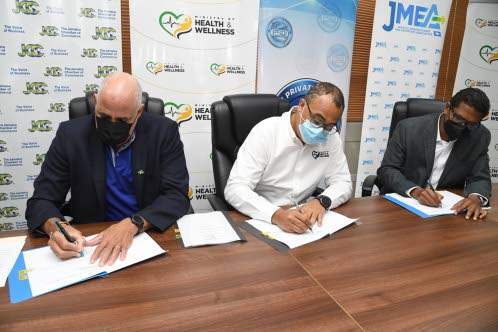
(From left) Keith Duncan, president of the Private Sector Organisation of Jamaica (PSOJ); Dr Christopher Tufton, minister of health and wellness; and Richard Pandohie, president of the Jamaica Manufacturers and Exporters Association, sign the memorandum of understanding for cooperation on vaccines at the IBM building, in New Kingston. (Photo: Joseph Wellington)
Herd immunity is the only way out of Jamaica’s economic slump, and so the private sector has pledged to partner with the Government to get us back on track. At last Friday’s press briefing, Economic Programme Oversight Committee (EPOC) Chairman Keith Duncan said that private sector bodies had signed a memorandum of understanding (MOU) to this effect with the Ministry of Health and Wellness.
“Notably,” he added, “private sector bodies and entities have indicated their willingness to fund the vaccination of their employees and dependents and to look at contributing to vaccinating the at-risk population.”
COVID-19 has left us with a 65.2 per cent downturn in tourism and restaurant businesses. However, Duncan noted two “bright spots” — agriculture, forestry and fishing up by 2.5 per cent and construction up by seven per cent. Remittances have also increased by some 30 per cent. I have never seen so much construction activity and enthusiasm for real estate. One colleague opined that people are seeing this as a safe way to protect their assets.
We wait anxiously for the COVID-19 vaccine, concerned that our Caribbean neighbours seem to have stolen the march on us. We are puzzled, because our health ministry was early with prevention promotion, contact tracing, quarantining of communities, and informative press briefings. Our friends in the US were impressed with the national consensus on the importance of mask-wearing, when there were so many mixed messages around it in that country. The reporting website created for travellers was thought to be innovative, but now there are questions about the security of the information.
This pandemic is the most challenging situation that Jamaica has ever faced, but as we have done in other disastrous situations, we will recover and be stronger from the hard lessons we are learning.
Excerpt from Jamaica Observer column published 15 February 2021
By Jean Lowrie-Chin
Co-founder of the Calabash Literary Festival Justine Henzell broke the good news last week that Jamaica was one of 12 countries chosen to participate in “Literature Live Around the World” last Friday. It is a credit to Justine and co-Founder Kwame Dawes that Calabash was chosen alongside the world-famous Jaipur Lit Fest, Edinburgh Book Fest, Toronto Festival of Authors, Emirates Lit from Dubai, Bay Area Book Fest from San Francisco, Ake from Lagos Filba from Buenos Aires and others.
Our poets and novelists made us proud, their pieces enhanced by the beautiful Treasure Beach setting. They were Ann Margaret Lim, Opal Palmer Adisa, Diana McCaulay, Earl McKenzie, Millicent Graham, Mutabaruka, Erna Brodber and Olive Senior.
Congratulations to organisers Kulturoperatørene in Bergen, Norway for providing this feast of creativity which we understand should be available online for the next ten days.
Excerpt from Jamaica Observer column published 15 February 2021
By: Jean Lowrie-Chin
Archbishop Emeritus Charles Dufour Photo credit: Jamaica Observer
We gathered (while distancing) at the Holy Cross Catholic Church last Wednesday for the celebration of Archbishop Emeritus Charles Dufour’s 25th Anniversary of Episcopal Service. Archbishop Dufour served in various capacities islandwide and as Bishop of Montego Bay created the Good Shepherd Foundation which established the first AIDS Hospice and has now expanded into a health centre which serves thousands.
The dynamic homilist was the first Chairman of the Peace Management Initiative, Chaired the Police (Civilian Oversight) Authority, and served on the Parliamentary Salaries Commission. After 50 years in the priesthood, Archbishop Dufour retired last September, only to be called two months later to serve the St Mary’s Parish in Above Rocks, St. Catherine. The Observer quotes him: “God sent me to serve the people and as long as he permits me to, I will continue to do his will.”
Excerpt from Jamaica Observer column published 15 February 2021
By: Jean Lowrie-Chin
Jamaica is faced with a spike in Covid-19 cases, more road deaths and, in the words of PSOJ President Keith Duncan, “an epidemic of violence”. When a busload of people is warned by police to put on masks, and as soon as he turns his back they remove them and consider it a joke, clearly they do not value their own lives. The same applies to the total lack of regard for the road code mostly by taxi drivers and motorcyclists. The Commissioner of Police noted that contract killings are on the rise because killers are charging less.
We can understand that some teachers and parents are fearful about keeping schools open and re-opening others, but with the breakdown in households, schools are not only places of learning but also places of protection. That advertisement depicting a girl child in fear of an older male relative is a sad reality for too many.
Statistics show that more than 50 percent of unattached youth in the 16-24 age group is affected by crime, and more than 70 percent of crimes are committed by that group. To address this issue, the government has created the HOPE Programme so participants can learn, earn and save. There is also the Jamaica National Service Corps, a one-year training programme for 26,000 youths conducted by the JDF, at the end of which some participants are accepted into the Force.
In a JIS report by Latonya Linton earlier this month, Minister of National Security, Hon. Dr. Horace Chang, told Parliament that the Government has launched the ‘Plan Secure Jamaica’ initiative. He noted that it is “the most coordinated, inclusive and enduring security programme that has ever been introduced in Jamaica. It is geared towards creating a safe, secure, cohesive and just society.”
He described main aspects of the programme: “strengthening the national security architecture; strengthening the criminal justice system; enhancing youth and community development; protecting and securing borders, maritime space and key sectors of the economy; strengthening national integrity systems; and increasing and sustaining public support for law enforcement and public order.”
The cost of the programme is estimated at $176 billion over seven years. Dr Chang said his was “the first Government to put in place such a robust security plan, with the necessary institutional arrangements to ensure a sustainable, whole-of-government approach to the social investment and social transformation component of crime-fighting.”
He said the country can look forward to the new Firearms Act, amendments to the Criminal Justice (Suppression of Criminal Organisations) Act (the ‘anti-gang’ legislation), and regulations for the Major Organised Crime and Anti-Corruption Agency.
The Crime Monitoring Oversight Committee (C-MOC) comprising representatives of both political parties, the Private Sector, Civil Society and the Churches has established a timetable to monitor the implementation of national security measures. EPOC has helped to keep our economy on track; we are hoping the same for C-MOC.




 Jamaica Highlights