The National Leadership Prayer Breakfast Committee (NLPB) has announced pending changes in its leadership following its recent annual general meeting.
The change comes as the current chairman, Reverend Sam McCook, and his team, have constitutionally completed their full term of four years. The newly-elected committee leaders will serve from 2025-2027, effective September.
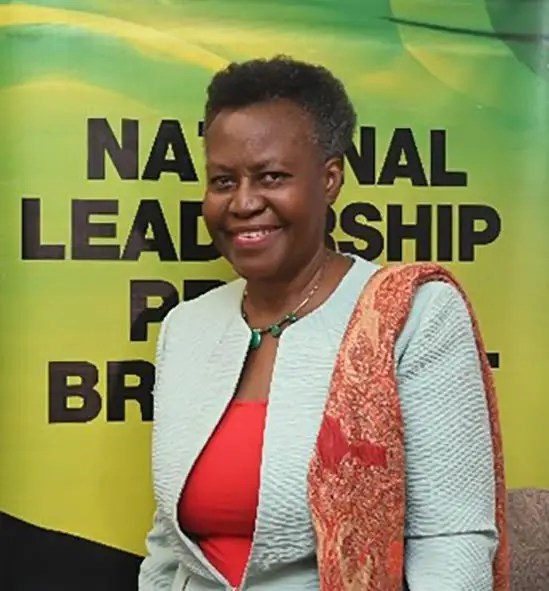
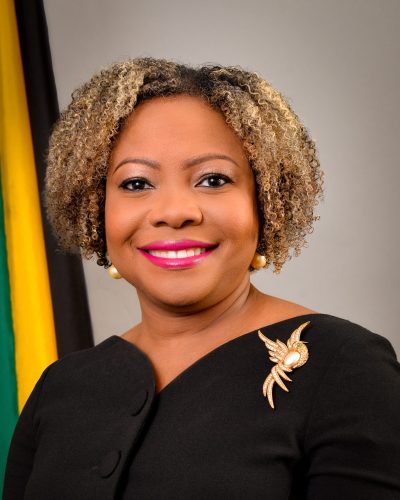
Rev McCook will be succeeded by Pastor Claudia Ferguson, executive member of the Jamaica Evangelical Alliance and director of Love 101 FM radio and television. Pastor Ferguson has served on the NLPB Committee since 2013 and is pastor in the Seventh-day Baptist Church denomination. The vice-chair will be Rev Dr Rohan Ambersley, executive member of the New Testament Church of God in Jamaica. In the meantime the secretarial post will be held by Rev Dr Wayneford McFarlane, executive member of the Jamaica Council of Churches and pastor of the Saxthorpe Methodist Church, with the assistant secretary to be Bishop Courtney Golding, currently chairman of the Jamaica Pentecostal Union Apostolic and pastor of the Orangefield Pentecostal Tabernacle.
The NLPB Committee has hosted an annual prayer breakfast in Jamaica for 45 years.
The prayer breakfast is aimed at fostering unity, fellowship, and spiritual reflection among the nation’s leaders.
As part of its commitment to nation building, the NLPB 2025 outreach project has focused on supporting The Tegwyn House — a special unit at the Jamaica National Children’s Home that cares for children who have severe mental and physical disabilities and need 24-hour care
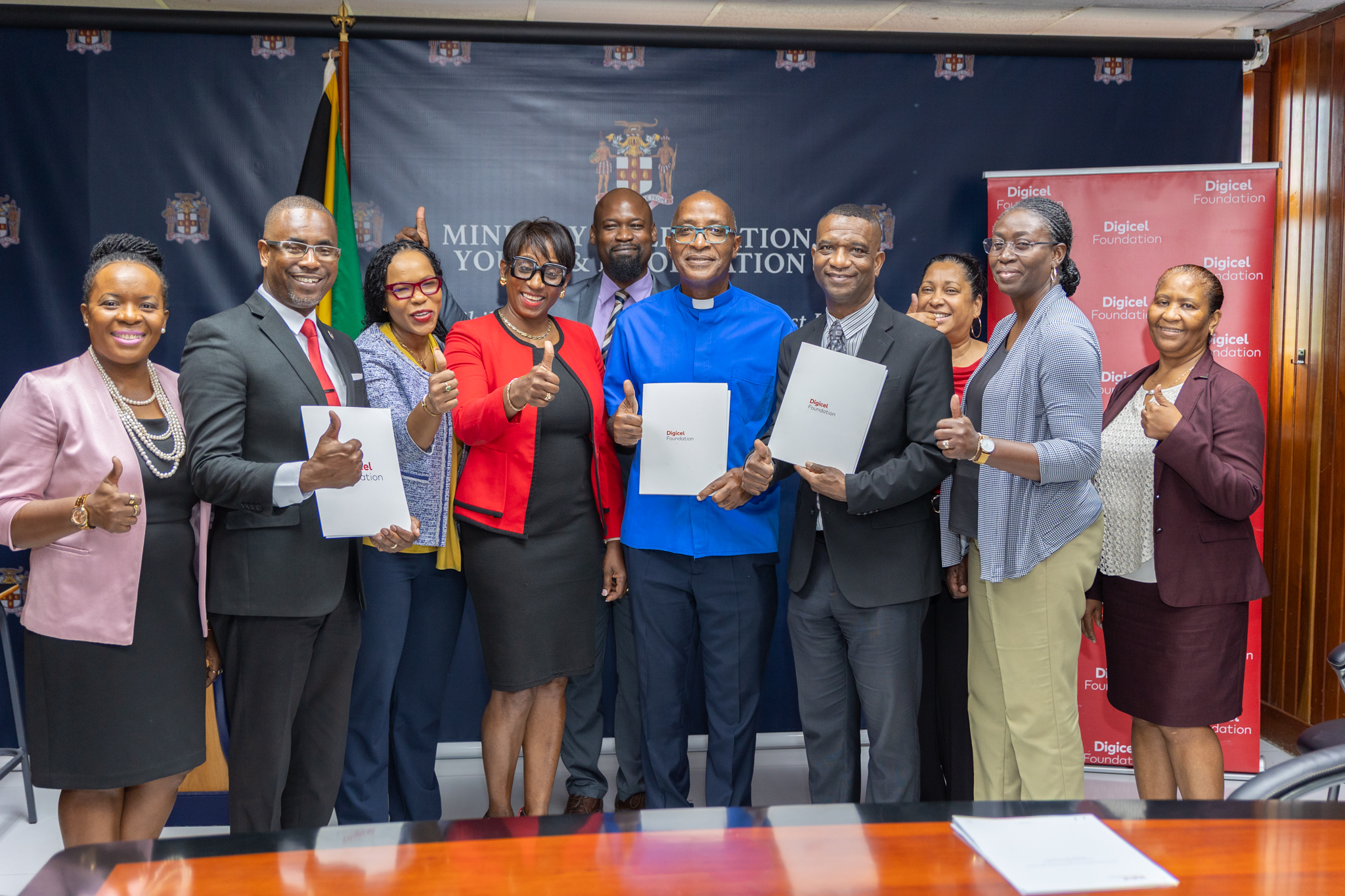
Permanent Secretary Dr. Kasan Troupe (3 rd left), Joy Clark Digicel Foundation Chairperson (4 th left) and representatives from the Ministry of Education, Youth, Skills and Information, Digicel Foundation, St. Joseph’s Teachers’ College, Mico University College, and Sam Sharpe Teachers’ College share thumbs up following the signing of MoUs to establish fully equipped Digicel Foundation Smart Lab.
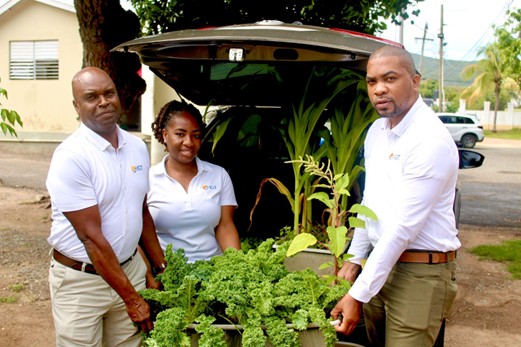
International Game Technology (IGT) Jamaica team members (from left) Mail Clerk Owen Campbell, People & Transformation People Partner Simone Seymour-Thomas, and Warehouse & Distribution Manager Dameon Pagan, destined for the SOS Children’s Village, load a vehicle with various vegetable plants and seedlings from the Rural Agricultural Development Authority (RADA). The team is transforming the children’s home landscape through their Labour Day community project—establishing a sustainable vegetable garden. This green initiative represents IGT’s commitment to community development while creating a lasting legacy of food security and environmental education for the residents.
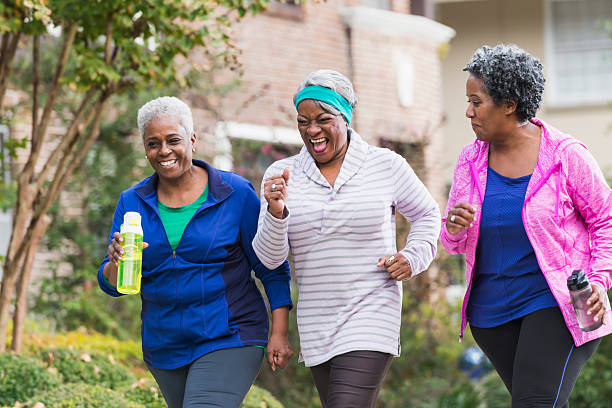
A group of three senior women exercising together, jogging or power walking along a sidewalk in they are having fun, laughing.
Our CCRP members have complained about the lack of parks where they can safely exercise, so we are calling on the Ministry of Labour and Social Services to collaborate with the Ministry of Local Government to establish areas similar to Emancipation Park and Harmony Beach Park in every parish.
We are happy that a petition we circulated for the reopening of the Rockfort Mineral Bath, signed by over 2,500 people, helped to push the envelope for the good news we received this week. We are incredibly grateful to the Caribbean Cement Company for keeping communication open and for the generous features that they are adding to the costly renovation.
As we reflected on the dangers to elders living alone — fire and natural disasters — we are calling for a division of the Office of Disaster Preparedness and Emergency Management to serve the elderly in collaboration with NCSC, the Jamaica Constabulary Force, and the Jamaica Fire Brigade.
The Senate committee also heard excellent presentations from Sandra Latibeaudiere, lecturer and the section head/unit coordinator for the Social Work Programme at The University of the West Indies, Mona, and Dr Brian Kazaara, president of the Jamaica Association of Psychiatrists. Latibeaudiere noted that there is a 6 per cent prevalence of dementia in Jamaica, and with our growing elderly population, called for a National Dementia Plan. She mentioned depression as a worrying factor and recommended cognitive testing. She said the existing community health teams should be equipped with specialists to address these issues.
Dr Kazaara noted the importance of ethics, respect, patient autonomy, and advocacy. He said elderly patients should be allowed to speak for themselves and emphasised that dementia is not an inevitable condition for the elderly. He underlined the importance of cognitive testing and bemoaned the inequity of the delivery of services in rural areas.
In our CCRP outreach activities we see how woefully underserved our needy elderly are, many of whom live in volatile areas. We are grateful to DSP Natalie Palmer-Mair, Sergeant Jerr Johnson-Heron, and other kind officers for assisting in distributing our care packages to destitute elders.
This proposed legislation is everybody’s business. It will not only protect the elderly of the present, but also Jamaicans of all ages — the elderly of the future.
The elderly are an underserved community in Jamaica.
On my way downtown last Tuesday morning, I opened my WhatsApp messages to see photographs of an elderly woman tied to a wheelchair with a wound on her forehead. She appeared to need a bath. They were sent with an urgent appeal for help by her daughter living overseas, who had been sending funds for her care. I later found out that a social worker from the National Council for Senior Citizens (NCSC) had visited the lady and was working with the family to ensure her safety.
Our team was heading to Gordon House to make CCRP’s presentation to the special select committee of the Senate mandated to develop legislation for the care and protection of the elderly. As the image of this poor lady flashed through my mind, my voice cracked at times. It has been a long road for CCRP, as we had activated our advocacy in 2017, writing releases and corresponding with representatives of the Ministry of Labour and Social Security and the Ministry of Health.Let us applaud Senator Professor Floyd Morris who moved the motion to push this legislation forward. It was seconded by Senator Sherene Golding Campbell, who immediately agreed to chair the Senate committee which began hearing submissions within a few months. We are grateful for the comments and suggestions made by the members at the meeting last week — senators Golding Campbell and Morris, Senator Dr Sapphire Longmore, Senator Sophia Fraser Binns, and Senator Kavan Gayle.
We welcome the announcement by Senator Dana Morris Dixon that reading will be treated as a separate subject in primary schools beginning in September. There was wide participation for Read Across Jamaica last Tuesday, and the attention and participation of the children showed their enthusiasm for books.
This took me back to the days when our father would take us to Tom Redcam Library to borrow books every week, followed by ice cream treats. Of course, we did not have the competition of digital media in those times, so it is harder for parents to manage their children’s reading habits. This initiative will ensure that children become better readers, which will prepare them for understanding texts on all subjects and directions in their examinations. As the saying goes, ‘Readers are leaders.’
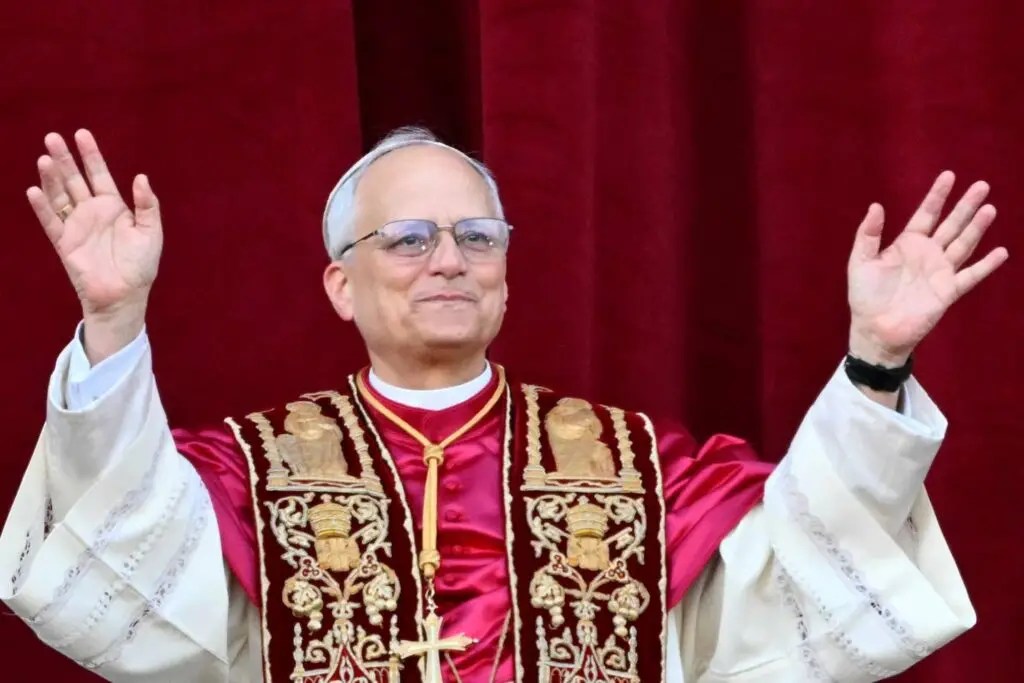
VATICAN CITY, Holy See — Newly elected Pope Leo XIV, Robert Prevost, arrives on the main central loggia balcony of St Peter’s Basilica for the first time, after the cardinals ended the conclave, on May 8, 2025. (Photo: AFP)
We Catholics held our breath after we saw the white smoke rising from the Sistine Chapel where the conclave of cardinals met to elect a new Pope.
There was joyous celebration at the message, “Habemus Papam” (We have a Pope). We had been in mourning after the passing of the compassionate Pope Francis and prayed that the new pope would follow in his footsteps, calling for peace, engaging the downtrodden, and concerned about environmental endangerment.
As we read about the most popular candidates, we saw two favourites from the Philippines and Africa — Cardinals Luis Tagle and Peter Turkson of Ghana, and there were comments that this would bring hope to Catholics in the developing world. The name of Robert Prevost did not appear in the betting reports; yes, there was active betting on who would be the new pope. Even then Cardinal Prevost had said to his brother John a few days before the conclave, “Not going to happen.”
But scarcely had 24 hours of the conclave passed that there were two-thirds or more votes (we will never know the exact number) electing Prevost, Pope Leo XIV, and his life story was revealed to the world. We learned that this Chicago-born cardinal had answered his vocation to become a monk of the Order of Augustine. His degree in mathematics resulted in him being offered a place at Harvard. Instead, he opted for the priesthood and studied at the Pontifical College of St Thomas Aquinas where he received a doctorate in canon law.He was then sent by his superiors to serve in Peru, where he is reported to have become a fatherly figure to the people of the city of Chiclayo. He rode on horseback and carried bags of provisions on his back to the poorest in remote areas. He became so close to the people that he had said he would serve there for the rest of his life. Later he was named bishop of the city and became a naturalised citizen of Peru. However, his leadership qualities led to him being appointed the head of the Augustine Order, and he subsequently relocated to Rome. Most recently he was appointed prefect of the Dicastery for Bishops at the Vatican, overseeing the selection of bishops.
It is no wonder then that on the social media platform X he reposted statements criticising the current US actions against immigrants. He has also posted a comment opposing Vice-President JD Vance’s hierarchical approach to love. He expressed sorrow at the killing of George Floyd and, surprisingly, this was criticised by a functionary in the current US Government.My non-Catholic friend in Florida chuckled, “Jean, your new Pope is a browning!” Ancestral records reveal that Pope Leo’s mother was a Creole from Louisiana and her father was a Haitian born in Santo Domingo, while her husband was of French ancestry. This has also been on repeat on social media. Racists may describe him as a ‘one-drop’ man of colour.
However, this Pope, who is fluent in five languages and who turned his back on a comfortable life to share the discomfort of the poor, has risen above such labels. He is now the leader of 1.4-billion Catholics worldwide, numbers matched only by the populations of India and China.
Here in Jamaica, Catholics are about 1.5 per cent of the other Christian denominations. However, we have a large footprint in education and service to the needy. Jessie Ripoll’s Alpha and Mercy community, Father Holung’s Missionaries of the Poor, Monsignor Ramkissoon’s Mustard Seed Communities, Food For the Poor founded by Ferdie Mahfood, Sister Benedict Chung’s Laws Street Centre, Archbishop Dufour’s Good Shepherd Foundation all testify to our emphasis on service to ‘the least of our brothers [and sisters]’. Even strong anti-Catholics boast about their children’s achievements at Catholic schools. Although these institutions may have been founded by Catholics, there is no discrimination against students or beneficiaries of other religions, as we follow Jesus’s teachings that every human being is our neighbour.
Catholics have been outstanding business leaders and indeed represent a high percentage of those in the Private Sector Organisation of Jamaica Hall of Fame. We have had, and still have, some strong voices in political leadership, including Alexander Bustamente, and are proud that National Hero Marcus Garvey and our famed poet Claude McKay became Catholic converts.
Last Sunday CCRP was hosted by the Bethel Baptist Church for our 15th Anniversary Thanksgiving Service. Afterwards, I thanked Reverend Rosalena Robinson for her warm welcome and told her I was a Catholic. She replied that it was the theology of the Catholic Church that she and fellow pastors had studied. The teachings of Christ and His first leaders prevail. May our new Pope Leo XIV be blessed as he preserves the legacy of our first Pope, St Peter.
The Animal Welfare Advocacy Group (AWAG), led by president and co-founder Dr Blossom O’Meally Nelson, has been in talks with several stakeholder groups to promote the humane treatment of animals. AWAG is growing in strength, having built working relationships with the Ministry of Agriculture, Mining and Fisheries and the Jamaica Constabulary Force.
Its recommendations for updating animal welfare legislation are being reviewed and “have made every effort to get the Ministry of Tourism to set standards for animals used in tourism”, notes Dr O’Meally Nelson. They are concerned at the proliferation of “fake vets” and are alerting the public to ensure that they use licensed practitioners for the protection of their animals. AWAG is planning a public education programme and is reaching out to media for their support.
We used a comfortable Jamaica Urban Transit Company (JUTC) bus for the shuttle service to the JMEA Expo at the National Arena. What a contrast to the “Jolly Joseph” buses of our school days. We acknowledge that Dr Peter Phillips has done yeoman’s service in the establishment of JUTC, but big congratulations must go to Transport Minister Daryl Vaz for the expansion of JUTC routes to rural areas and the introduction of school buses for long-suffering students.
Jaevion Nelson commented on social media: “Was having a convo with my uncle the other day about the rollout of public transportation in Clarendon. He said the impact is huge. People are saving a lot. His son gave up his place in town and travels, saving about $300 each way, and get a comfortable ride to town. All this time I thought it was just about two routes JUTC had there. I’m very happy for them. Long time public transportation should be offered to other parishes.”Thank goodness for efficient transportation initiatives, a must for social and economic development.
Jamaica ranked 26th of 180 countries on the World Press Freedom Index.
We used to brag that Jamaica usually placed in the top 10 for press freedom. This week we were relegated to 26th position, the lowest I can recall, by Reporters Without Borders (RSF – Reporters sans frontières). However, to be 26th of 180 states is no shame; the only Caribbean country ahead of us is Trinidad and Tobago at 19th and many developed countries are behind us. Check https://rsf.org/en/index for some interesting ratings.
The Press Association of Jamaica (PAJ) has described our slippage as “a wake-up call”. It noted: “The RSF report highlights a troubling erosion in the relationship between the media and public institutions, especially the state. It cites growing mistrust, limited transparency, and increased economic vulnerability among newsrooms. These trends threaten to undermine public interest journalism and democratic accountability.” I should declare here that I am one of three trustees of the PAJ, serving with Laura Tanna and Franklin McKnight.We used to brag that Jamaica usually placed in the top 10 for press freedom. This week we were relegated to 26th position, the lowest I can recall, by Reporters Without Borders (RSF – Reporters sans frontières). However, to be 26th of 180 states is no shame; the only Caribbean country ahead of us is Trinidad and Tobago at 19th and many developed countries are behind us. Check https://rsf.org/en/index for some interesting ratings.
The Press Association of Jamaica (PAJ) has described our slippage as “a wake-up call”. It noted: “The RSF report highlights a troubling erosion in the relationship between the media and public institutions, especially the state. It cites growing mistrust, limited transparency, and increased economic vulnerability among newsrooms. These trends threaten to undermine public interest journalism and democratic accountability.” I should declare here that I am one of three trustees of the PAJ, serving with Laura Tanna and Franklin McKnight. We used to brag that Jamaica usually placed in the top 10 for press freedom. This week we were relegated to 26th position, the lowest I can recall, by Reporters Without Borders (RSF – Reporters sans frontières). However, to be 26th of 180 states is no shame; the only Caribbean country ahead of us is Trinidad and Tobago at 19th and many developed countries are behind us. Check https://rsf.org/en/index for some interesting ratings.
The Press Association of Jamaica (PAJ) has described our slippage as “a wake-up call”. It noted: “The RSF report highlights a troubling erosion in the relationship between the media and public institutions, especially the state. It cites growing mistrust, limited transparency, and increased economic vulnerability among newsrooms. These trends threaten to undermine public interest journalism and democratic accountability.” I should declare here that I am one of three trustees of the PAJ, serving with Laura Tanna and Franklin McKnight We used to brag that Jamaica usually placed in the top 10 for press freedom. This week we were relegated to 26th position, the lowest I can recall, by Reporters Without Borders (RSF – Reporters sans frontières). However, to be 26th of 180 states is no shame; the only Caribbean country ahead of us is Trinidad and Tobago at 19th and many developed countries are behind us. Check https://rsf.org/en/index for some interesting ratings.
The Press Association of Jamaica (PAJ) has described our slippage as “a wake-up call”. It noted: “The RSF report highlights a troubling erosion in the relationship between the media and public institutions, especially the state. It cites growing mistrust, limited transparency, and increased economic vulnerability among newsrooms. These trends threaten to undermine public interest journalism and democratic accountability.” I should declare here that I am one of three trustees of the PAJ, serving with Laura Tanna and Franklin McKnight
We used to brag that Jamaica usually placed in the top 10 for press freedom. This week we were relegated to 26th position, the lowest I can recall, by Reporters Without Borders (RSF – Reporters sans frontières). However, to be 26th of 180 states is no shame; the only Caribbean country ahead of us is Trinidad and Tobago at 19th and many developed countries are behind us. Check https://rsf.org/en/index for some interesting ratings.
The Press Association of Jamaica (PAJ) has described our slippage as “a wake-up call”. It noted: “The RSF report highlights a troubling erosion in the relationship between the media and public institutions, especially the state. It cites growing mistrust, limited transparency, and increased economic vulnerability among newsrooms. These trends threaten to undermine public interest journalism and democratic accountability.” I should declare here that I am one of three trustees of the PAJ, serving with Laura Tanna and Franklin McKnight.
They are concerned about the delays in revisions to the Access to Information Act (ATI) and are recommending:
• Expedite the tabling and debate of the revised ATI legislation Commit to reducing turnaround times on ATI requests
• Equip all public authorities with the training and resources to comply
• Introduce sanctions for unjustified refusals or delays.
The Press Association’s motto is “A Free Press – the Oxygen of Democracy”. It is a strong reminder of the importance of this, our Fourth Estate.

 Jamaica Highlights