Chairman of the Digicel Foundation, Joy Clarke (left), cuts the ribbon to hand over a state-of-the-art smart room to the Black River Primary and Infant School in St Elizabeth, on March 27. Sharing the moment are (from left, foreground) head girl of the school, Melissa Campbell and head boy, Levaunghn Brown. In the back row (from left) are Vice Chairman of the Black River Primary and Infant School Board, Jennifer Mullings; Senior Education Officer in the Ministry of Education, Youth, Skills, and Information – Region Five, Nevadeene Gallimore-miller, and principal of the school, Sharon Whyte.
Digicel is celebrating 24 incredible years of connecting and empowering people across the Caribbean as it looks to the future with confidence.
With Saturday 19th April marking the anniversary of its launch in Jamaica and the start of its remarkable expansion across the region, Digicel’s legacy of challenging the status quo, reshaping the telecoms landscape, making powerful social impact investments and creating a brand that is known and loved across the region, is built on passion, innovation and an unwavering commitment to keeping people connected.
With a new Group senior leadership team in place, the last 12 months have seen a focus on empowering the 25 Digicel markets across the region with a strong focus on customers and service delivery translating into EBITDA growth of approximately 6% and growth of cash balances by 50%.
Digicel Group CEO, Marcelo Cataldo, comments; “The legacy of Digicel is a proud one – as inspirational as it is impressive. When we launched in Jamaica 24 years ago, democratising telecommunications and connecting the unconnected was our mission. I’m honoured to be stewarding the company in our next era under our new mission of Connecting and Empowering as we build on our past and position ourselves powerfully for our future.”
He continues; “I would like to thank our customers for putting their trust in us and allowing us to serve them and of course our amazing team who show up and step up every day, going the extra mile and living our DIGI values of diversity, integrity, growth and innovation.”
Jamaica has been wisely restrained during the recent news from the US regarding closures, deportations and tariffs. We welcomed Prime Minister Dr. Andrew Holness’s message to prospective returnees to Jamaica – they have a home here, as citizens of our country. Our collaboration with the USAID had been focused on development and education, projects that we understand can still attract assistance from the US State Department. In response to the recent announcement of tariffs, our Government response to concerned exporters was that they would initiate talks with the US Government.
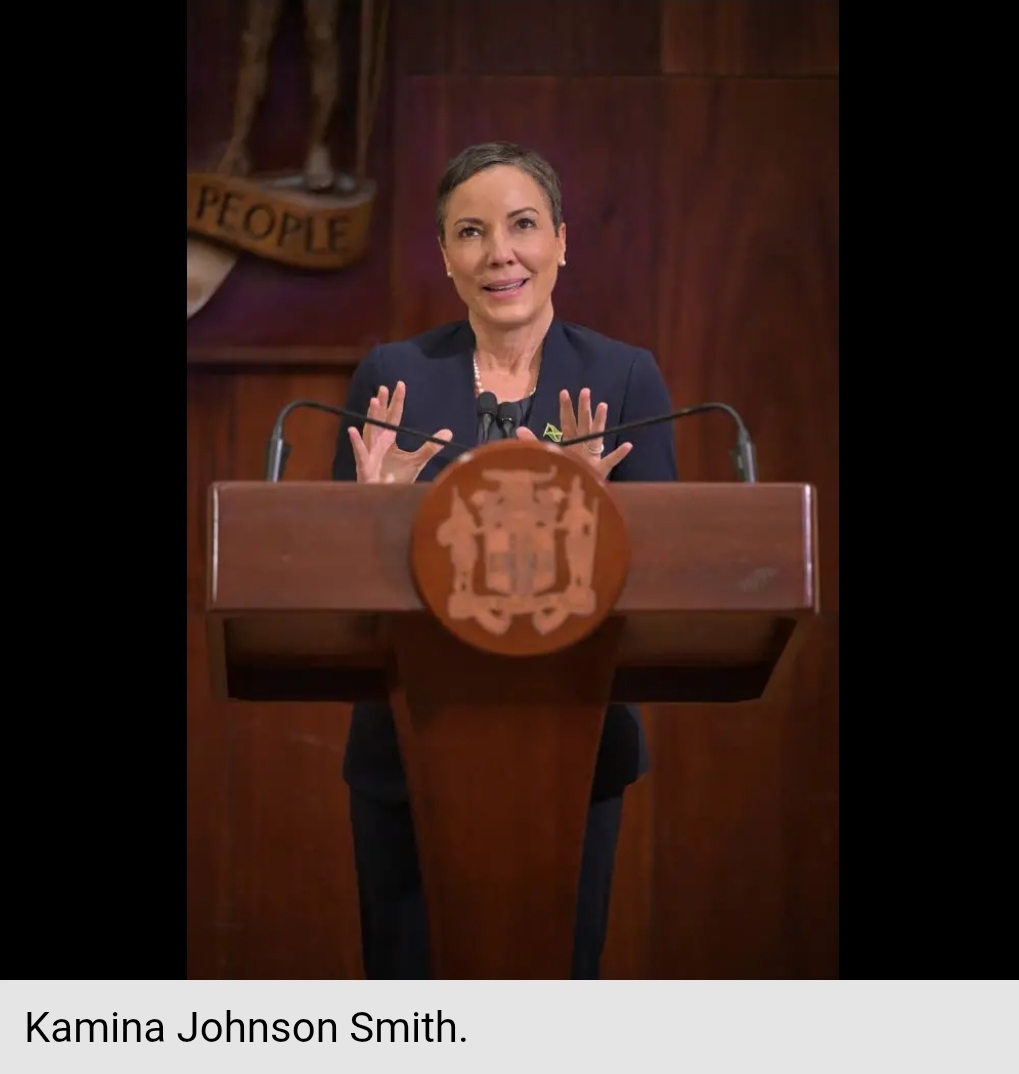
We hope for a positive outcome, having enjoyed cordial relations with the US, thanks to Foreign Affairs Minister Kamina Johnson-Smith, former US Ambassador Audrey Marks and the brilliant team at the Ministry of Foreign Affairs and Foreign Trade led by Ambassador Sheila Sealy Monteith.
The recent American Friends of Jamaica (AFJ) Hummingbird Gala reflected the supportive relationship which endures between our two countries. In the presence of PM Holness, the AFJ recognized Elias “Lee” Issa with their International Achievement Award and Paul Issa with their International Humanitarian Award, described as ‘two Jamaican born iconic leaders; one a stalwart in Tourism and the other a trailblazing Humanitarian’.
The AFJ, comprising current and former US Ambassadors and friends announced grants totalling US$740,000 which were awarded to 54 grantees to support several initiatives here. These include education, music, sports, homeless, health, skills training, gender-based violence, arts, coding, veterinary care, environmental protection, school-feeding and peace-building programmes, among others.
Grant Certificates were presented last Tuesday at the US Embassy here in Kingston. In the JIS report, writer Judana Murphy quoted Minister of Education, Skills, Youth and Information, Senator Dr. the Hon. Dana Morris Dixon, who addressed the event: “For over four decades, the American Friends of Jamaica have remained a pillar of support for our country. Their legacy is etched into the walls of our hospitals, the classrooms of our schools and the hearts of our people. Whether responding to hurricanes, expanding educational opportunities or modernising public health infrastructure, the AFJ has consistently shown up for us.”
Charge d’Affaires, Amy Tachco, also remarked on the ‘generosity and dedication’ of the AFJ. which has been supporting Jamaica’s non-governmental organizations with millions of US Dollars since 1982.
Whether or not we agree with the current political situation in the US, let us remember that we are intrinsically joined through family and friends and applaud our diplomatic ties.
JAAA President Garth Gayle recently announced that Jamaica’s young athletes can now benefit from the elite services offered at the Red Bull Athlete Performance Centre (APC), both overseas and locally, through a partnership between the Jamaica Athletics Administrative Association (JAAA) and Red Bull.
This collaboration marks the company’s investment in the development of Jamaica’s Under-18 and Under-20 national teams, giving them access to world-class resources including physiotherapy, strength and conditioning, performance assessments, medical services, and rehabilitation.
“Red Bull is proud to be working with the JAAA, our first Athletics Federation partner globally” said Marc-Oliver Kochan, Managing Director, Red Bull Athlete Performance Centre. “Jamaica’s track and field legacy is world-renowned, and we are looking forward to supporting the next generation of young athletes on their journey. We are really excited to help them realize their dreams and provide them with the tools, services, and support they need—not just to succeed in sport, but also in life.”
Gayle noted, “This sponsorship will allow the JAAA to provide a holistic programme, stay on track with the important components for their wellbeing and consistent performance. This is one of the objectives of the JAAA, and this level of support will ensure that no young athlete will be left behind.”
Eatmon noted that this is the first time that Red Bull is partnering with an athletics organization globally, and that they are proud that they chose the JAAA. “It means that they believe in what we’re doing, they believe in our programme, and they believe in the potential of our athletes,” he said.
Red Bull Athlete Performance Programme representatives Dr, Helge Ripenot Medical Doctor; Peter Muller, Head of Therapy; and Fionn MacPartlin, Head of Strength Training also attended the Boys and Girls High School Championships. It must have made them happy that our amazing young athletes will receive the expert assistance of their APC.
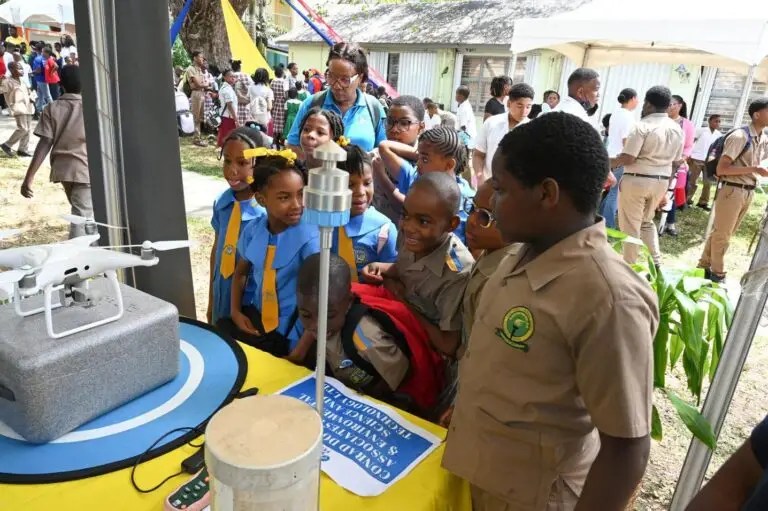
Young students from the IGT After School Advantage Centre at Dunrobin Primary School eagerly gather around a drone and meteorological equipment, engaging in hands-on learning about technology, weather forecasting, and environmental science at The UWI Faculty of Science and Technology’s Science Festival.
“Inever thought I could be a scientist until today,” whispered an awestruck student as she programmed a robot for the first time at The University of the West Indies (UWI) Science Festival. Her experience, alongside 49 other students from underserved communities, was made possible through International Game Technology’s (IGT) strategic investment in Caribbean educational technology (EdTech). The company strategically chose March 14 — Albert Einstein’s birthday and worldwide Science Education Day — for the students’ attendance, adding symbolic weight to an already transformative experience.
“EdTech is revolutionising education, and IGT is proud to be at the forefront of this transformation. Sponsoring ASA students for The UWI Science Festival is part of our broader mission to integrate technology into learning and create sustainable pathways for success,” said Debbie Green, general manager of IGT Jamaica.
After School Advantage (ASA) is the company’s flagship community initiative, devoted to providing youth with access to technology at digital learning centres in communities where IGT operates. The programme ensures students have access to participate in science, technology, engineering, and maths (STEM) educational opportunities while developing the knowledge and skills for the jobs of tomorrow. Since 2011, IGT and its subsidiaries have opened 40 ASA computer labs across the English-speaking Caribbean. As part of the company’s ongoing commitment to supporting its global communities, IGT aims to continually enhance the technological awareness of students and prepare them to contribute to the social and infrastructural development of the Caribbean.
The UWI Science Festival serves as a platform for students to engage with cutting-edge technologies and scientific concepts through interactive experiences. Professor Tannecia Stephenson, deputy dean of the Faculty of Science and Technology and lead on the Science Festival, emphasised the impact of IGT’s support.“IGT’s support enables more students, particularly in underserved schools, to participate in the Science Festival’s immersive STEM experiences. Through experiments, tours, and expert talks, students gain exposure to science applications and career paths. This investment nurtures future innovators poised to create solutions for global and regional challenges,” she said.
The festival is aligned with The UWI’s strategic approach to education and innovation.“The UWI’s Triple A strategy — Access, Alignment, and Agility — guides its approach to STEM education and innovation. The festival highlights research, industry partnerships, and technologies, engaging students from Jamaica and the Caribbean. This aligns with initiatives like the BOOST Scholarship programme for science teachers in underserved schools and the ‘FiWi Science’ initiative, which celebrates Jamaica’s scientific culture and legacy,” Professor Stephenson explained.
IGT’s sponsorship enables students from diverse backgrounds to access educational experiences that might otherwise be beyond their reach. By exposing them to emerging technologies and scientific advancements, the company is playing a crucial role in shaping the future workforce of the Caribbean.
“By exposing students to emerging technologies and scientific advancements, we are nurturing a generation of critical thinkers and problem solvers who will drive the Caribbean’s technological evolution,” Green added.
Through this partnership, IGT and The UWI are not only enhancing students’ technical skills but alsofostering an entrepreneurial mindset that will be essential for success in an increasingly digital economy. The initiative exemplifies how private sector involvement in education can accelerate the adoption of EdTech solutions and create opportunities for sustainable development across the region.
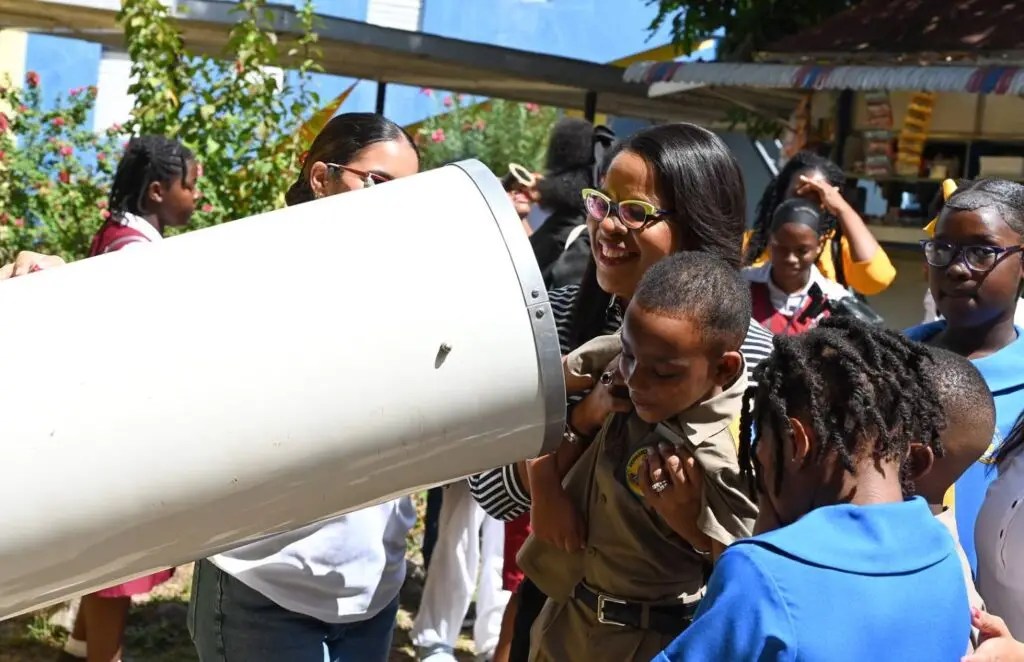
International Game Technology (IGT) Jamaica General Manager Debbie Green lifts a young student from the IGT After School Advantage Centre at Dunrobin Primary School for a closer look through a powerful telescope during the festival. Surrounded by his fellow students, this hands-on experience nurtures students’ love for astronomy and inspires the next generation to explore the wonders of the universe.
On Sunday, 20th April the seniors advocacy organization CCRP (Caribbean Community of Retired Persons) will celebrate our 15th Anniversary. After the 30th Anniversary of our company, PROComm in 2009, I considered who had helped me along my journey and realized they were seniors including my Mother Maisie Lowrie who was our first investor and supported us throughout the years. In gratitude, I decided that I would start an organization to advocate for our underserved seniors.
Our initial collaborators were my husband Hubie Chin, Ambassador Aloun Assamba who donated all the legal work, registering the organization and preparing our Articles of Incorporation; J. Lester Spaulding, late Chair of the RJR Gleaner Group who set up our accounting system, Professor Sir Kenneth Hall, our Honorary Director and Professor Denise Eldemire Shearer, our Honorary Chair. We thank our Patron Governor General Sir Patrick Allen and Lady Allen for hosting our first media event at which the late Hon Oliver Clarke registered to be our first member – now we are over 12,000 members strong.
We are blessed with excellent Board Directors: Vilma McDonald, Director Emerita Ambassador Aloun Assamba, Patricia Reid-Waugh, Marlene Street Forrest, Dr Owen James, Dennis Jones, Sethuraman Kumaraswamy, Warren McDonald, Peter Mais and Donovan Wignal. We recently appointed Angela Patterson as our General Manager, supported by the PROComm Team.
CCRP’s voluntary regional convenors are Patricia Blackwood – Central Jamaica; Dr Norma Taylor – Western Jamaica; and Pixley Irons, Northeast Jamaica. Our Caring Committee Chair is Moveta Munroe; former chairs are Irene Walter and Verla Seymour. The Committee comprises our parish representatives, who assist in our outreach to the needy elderly. Our excursions planned by Charmaine Harrison are hugely popular – they help our members in the words of our motto to live ‘Life to the Fullest’.
We thank our over 100 discount partners and top sponsors JNGI, National Baking, BPM Financial, Juici Jamaica, Supreme Ventures, Cari-Med Group, Sandals Group, Sterling Asset Management, WIHCON, Sagicor, Gallagher Insurance Brokers, managers of CCRP health plans and Morgan White Insurance.
We congratulate Senator Floyd Morris and Senator Sherene Golding-Campbell for taking the Motion for Legislation for the Care and Protection of the Elderly to an active Special Select Committee of Parliament which has been holding hearings on the matter. CCRP has made a comprehensive submission to the Committee, and we are optimistic that this Legislation will soon become a reality.
Former Chief Executive Officer of the Jamaica Information Service, Enthrose Campbell, at a recent farewell ceremony held at the agency’s head offices in Kingston.
The Jamaica Information Service (JIS) family bade farewell to former Chief Executive Officer (CEO), Enthrose Campbell, who retired on December 31, 2024.
Team members gathered at the agency’s head office on Half-Way Tree Road in Kingston recently, to celebrate the respected journalist and dedicated civil servant, who spent almost 30 years at the Government’s news agency, serving as CEO for the last two years.
Campbell’s illustrious career stands as a testament to dedicated public service and transformative leadership in government communication.
“It was a really good 29 years,” she said, reflecting on her time at the agency.
“It was good for me because I moved from radio to TV to production to deputy CEO and then to CEO. It was a good experience.
“I am really delighted to have worked with all of you. It has been a journey and I am grateful and thankful. Thank you for your support, you made my work so easy… because you all did so well,” she added.
Campbell commenced her tenure at the JIS as a temporary editor in 1995, rising through the ranks and making impactful contributions before being ultimately appointed to head the agency in October 2023.
Among her notable appointments was as senior editor and radio manager, where she played a pivotal role in modernising broadcast operations, and as director of electronic productions, where she oversaw the agency’s multimedia content strategy. As deputy CEO, she was instrumental in driving the agency’s digital transformation.
Campbell’s exceptional leadership was exemplified by herskilful media management of critical national events, including State visits and disaster-response efforts.
Another of Campbell’s key achievements was transforming the agency’s ‘Get the Facts’ television programme into Jamaica’s premier platform for articulating Government policies and programmes, which, at its peak, directly reached more than 300,000 weekly viewers.
Notably, she spearheaded the establishment of the JIS Morant Bay Regional Office in St Thomas in 2023 to enhance community outreach.
Beyond her roles at the JIS, Campbell made significant contributions to public service, particularly through diplomatic translation.Leveraging her master’s degree in Spanish translation, she provided critical interpretation services for numerous international summits, State visits and CARICOM delegations at United Nations assemblies.
Throughout her illustrious career, Campbell pursued specialised training across five continents, honing her skills in media management, disaster communications and digital journalism.
Her impact and excellence were widely recognised through myriad accolades and awards. These include the prestigious 2019 Press Association of Jamaica Veterans Award, the 2013 Civil Servant of the Year Award, and annual commendations for crisis communications leadership from successive Cabinet Secretaries between 2005 and 2016.
Aside from her professional achievements, Campbell dedicated 25 years to volunteering as a Sunday school teacher, positively impacting more than 1,500 children through youth programmes.
Acting Chief Executive Officer of the JIS, Celia Lindsay, commended Campbell for her impactful leadership.
“[You] never faltered in providing strong and visionary leadership through the celebrations as well as the challenges, ensuring that optimum levels of performance would have been maintained,” she shared.
“Ms Campbell, your leadership of the Jamaica InformationService and your many years of dedicated contribution have been sterling and a source of inspiration to many of us. Thank you for being a remarkable leader; your legacy will continue to motivate us.”
Manager for the JIS Radio Department, Vaughn Davis, noted that Campbell was an instrumental part of his entry into radio production.
Davis joined the JIS as a research officer in the Research and Publications Department in 2009 and made the switch to radio three years later.
Despite having no prior experience in radio production, Davis seized the opportunity and, 15 years later, credits Campbell for her unwavering support in shaping his success.
“Throughout my time in Radio, Ms Campbell had always been very supportive and had words of encouragement and advice to help me grow and develop,” he said.
He noted that “she has always been a source of good professional and personal advice, and her cheerful and pleasant disposition has also been much appreciated. I wish her well in her retirement and hope she finds happiness and fulfilment in her second act.”
Managing Editor of the Editorial and Photography Department, Tracey Chin Loy, described Campbell as “both a mentor and a friend”. “I will always treasure our one-on-one sessions. Her support and guidance have made me a stronger and more confident leader,” she shared.
Chin Loy noted that the former CEO’s ability to inspire team collaboration, combined with the positive energy she brought to the workplace, “will be missed”.
“She can feel confident that she has left a legacy of outstanding achievement that will inspire everyone she worked with,” the managing editor added.
Senior audiovisual librarian, Simone Burnside, noted that “Ms Campbell has an impeccable sense of style that is commendable”.
Her legacy lives on through the JIS’s expanded regional presence and the new generation of media professionals shementored, she said.
Campbell’s unwavering dedication, exceptional leadership and profound impact on Jamaica’s communication landscape have left an indelible mark on the nation, its people and the field of public service.
All traditional spiritual systems include some form of ancestor veneration. It’s different from praying to ancestors—it’s about respecting and acknowledging them. Even if someone doesn’t believe ancestors actively influence our lives, the idea of respecting those who came before us is universal.
When we consider our ancestors’ presence in our DNA, their struggles and victories become a part of who we are. Honouring them empowers us physically, mentally, emotionally, and spiritually. We often use phrases like, “Your grandmother would turn in her grave,” without thinking about what they really mean. It suggests that we instinctively understand that our ancestors remain connected to us in some way.
Simple Ways to Honour Our Ancestors
How can people practically venerate their ancestors?
There are so many ways! Let’s start with the simplest ones and go to some more complicated ways:
Create an Ancestral Shrine: Many people may already have a kind of shrine without realizing it. A lot of our grandparents have pictures of those that died in a special place – that’s a shrine. You can set aside a small space in your home and put some flowers there, or a candle along with images of ancestors, and a glass of clean water for them. Speak Their Names: A powerful and simple practice is to say their names aloud. There’s an old saying that if we don’t speak of our dead, they die twice. Make sure your children know their names, and their stories. If you have images, show them pictures so they have ideas of who these people are and where they’ve come from. That empowers us on a different level because it tells us they went through these things. They survived. They overcame.
Remember them with Empowering Ritual Phrases: In different Ifá and Orisha traditions, we say certain phrases after an ancestor’s name to empower them. For example, in Cuban practice, we say Ibaye Baye Ontonu or Kinkamashi in Trinidad after calling an ancestor’s name. It’s like saying, “Go get ‘em, Grandma! We got you, you got us!” For example, my maternal grandmother is Alberta Cox Belgrave. We can say Alberta Cox Belgrave, Ibaye Baye Ontonu or Alberta Cox Belgrave, Kinkamashi.
Leave Offerings: If your ancestor loved coffee, pour a small cup for them. If they had a favourite food, set aside a small portion before adding salt (since salt was historically used against freedom fighters). These small gestures acknowledge their presence.
Pour Libations: Many Caribbean people instinctively pour a bit of alcohol on the ground before drinking, saying, “For the spirits.” That’s an ancestral tradition. Our ancestors were people too; they liked to have fun, and remembering them in our joy and in our celebration keeps them close.
What Do we lose if we don’t remember them?
To consider the inverse of why should we honour our ancestors, let me ask this—what do we lose if we don’t remember them?
That’s a sad question. We lose ourselves. We lose our future. There’s a Ghanaian symbol called Sankofa— It looks like a bird whose head is facing backwards, while it’s moving forward. And it means that we have to go back and get it. You have to know where you are coming from if you have any hope of getting to where you want to go.
Without the historical contextualization, we really don’t understand why we are, where we are, who we are, how we are, so that we can make decisions about who we become, to avoid the errors of the past.
Without ancestor veneration, as the old people would say, we are ‘spinning top in mud’. We are going nowhere and getting dirty doing it–busy and tired but going absolutely nowhere. So many of our ancestors fought for our survival. If we ignore them, we risk repeating the mistakes of the past and losing the wisdom they left behind.
Without ancestor veneration, we have lost one of our main paths to connect with the spiritual world and to be guided and protected by the spiritual realm. Who’s going to pray for you harder than your grandparents? Who’s going to intercede for you more than your blood? We’d lose a lot of strength, a lot of power, a lot of safety, a lot of wisdom. But it’s there in our DNA to tap into.
The Loss of Ancestral Lineage
One of the great losses of the Middle Passage and the enslavement of our people is the erasure of our ancestral lineage. Very few of us can trace our roots back across the Atlantic. If we can name even three or four generations, we are lucky. First names, the surnames, origins, professions, ages, of birth, dates of death… we’ve lost that.
Records of enslaved people offer little help, as the destruction of our names was central to stripping us of our personhood. So, we have to build our ancestral lineage with whatever we can gather now and pass that on to our children so that they can continue to build as well. Because the longer the lineage, the more powerful your veneration and the impact.
Venerating Ancestors by Seeking Reparations
How does the act of honouring and remembering our ancestors connect to the present-day call for reparation and repair?
The fight for justice didn’t start with us. Our ancestors resisted, fought, and died for our freedom. The sacrifices that were made, the fights that were fought by the Egun, whose names we may never be able to recollect, demand that they are honoured. We have to honour their fight by demanding and receiving justice in their names for their children. We have a responsibility to them. Our blood is going to continue to call out until justice is served and received.
Kavelle Hylton, Digicel Foundation SIT programme partner and CEO of STEM Builders Learning Hub, engages students at the Jessie Ripoll Primary School in interactive discussions on online safety.
The Digicel Foundation’s Safer Internet Together (SIT) programme has already impacted more than 5,000 students across Jamaica, equipping them with the knowledge to navigate the digital world safely and responsibly.
Launched on Safer Internet Day in February, the programme is now in its fifth week and has visited 20 primary and high schools, with a goal of reaching 150 schools by year-end. Kavelle Hylton, CEO of STEM Builders Learning Hub, who partners with Digicel Foundation to deliver the interactive lessons, highlighted the programme’s impact: “Technology is a powerful tool, but it must be used responsibly. Through the SIT programme, we are empowering not just students, but also parents, teachers, and community members with the skills they need to stay safe online.”
A dedicated volunteer team of nearly 200 Digicel employees, known as the SIT Squad, has been mobilised to support the initiative.Mona Heights Primary School Principal Alex Hepburn is among those commending Digicel Foundation for the initiative.
“The SIT programme has been invaluable in helping our students understand online safety. We want them to understand that there are certain nuisances in the online space and therefore it is very important to teach them how to navigate it responsibly,” said Hepburn.In the meantime St Jude’s Primary School Principal Susanna Ainsworth also expressed support for the programme.
“This initiative has empowered our students and staff to promote online safety, digital responsibility, and cyber awareness. We are thankful for the Digicel Foundation for its dedication to creating a safer online environment for our school community,” said Ainsworth.
The SIT programme is a holistic awareness and educational campaign that goes beyond the classroom.
In addition to engaging students, the initiative includes sessions for parents and teachers, helping them understand online risks and how to guide children in safe internet usage.
It also extends to business owners, service group members and the elderly, ensuring that digital literacy and cybersecurity awareness reach all generations.
The success of the SIT programme to date can be attributed in large part to the support of its partners, including Jamaica Public Service Company, Sunshine Snacks, Kool 97FM, and Macmillan Education.
The JMEA Expo, which ended yesterday, brought back memories of its early days and the dedicated volunteers from the then JMA (Jamaica Manufacturers’ Association) and JEA (Jamaica Exporters’ Association).
There was Gloria Millwood, with her impeccable knowledge of protocol, who hosted the Hospitality Suite and Horace Abrahams, both gone to their rest. The longest-serving member of the Expo Committee, Deryck Rose, is still there, though now playing a less active role. Paulette Wong Rhoden of blessed memory was a dynamo, quickly completing her Crimson Dawn display and then running from booth to booth to help them make the deadline for the opening.
One of the most dramatic scenes was of a business owner who arrived the night before opening and was so disappointed with the appearance of his display that he destroyed it single-handedly! The contractors worked all night to get it right, and they did. The best booth competitions were filled with drama and intrigue, with rumours of expensive gifting.
The most amazing displays were sponsored by Butch Hendrickson’s Bold One of Manufacturing programme. They showcased an avenue of displays of upcoming manufacturers, with all the reusable promotional materials created for their ongoing marketing programmes. Visitors were introduced to Lacey-Ann Bartley’s All in Wood, Michelle Smith’s Chocolate Dreams, and Devon and Nayana William’s Lifespan Water.
As we were enjoying our locally grown breakfast, including the best coffee in the world, we heard a call for an Eat Jamaican campaign from a JMEA representative at Expo 2025. Our shop had run an Eat Jamaican campaign about 10 years ago and the logo we created continues to be used. It features “Doctor Bird” complete with stethoscope, a mascot we created, which featured in our cross-island road show with Ity and Fancy Cat. A highlight was a visit to the culinary arts final of the Jamaica Cultural Development Commission (JCDC) with a young Shelly-Ann Fraser. The fact that our home-grown athletes are world leaders should tell us something about the great nutrition offered by our produce.Sure, we saved a few dollars running abroad to shop, but we need to save our economy by supporting the top-class Jamaican-made products which were on display at the JMEA Expo. The business of manufacturing creates employment and the most delicious and enjoyable products. They say the closer to home that you source your food, the healthier it is. Paulette Rhoden used to emphasise also the ready markets in the Caribbean and Central America. The US tariff may focus us more wonderfully on the opportunities that exist outside of the USA.







 Jamaica Highlights