
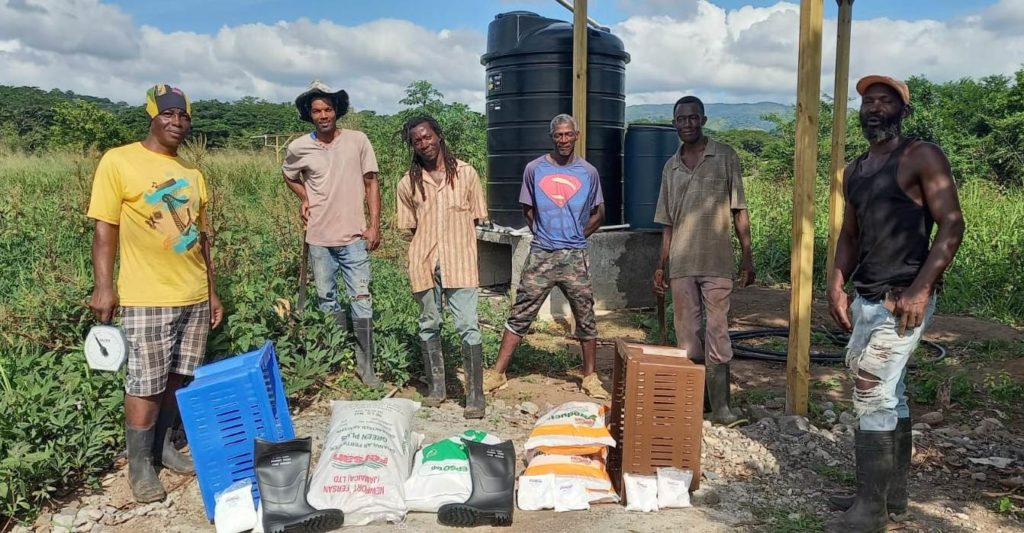
As part of a Food for the Poor Jamaica project, farmers in the Suttons area of Clarendon have been provided with training in crop production, best practices and farm business management to include plant nutrition, integrated pest management, harvest/post-harvest, record keeping.
This was done in partnership with the Rural Agricultural Development Authority (RADA) and Newport Fersan Jamaica Ltd.
Each farmer has the potential to produce 3,000 lbs of sorrel from two crop cycles annually. The sale of the sorrel will be a significant income generator for the farmer who can earn an income of more than $1.2 million annually.
3,000 RESIDENTS LIVING IN COMMUNITY
With the intervention of FFP and its donors, including Douglas Orane, CIBC FirstCaribbean International Bank and others who supported the organisation’s Farm-To-Table event back in 2019, it was a huge success.
The fundraiser featured produce from small farmers and fisherfolk who received assistance through Food For The Poor’s Agriculture and Fishing Programme. Funds from that initiative have been used to execute a multi-element support project in Suttons, which will enhance the capacity of farmers to better manage their farm, and to alleviate some of the hardships faced by the community members.
Almost smack in the middle of the island, Suttons is a small rural upland farming community, bordering the Coxswain, Wood Hall, New Longville and Rock River districts. There are approximately 3,000 residents living in the community.
The area – so named for 18th Century plantation owner and Speaker of the Jamaican House of Assembly, John Sutton – has a long history in agriculture, and farming activities remain the main source of livelihood for men and women in the area to this day. The area has limited scope for other industries or economic activities.
In recent times their farming activities have been impacted negatively as the region has been experiencing droughts and changes in climate conditions.
General unpredictability in the weather has had a negative impact on all aspects of life, from the productivity to the unavailability of water for domestic use. Also, the region’s location and the general inaccessibility of the terrain has made the provision of piped water almost impossible. The pandemic, and the attendant logistic and economic issues, have also been a factor.
Ten farmers were given the resources and skill sets to improve their farm, making it a more sustainable income generating activity. The farmers were provided with rainwater harvesting and gravity fed drip irrigation systems, complete with 1,000-gallon water storage tanks, to establish 1/2 acre of sorrel. In addition, they were supplied with the necessary farming inputs to maintain the crop at maximum productivity. Some of the inputs received were seedlings, pesticides, fertilizers and small tools and equipment. They have also received 50 fruit trees as part of Food For The Poor’s Tree Planting Initiative, geared towards reforestation and food security.
“Food For The Poor thanks our donors for assisting us in this vital work of supporting our farmers and contributing to the stability of our rural communities,” said Nakhle Hado, FFPJ’s director of agriculture and Fishing.
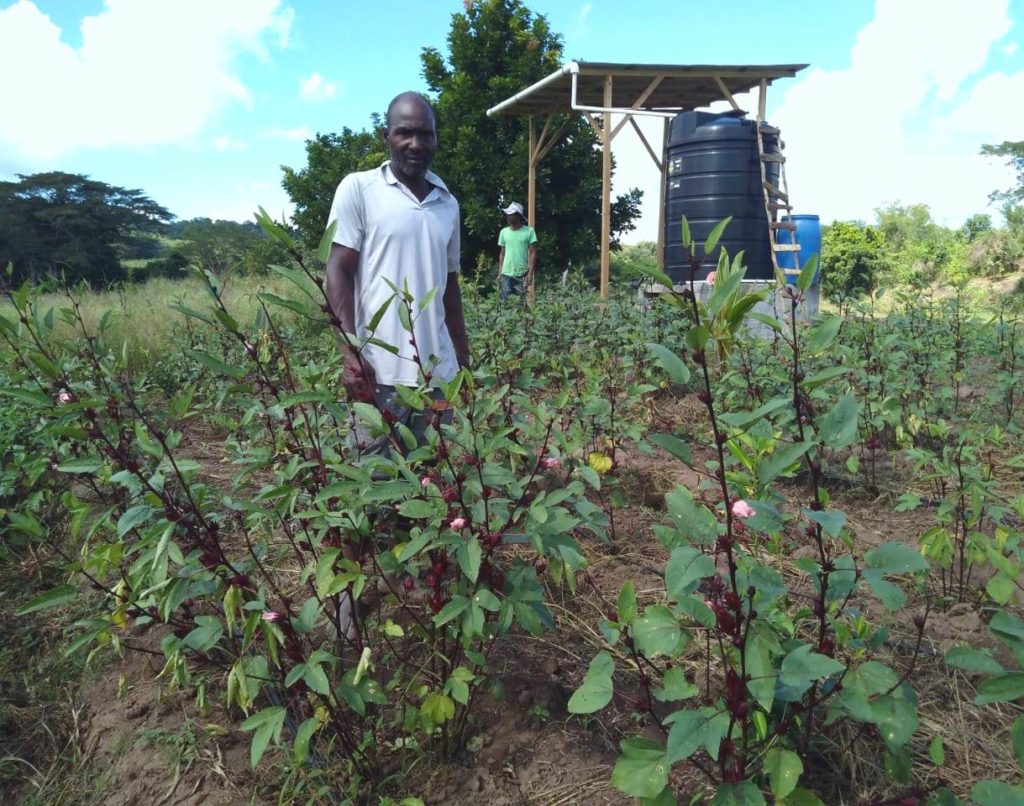
Beyond the increased income and purchasing power, Hado notes, the project has the potential to create long-term development in the community; the farmers, being able to afford a better education for their children, which in turn increases the likelihood that they will enjoy better incomes in the future. Also, beyond the pure agro assistance, Food for the Poor has taken a multi-element approach, incorporating social intervention for some of the recipients found in desperate need, as well as the distribution of household, food and care packages. Some recipients will be submitted as potential housing recipients and the team is following up.
“These inputs are helping our fellow Jamaicans in Suttons to better provide for themselves and their families and to fill the ongoing need for quality produce as our commercial sector continues to seek to cope with the effects of the pandemic,” he said.
Most of the beneficiaries have been farming their entire lives and are also second and even third generation practitioners, often with little to no formal schooling. Howard Bailey, at age 41, has been farming from the age of 11, while Winston Williams, who is 55 years old, is also a 30-year farming “veteran”. Williams is the main breadwinner for his family, which includes three children.
For them, the project is a godsend and a strong support, as it provides the opportunity to overcome the limitations imposed by drought, unstable weather and the lack of market opportunities
 Jamaica Highlights