
Excerpt from the Observer Column published Monday, May 17, 2021
By Jean Lowrie-Chin
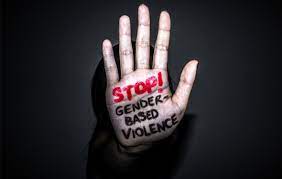
Over 500 justices of the peace (JPs) showed up for a webinar hosted by Justice Minister Delroy Chuck on ‘Sensitization on Domestic Violence and Gender Based Violence’. It was heartening to hear the minister’s resolve that laws protecting our women from violence be strengthened.
Minister of Culture, Gender, Entertainment and Sport Olivia “Babsy” Grange appealed to JPs to use their training in conflict resolution to support families in crises.
“Gender inequality continues to be a significant challenge,” stated Minister Grange, noting that the international focus on “gender architecture” was a welcome development.
We reflected on the #MeToo movement which emboldened women to speak out against their abusers, opening the floodgates for the conviction of well-known men from Wall Street to Hollywood.
Unfortunately, it is not that easy for women in our small country, where gender-based violence has been trivialised as “a man and woman thing”, and machete-wielding, trigger-happy partners have women living in fear.
Legal officer in the Ministry of Culture, Gender, Entertainment and Sport Georgette Grant enlightened us on current legislation on domestic violence, noting that Jamaica’s Domestic Violence Act was being reviewed, with Cabinet having approved the following amendments:
1) Definition of violence (Section 2): Domestic violence will now be defined as a type of abuse that includes:
(a) physical, sexual, emotional and psychological abuse;
(b) instances of abuse occurring in situations in which individuals use various other means, such as exposing intimate pictures of their former partners to the public to inflict reputational and emotional harm on the victims; and
(c) using third parties or accessories to inflict harm on the victims.
Senior pastor of the Upper Room Community Church Rev Ian Muirhead gave proposals to amend laws to protect from an abuse. He warned that partners (women and men) should never take lightly threats of violence or suicide, sudden outbursts of anger, shouting, hurting them or children and pets, excessive jealousy, being forced to have sex against their will, being blamed for their violent outbursts, and being kept away from their social circle. He attributed these to personality disorders and warned that escalation of threats can be lethal.
Among his proposals are the termination and refusal to provide gun licences to abusers, witness protection for women who report threats, psychological evaluation of abusers, a special desk at the Independent Commission of Investigations (INDECOM) for victims when the police fail to respond. He recommended that when a partner is at risk, and the abuser cannot be found, a report should be made to the police and the abuser be designated a person of interest, who should report to the police.
“Always be conscious of your own safety in all interactions involving an abusive person,” he advised. “Do not meet privately with a violence-prone individual. If you must do so, be sure someone is available close by in case you need help.”
He called for a greater role for restorative justice and a national communication plan for social and behavioural change regarding the abuse of women. His presentation will be made available to every JP, and we must share it as far and as wide as possible.
We congratulate The University of the West Indies Institute for Gender and Development Studies and the Jamaica Council of Churches who partnered to protest gender-based violence last Thursday. Somehow, it was identified as a People’s National Party (PNP) Women’s Movement initiative, as some of its members joined in the event, and was carried as such by TVJ, who apologised for their error the following day.
That wise gender activist Judith Wedderburn shared with us, her fellow members of WMW Jamaica: “Anyone, any individual or a member of a political party has the right to support such a protest against the very serious national tragedy of violence against women and girls. But they certainly cannot claim it to be theirs, nor should it be treated or reported as such. Nor should it be turned into a partisan matter if a group of women from one of the parties decides to participate in support of the action which is in defence of women and girls.”
 Jamaica Highlights