Virus Cases Surged in Young Adults. The Elderly Were Hit Next.

Excerpt from The New York Times published 24 September 2020

By: Roni Caryn Rabin

As millennials mingled in bars and restaurants over the summer, and students returned to college campuses, coronavirus infections surged among young adults.

From June through August, the incidence of the virus was highest among adults ages 20 to 29, according to research published on Wednesday by the Centers for Disease Control and Prevention. Young adults accounted for more than 20 percent of all confirmed cases.

But the infections didn’t stop with them, the researchers found: Young adults may have also seeded waves of new infections among the middle-aged, and then in older Americans.

The new data show that outbreaks linked to parties, bars, dormitories and other crowded venues are hazardous not just to the 20-somethings who are present, but to more vulnerable Americans with whom they are likely to come into contact.

College campuses have become a particular threat. According to a database maintained by The New York Times, there were more than 88,000 coronavirus infections reported on nearly 1,200 campuses as of early September.

At a congressional hearing on Wednesday, Dr. Anthony S. Fauci, director of the National Institute of Allergy and Infectious Diseases, warned against sending home students from colleges experiencing outbreaks.

Colleges “should be able to accommodate the students in a facility, maybe a separate dorm or a separate floor so they don’t spread among the student body,” Dr. Fauci said, referring to infected students. “But do not send them home to their community because of the likelihood of them bringing infection in the community.”

Millennials may also face a higher risk of infection from occupational exposures, as they represent a large portion of the workers who interact with the public in retail stores and the food service industry, as well as other frontline jobs such as child care and public transportation.

But the new study suggested they also might be less likely to adhere to recommended mitigation practices, such as social distancing and avoiding large gatherings.

“This is what we worried would happen if young adults started regathering in higher numbers,” said Dr. Tom Inglesby, director of the Center for Health Security at Johns Hopkins Bloomberg School of Public Health.

“We need to turn this around,” Dr. Inglesby said. “Leaders need to communicate better with younger people how essential they are in keeping this epidemic under control.”

He said the patterns are “yet more evidence that the concept proposed by some — cocoon the elderly, and let young people get sick because they will not have bad outcomes — will not work.”

Though it is rare, young people can become severely ill and die from the virus, as well as set off chains of infection that move into older populations. “The young and the old are all connected in our world,” Dr. Inglesby said.

Young people need support and help finding ways to stay socially connected during the pandemic, said Julia L. Marcus, an assistant professor of population medicine at Harvard Medical School.

She warned against demonizing young people, many of whom are filling critical public-facing jobs that expose them to the virus and living in intergenerational households that don’t make for easy seclusion.

“We can’t let moral outrage about partying distract us from addressing the occupational and household risks that continue to drive this pandemic,” she said.

The C.D.C. report examined positive test results, emergency department visits and confirmed virus cases from May to August in all 50 states and the District of Columbia.

The incidence of cases was highest among those in their 20s, but the spike in cases in this age group was quickly followed by increases in infections among people 60 and older, the researchers found.

In the South, where cases rose drastically over the summer, a clear pattern emerged. Within nine days of an increase in cases among those in their 20s and 30s, cases also rose among those 60 and older.

In states like Alabama, Florida and Georgia, transmission was more sequential. The increase among people in the 20-to-39 age group was followed by a bump in cases nine days later among those ages 40 to 59, and then another rise in cases 15 days later among people 60 and older.

Younger adults are most likely playing a significant role in spreading the virus, which can be transmitted before people know they have been infected and before they show symptoms, the researchers said.

“Strict adherence to community mitigation strategies and personal preventive behaviors by younger adults is needed,” the report concluded.

“My message to younger adults is to understand that they may play a role in the transmission of Covid-19 to family and friends and others in their communities, and they play an important role in our ability to contain the pandemic,” said Tegan K. Boehmer, an epidemiologist and the lead author of the C.D.C. study.

Because many young adults may have mild infections, they might “be in a situation where you don’t know that you’re infectious or that you’re contagious,” especially before symptoms develop, Dr. Boehmer said. “There’s the possibility that they’re unknowingly transmitting Covid to others during this pre-symptomatic or asymptomatic state.”

Young adults are not immune to the virus themselves. Though older people make up the majority of deaths from the coronavirus, more than 5,000 younger adults between the ages of 25 and 44 have died of the virus, according to C.D.C. figures, and many more have been hospitalized with severe illness.

Another study of college transmissions, which has not yet undergone peer review, analyzed infection trends in towns with colleges and universities and determined that the reopening of schools was associated with an increase in virus cases in counties where schools were located — but only when colleges resumed mostly face-to-face classes.

“We only saw that happening where the college opened for primarily in-person teaching,” said Martin Andersen, an author of the paper, who is a health economist and an assistant professor at University of North Carolina at Greensboro.

The paper’s other authors were from Indiana University Bloomington, University of Washington and Davidson College.

Even though many university students gathered to live on or near campuses when instruction was mostly remote, they did not drive an increase in cases in those counties, Dr. Andersen said.

Spikes in cases occurred about two weeks after colleges opened. The increases were higher at schools with face-to-face instruction that drew students from regions where the virus was widespread, Dr. Andersen and his colleagues reported.


Live as one, Jamaica

Excerpt from Jamaica Observer column published 14 September 2020

By: Jean Lowrie-Chin

We borrow Toots’ words to herald in the members of the Cabinet announced by Prime Minister Andrew Holness last Friday. We heartily congratulate the reappointed and new Ministers, State Ministers and Parliamentary Secretaries; you have worked hard and your appointments are well earned. The PM has not minced words about his expectations of those in whom he has entrusted the business of the country, warning against acts of corruption and reminding them that they are servants and not monarchs.

They have assumed their high office in the toughest times faced by Jamaica in recent history.  Last Saturday we recalled the devastation caused by hurricane Gilbert 32 years ago and we reflected that the damage was horrible but visible, it had a beginning and an end, and we could appeal to our international friends for assistance. Covid’s damage is insidious and seems unending. Our international friends are also suffering from its wide and merciless grasp.  

This Cabinet will have to draw on the support of citizens from every walk of life. I remember Monsignor Richard Albert relating how an old lady in Riverton Meadows called out to him on a visit, and handed him a paper package with coins she had been saving. She said she saw the good he was doing and she wanted to help. And there is my friend Mrs Ferguson, a humble lady in St. Elizabeth, who will not sit down to eat her Sunday dinner until she takes some for two elderly persons who live nearby. This is the spirit of generosity that we must enkindle in our people because no Government, no matter how competent, no matter how honest, can handle this crisis on their own.

There is so much sacrifice, so much pain. We have to search ourselves and find ways in which we can make another’s life more bearable. Yes, we should expect good governance and sound policies from our leaders, but they cannot do it all.

After elections, we should live as one Jamaican family, and so this disgusting behaviour of ‘burying’ a candidate and going to the extreme of producing a full-colour funeral programme, must be given no quarter. That kind of energy should have been expended for the good. Covid does not give us the luxury of time for foolishness. We need everybody on board, JLP and PNP, so we are depending on our political representatives to set an example of respect and dignity.   

Covid scammers

We received reports of a scammer, pretending to be from the Ministry of Health, who telephoned a man, informing him that he had been in contact with a Covid-infected person and that he would be sending him a test kit. The caller asked for his card number to collect payment for the kit. When the man refused to disclose his card number, he was threatened with penalties. Please tell your senior relatives that there is no such programme and they should pass on the telephone numbers of such persons to the police so they can be tracked down and charged.

Farewell Trailblazer Jeanette Grant-Woodham

Jeanette Grant-Woodham

Jeanette Grant-Woodham’s life was one of dynamic leadership. The legendary educator was the first Principal of the Tivoli Gardens High School and was the first woman Leader of the Senate, appointed in 1984.

In his tribute, PM Andrew Holness said, “Jeanette pushed boundaries, broke barriers, and did the seemingly impossible.”  She was appointed Minister of State for Foreign Affairs, Trade and Industry in 1986, and a Foundation established in her name has made tertiary education possible for several West Kingston students. She became an active member of the Jamaica Women’s Political Caucus and must have taken comfort in the rising number of women politicians.

Our condolences to her son Omar and to her relatives and close friends. May the great soul of Jeanette Grant-Woodham rest in peace.

Toots Hibbert: “Rise up Jamaica

Excerpt from Jamaica Observer column published 14 September 2020

By: Jean Lowrie-Chin

Toots Hibbert - Simple English Wikipedia, the free encyclopedia
The legendary Frederick Nathaniel ‘Toots’ Hibbert

Jamaicans everywhere are deeply moved by the passing of Frederick Nathaniel ‘Toots’ Hibbert, our favourite brother whose voice was joy itself, and whose music danced us through decades of ups and downs. Major media houses here and abroad have been carrying obituaries and features on our charismatic Toots. It was serendipitous that it was he who named the reggae beat: indeed, he personified the happiness of a rhythm that gladdened our hearts and captivated the world.

His Festival songs had us on our feet: “Bam Bam”, “Sweet and Dandy” and “Pomps and Pride”. His entry in this year’s Festival Song contest was the message of a patriot: “Eternal Father bless our land with justice, truth and rights – Won’t you rise up Jamaica stand up Jamaica with love and justice for all / Let us build our nation from the foundation of love/ … We are all God’s people, we should live as one.”

His “Monkey Man” entered the UK charts in the seventies, bringing him to the attention of the world but already we had been jumping to “54-46 was my Number” and “Pressure Drop”. Toots showed his soulful side with a ringing rendition of “Country Road, Take Me Home.” His brilliance moved such celebrities as Eric Clapton, Keith Richards and Willie Nelson, who were featured on his album “True Love”.

In an interview with the Guardian’s Miranda Sawyer, perhaps his last, he noted that he still worked a six-day week, from 10am to 8pm. “Writing songs is so hard to do: I’m not easy to please,” he shared. Of his new album, “Got to be Tough”, he said his message is, “Don’t take life for granted, be careful, be strong.”

Toots Hibbert shared a Trench Town address with his close friend Bob Marley and often shared with him the stage and back-up bands. Ziggy Marley posted on social media: “The legendary Toots Hibbert has passed. I spoke with him a few weeks ago, told him how much I loved him – we laughed and shared our mutual respect. He was a father figure to me – his spirit is with us, his music fills us with his energy. I will never forget him. RIP MIGHTY AND POWERFUL NIAH FIAH BALL (tears emoji).”

We send condolences to Mrs Dorothy Hibbert, his wife of 40 years and his children, and we give thanks that we still have his music to sing us through these challenging times. Rest in peace, beloved Toots Hibbert.

iBloom Foundation

Excerpt from Jamaica Observer column published 14 September 2020

By: Jean Lowrie-Chin


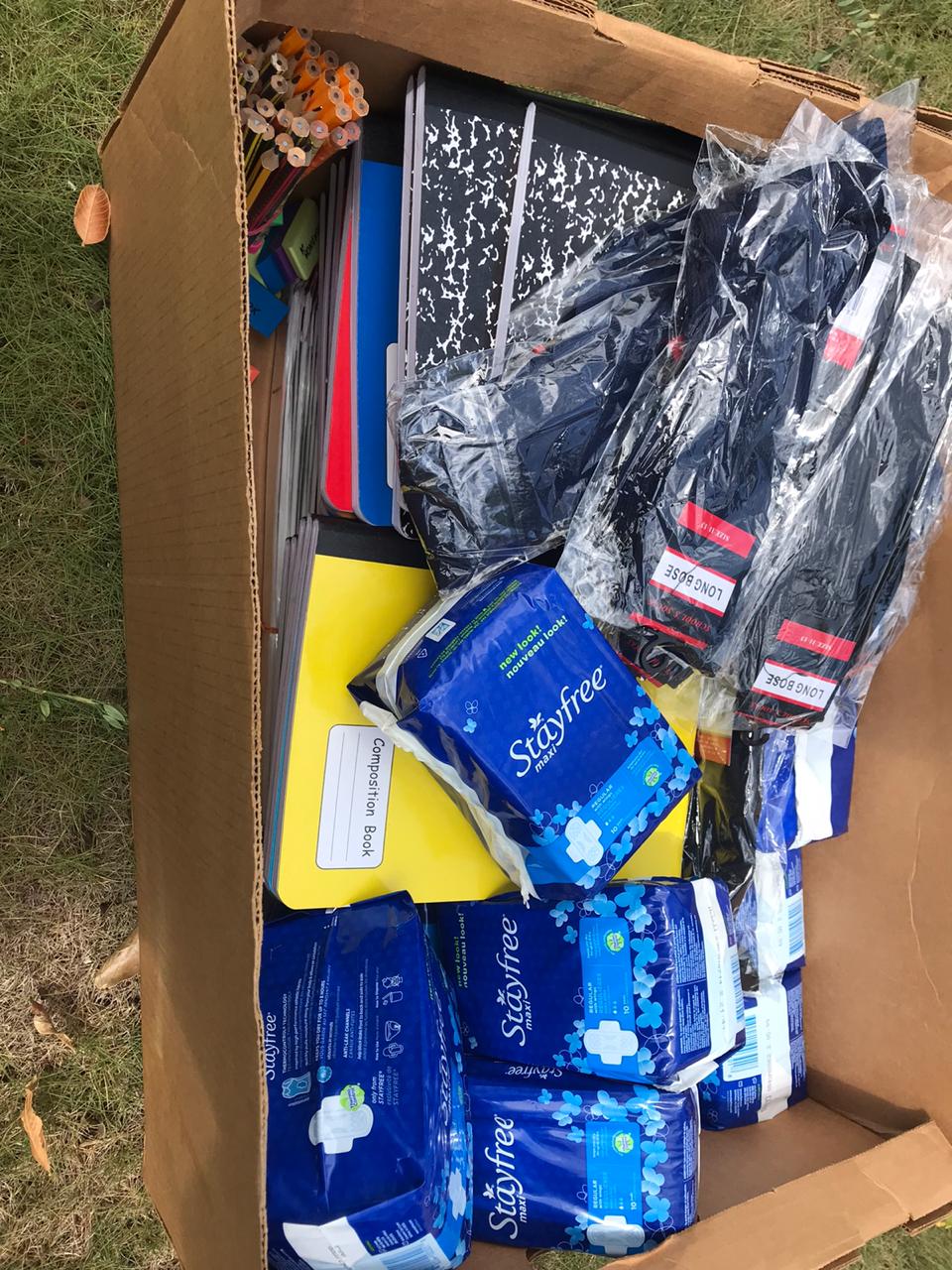
Be inspired to serve by these eight young graduates and students, passionate about youth and volunteerism, who have come together to form the iBloom Foundation. They have raised funds to assist 100 students with back-to-school kits, and 45 students with credit for their online studies in urban and rural parishes. Kudos Shanakay Dyer – President, Yanique Mendez – Vice President, Shanice Harrison – Secretary, Shayna Small – Treasurer, Ramone Daley – Fundraising and Sponsorship Coordinator Samantha Gregory – Public Relations Officer, Kaifa Clarke – Central Coordinator and Deborah Akiara – Sponsorship and Outreach Coordinator.  Their organisation has now grown to 50 members. Check their inspiring social media messages.

Below are few of the donations received at the foundation’s recent back to school drive.

CCRP Welcomes Special Provisions for Senior Citizens on Election Day

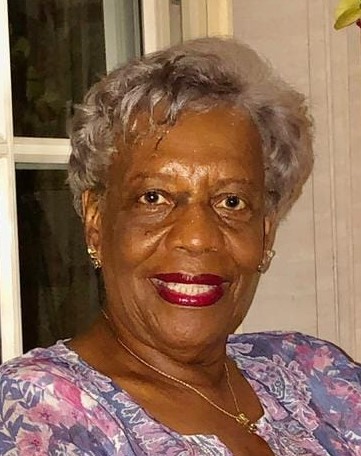
Mrs Vilma McDonald
Mrs Vilma McDonald

The Caribbean Community of Retired Persons (CCRP) welcomes assurances from the Electoral Office of Jamaica (EOJ) that senior citizens will be given priority when voting in the General Election on Thursday, September 3, 2020.

“As an elder, I am pleased to hear that we will be allowed to go to the head of the line at polling stations to limit our exposure,” said CCRP Foundation Board Member  Mrs Vilma McDonald, adding: “We understand that supervisors will be in charge of assisting us. That is important as we will need help also to navigate the strict COVID-19 protocols that will be in place.”

CCRP is encouraged to hear that political candidates are instructing those who will be transporting our elders to observe all COVID-19 protocols, and to sanitize their vehicles. It is critical that there is a safe mode of transportation to and from the polling station.

“We welcome the news that the National Health Fund will be distributing a number of disposable masks and sanitizer to all candidates,” noted Mrs McDonald. “They should have some in reserve for the elderly they transport as some home-made masks may not fit well and make good use of the hand sanitizers to protect their supporters.”

“I want all my fellow seniors to be able to exercise their right to vote with a feeling of safety and security, during the pandemic,” she added.

In order to check if your name is on the voters’ list, simply go to the EOJ website at https://ecj.com.jm. For more details on the voting procedure, view their YouTube channel at  https://www.youtube.com/watch?v=mqh4RPaMiqc

Staff at the CCRP head office and regional chapters are now working remotely.  They can be contacted at the numbers and email addresses given on the CCRP website:  ccrponline.org.