Editorial | The Gap Between Research And Policy

Against the backdrop of the usual noise associated with political campaigns, a serious message may have been missed this week when the GraceKennedy Foundation renewed its commitment to research work at the University of the West Indies. The foundation funds research activities through the Carlton Alexander Chair in Management Studies and the James Moss-Solomon Chair in Environmental Management.

Chief executive officer of GraceKennedy, Senator Don Wehby, said the UWI must be known as a centre for solutions and a leader in promoting innovation and innovative thinking.

Increasingly, society is looking to tertiary institutions, like the UWI, to use their enormous human resources to bend the curve of technology in the 21st Century and deliver greater opportunities for economic growth and development to future generations.

As Jamaica faces challenges in social justice, health, agriculture, climate change and other areas relevant to national development, it is imperative that new research be undertaken to find ways of mitigating the impact of these challenges on society. These decades-old obstacles throw up numerous opportunities for academics to demonstrate the reach and impact their work can have.

Research is an expensive business and will not flourish without appropriate and consistent funding. Most of the research in tertiary institutions comes from external sources, including philanthropic organisations and private-sector entities. For these investors, it is assumed that they would be keen to measure the success of their investment by effective outcomes.

The results of such research cannot just be displayed during exhibitions at a designated time each year. This new knowledge gathered through research must be used in policy development. The results of research are critical in influencing development of policy, helping to shape legislation, and even to alter behaviours that are found to be detrimental to the common good.

UNDERSTANDING SCIENCE

It may take some convincing to get politicians to understand the science behind the research work, and even harder to get new policy implemented. However, we now have a minister of science and technology in Dr Andrew Wheatley, who has qualifications in biochemistry and chemistry and is a research scientist.

It may, therefore, be left to him to work with the scientific community to convey the idea of research-based evidence by demonstrating to his parliamentary colleagues how the findings were tested, debated and reviewed before achieving consensus.

Recent pronouncements by Dr Wheatley that Jamaica is not lagging in scientific research have been challenged by a letter writer to The Gleaner. The reader, who describes himself as a Jamaican with a scientific background, who has left the island to pursue opportunities overseas, decried the fact that “large-scale investment in scientific research is lacking”.

He suggested that there needs to be a scientific research culture in Jamaica. He lamented the lack of funding as one reason why persons passionate about science have become discouraged.

CRITICAL STEPS

It is indeed a fact that for the country’s research to serve the community well and command global attention funding, it is critical to provide qualified academics and procure equipment and infrastructure to facilitate their work.

Traditionally, policymakers tend to be heavily influenced by what is popular rather than evidence-based research, and this is why research-informed evidence is not assigned the place of importance it deserves in policymaking. It is time to bridge that substantial gap between research and policy.

Source: http://jamaica-gleaner.com/article/commentary/20161126/editorial-gap-between-research-and-policy
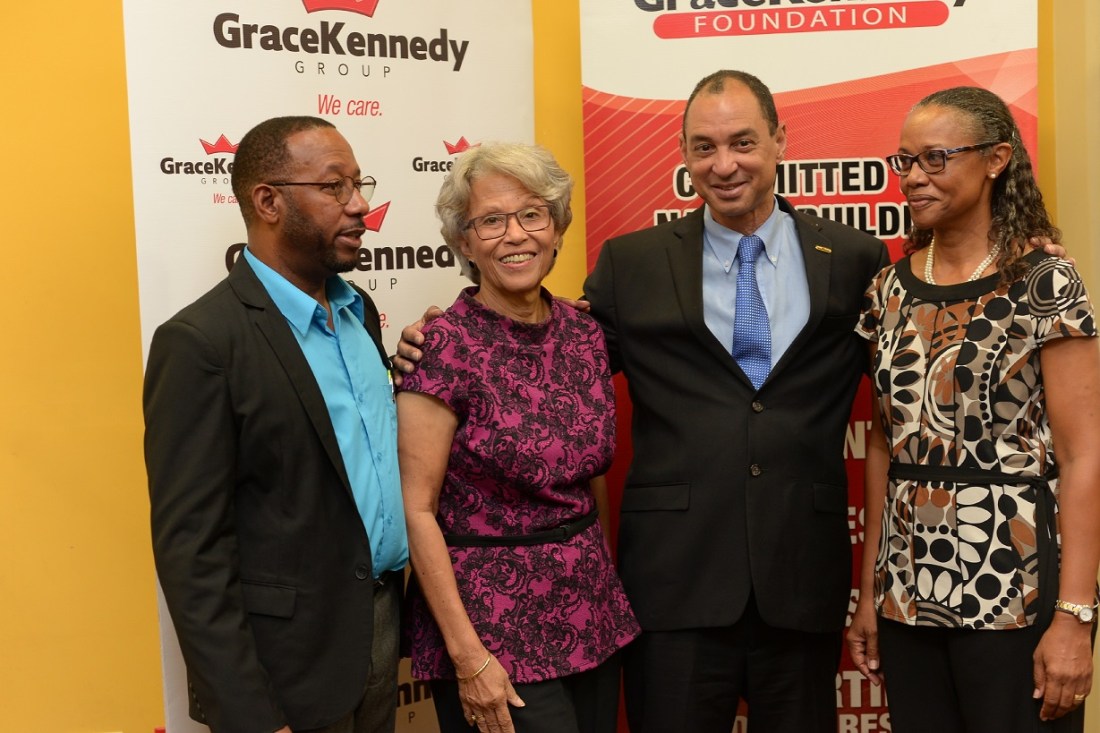
GraceKennedy Foundation Renews $11m Funding For Research

gracekennedy-foundation-support-of-uwi-a-model-partnership

The GraceKennedy Foundation has renewed funding for the Carlton S. Alexander Chair in Management Studies and the James Moss-Solomon Senior Chair in Environmental Management at the University of the West Indies (UWI).

The Chairs are respectively held by Professor Ian Boxill, who has been in the post since 2010, and Professor Mona Webber, who was appointed on October 1 this year.

During a forum held on November 22 at the Regional Headquarters at the UWI, both professors spoke about their research, community work, and their relevance to current problems being faced by the country.

Among Boxill’s research and contributions over the past year is a programme with the Sandals Group and Island Tours to identify ways of leveraging Jamaica’s attractions, improving the tourist experience, expanding linkages, and earning more revenue for the country. He has also conducted a needs assessment with the Jamaica Manufacturing Association to identify the areas where greater support is needed by the sector to increase its effectiveness. Manufacturing contributed 8.6 per cent to GDP in 2015.

Webber’s account of her research opened eyes and minds as she shared about the life-giving and, possibly, life-saving work her team is conducting under the sea.

She spoke about the impact of pollution on marine health and announced that she would be delving further into examining content found in the stomachs of fish found in Jamaica’s waters. Already discovered is that some fish are consuming toxic micro plastics. Her research will have far-reaching implication for the livelihood of fishermen and the health of consumers of seafood.

Each Chair is funded by the GraceKennedy Foundation at a value of $5.5. million per annum.

CENTRE FOR SOLUTIONS

Don Wehby, CEO of GraceKennedy Ltd, commended both professors on their work, while also thanking outgoing James Moss Solomon Snr Chair, Professor Dale Webber, who was recently appointed pro-vice-chancellor, graduate studies and research.

“The UWI must be known as a centre for solutions and a leader in promoting innovation and innovative thinking among its students – the future leaders of Jamaica. Education, after all, is the ultimate problem solver … I again restate GraceKennedy’s commitment to UWI as we see it as one of our ways of answering the future’s call,” Wehby said.

Professor Archie McDonald, principal of the UWI’s Mona campus, described the partnership between the GraceKennedy Foundation and the UWI as “the quintessential merger of big business and education”.

http://jamaica-gleaner.com/article/lead-stories/20161125/gracekennedy-foundation-renews-11m-funding-research

Digicel Foundation Helps Tots

df-helps-tots

The institution was chosen by Meshae Caple, a member of the Jamaican diaspora living in Chicago, Illinois, who won the foundation’s Build Back Yard Competition. As the winner, Caple selected the Hanover-based institution to receive $190,000 to support their activities.
Source: http://jamaica-gleaner.com/article/news/20161117/digicel-foundation-helps-tots

MYERS, FLETCHER & GORDON SUPPORTS HAITI RELIEF

ffp-gleaner-nov-14-2016

The Myers, Fletcher & Gordon family responded to Food For The Poor’s call for assistance to Haiti in the aftermath of Hurricane Matthew by handing over a cheque for $300,000 and numerous canned items on November 7 at its downtown Kingston law office.

Peter Goldson, the firm’s managing partner, said emphatically, “Having been spared what could have been a devastating blow to Jamaica, we have to do our part to assist our neighbours in Haiti with their recovery”. “Our Social Outreach Committee is mandated to identify areas where the firm may assist in the empowerment and upliftment of people, particularly the young among us. When the recommendation was made that we should include Haiti, our entire firm was quick to support,” added Goldson.

http://jamaica-gleaner.com/article/news/20161114/myers-fletcher-gordon-supports-haiti-relief


GOOD COMES FROM FLANKER

Inner-city youth balances work & study, earns bursary

uwidef-scholar-odain-murray

Odain Murray collects his University of the West Indies Development and Endowment Fund (UWIDEF) bursary cheque from Margarita Morris, administrator and data officer, UWIDEF.

Final year student of The University of the West Indies (The UWI), Mona, and UWI Development and Endowment Fund (UWIDEF) bursary recipient Odain Murray stands as proof that Flanker — a tough inner-city community in St James — can produce good, educated and hard-working young people.

Murray — who has been on the Dean’s List for the last two years in the Faculty of Social Sciences and now holds a grade point average (GPA) of 3.31 — says while growing up he never gave in to the negative forces in his community, but instead used them as motivation for advancement.

“From seeing what was happening around me and not wanting what was happening around me in my life back then was what motivated me to work hard to get an education,” Murray, 27, told the Jamaica Observer in a recent interview.

Murray aced the Grade Six Achievement Test and was placed at Cornwall College. He successfully completed high school and, in 2007, was accepted to pursue a bachelor’s degree in history at The UWI. He moved to Kingston, but the unpredictable happened — his father died suddenly and he had to put his tertiary pursuits on hold.

“After my father died, I started having some challenges, financially and otherwise, and I had to apply for a leave of absence from UWI in 2009. Then I started working in the performing arts industry,” Murray said.

While working, he realised that there was a huge demand for professionals to strategically market plays in Jamaica. So, he returned to The UWI in 2013 as a part-time student, this time pursuing marketing. UWIDEF has assisted him to continue his studies by awarding him a bursary of $100,000.

“I heard about the bursary while I was at the Philip Sherlock Centre for the Creative Arts. Then I went on the Student Services section on UWI’s website, applied for the UWIDEF Performing Arts Bursary, and I was successful. Being a recipient of this bursary is a good thing for me, especially for someone from the performing arts, because you hardly find this being offered in Jamaica,” Murray said.

“I chose marketing because I realised that the theatre needs proper management with regards to marketing. The new recreational activities most members of our society are drawn to involve parties and not theatre shows. I want to change this. That’s the reason I did not choose music or drama. I chose marketing to get the Jamaican theatre industry out there to a wider audience,” Murray explained.

For nearly two years, Murray has been working as a student assistant in the Marketing, Recruitment and Communications Office on campus, as well as in the performing arts industry.

When asked how he balances his work responsibilities and his school work, he said: “It is a major challenge, but I try to structure my time based on my timetable and when I don’t have rehearsal, I prioritise. I work when I don’t have classes. When it is that assignments are to be completed, I miss one or two rehearsals and try not to stay too late at work. That’s how I balance.”

Murray says he wants to become “a better human being” and when he graduates from The UWI in 2017, he has set his sights on a job with the Ministry of Culture or the Jamaica Cultural Development Commission (JCDC).

He is particularly interested in the areas of policy and business development as it relates to the performing arts.

“The ministry can lobby for new policies and developmental strategies and JCDC has been around facilitating cultural retention for decades, and I could market aspects of our culture which needs promotion,” said Murray.

The young man believes in giving back. Already UWIDEF, his benefactor, has become a beneficiary of his generous spirit. In April, Murray assisted with arranging a benefit performance of Dahlia Harris’

Same Difference, which helped raise approximately $100,000 to provide meals for needy students at the university.

Source: http://www.jamaicaobserver.com/magazines/career/Good-comes-from-Flanker_80282


PwC donates to Haiti

ffp-gleaner-november-3-2016

David Mair (second left), executive director of Food For The Poor, accepts a $250,000 cheque from PricewaterhouseCoopers (PwC) team members (from left) Leighton McKnight, Peter Williams, Recardo Nathan, Gali Moore, Damion Dodd, Rochelle Samuels, Shantel Biggs, Wendy Patrickson, Samantha Morris and Paul Cobourne. The cheque was donated to the organisation during a handover ceremony yesterday at the PwC head office at the Scotia Centre in downtown Kingston. This was part of the company’s larger corporate social responsibility programme, which aims to assist local charities and communities across Jamaica.

ffp-donates-to-haiti

David Mair (right), executive director of Food For The Poor, thanks the PricewaterhouseCoopers (PwC) team for their $250,000 donation to the organisation at a cheque handover ceremony yesterday at the PwC head office at the ScotiaCentre in downtown Kingston. This was part of the company’s larger Corporate Social Responsibility programme which aims to assist local charities and communities across Jamaica. The company said it will be deepening its Corporate Social Responsibility footprint in coming months. The PwC team (from left) are: Paul Cobourne, tax director; Leighton McKnight, territory leader; Rochelle Samuels, executive assistant; and Peter Williams, partner-assurance.

Source: http://www.jamaicaobserver.com/news/PwC-donates-to-Haiti_79072